
Ancestors function as relational resources, not just sources of inherited pain. Ancestral healing works by changing your relationship to family history rather than rewriting it, drawing on rituals, storytelling, and trauma-informed therapy together. It carries both burdens and strengths, and the safest way in is small: a simple practice, honest reflection, and professional support when patterns run deep.
TL;DR:
- Ancestral healing focuses on changing your relationship to family history through rituals, storytelling, and therapy, not on rewriting or erasing it.
- Common ancestral patterns include survival strategies, family narratives, caregiving templates, and resilience strengths that are often passed down through behavior and relationships.
- Practices like storytelling, altars, and group constellations complement therapy and can be done safely with clear boundary-setting and professional guidance.
- Signs of lineage influence include repeating harmful patterns, unresolved family narratives, and emotional triggers, especially when trauma symptoms like addiction or self-harm appear.
- Starting safely involves clear intentions, gathering known family details, setting boundaries, using small rituals, and seeking trauma-informed practitioners.
Table of Contents
- How Ancestry and Lineage Transmit Trauma and Resilience
- Common Ancestral Healing Methods and Where They Overlap With Therapy
- What Do Clinicians and Practitioners Say About Ancestral Healing?
- Signs Your Family Line Is Influencing Current Patterns
- How to Begin Ancestral Healing Safely
- How Mother Odessa Approaches Ancestral Work
- What to Expect From Ancestral Healing
- Why This Work Deserves Care, Not Shortcuts
- Ready for Guided Ancestral Ritual Work?
- Sources
How Ancestry and Lineage Transmit Trauma and Resilience
Generational trauma moves through families in ways that have nothing to do with mysticism. A grandmother who survived famine teaches her children to hoard food, even decades after scarcity ends. A father who grew up with an unpredictable parent raises kids who read anger in every silence. These are learned survival strategies, and they get passed down as family rules long after the original danger disappears.
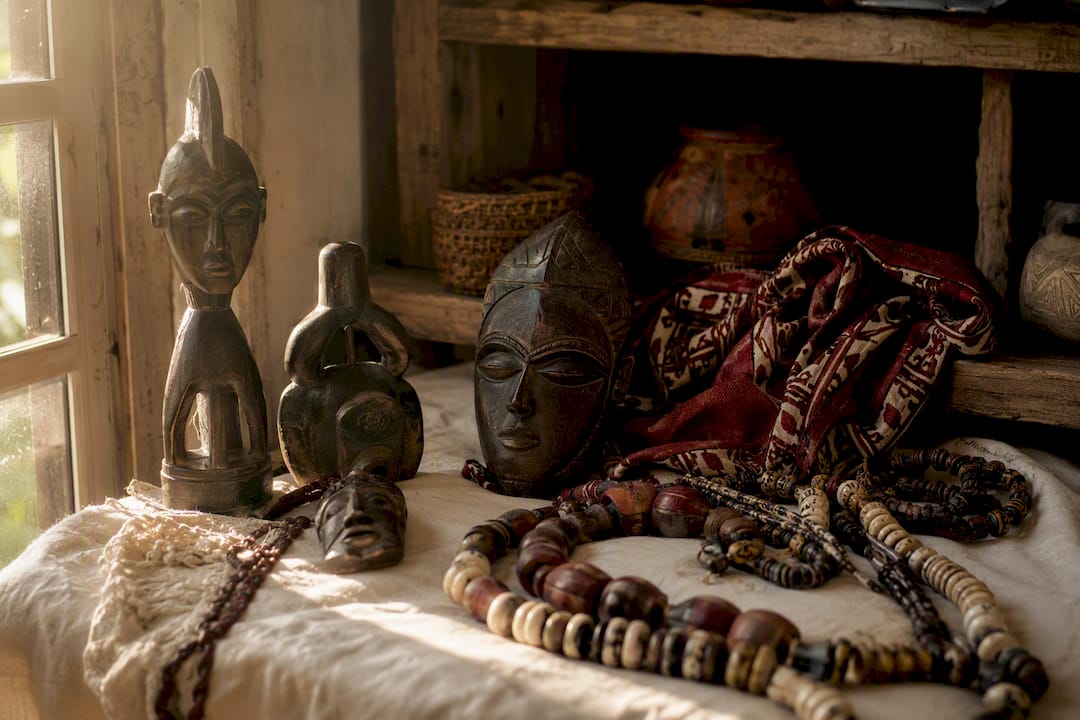
Attachment researchers have documented this transmission closely: caregiving patterns, including anxious hovering or emotional withdrawal, tend to repeat across generations because children absorb their caregivers’ nervous system responses before they absorb language. A parent who was never soothed struggles to soothe, not from lack of love but from lack of a template.
Epigenetics adds a cautious, still-developing layer to this picture. Some research on descendants of trauma survivors suggests stress exposure can leave marks on gene expression that may influence how the next generation responds to stress. The findings remain preliminary and are often overstated in popular writing, so treat any strong claim of “trauma in your DNA” with skepticism. What’s clearer is the behavioral and relational transmission, which practitioners can actually work with.
Here’s what typically gets passed down, for better or worse:
- Survival strategies: hypervigilance, self-reliance, or conflict avoidance that once kept an ancestor safe
- Family narratives: stories about who “we” are, what “we” deserve, or what “we” fear
- Caregiving templates: how affection, discipline, and repair get modeled
- Adaptive strengths: resourcefulness, humor, faith, or community bonds that helped a lineage endure
That last point matters as much as the trauma itself. Ancestral healing practitioners often describe recovering a family’s “golden thread,” meaning the resilience and adaptive skill that got a lineage through hardship in the first place. Healing isn’t only about clearing pain; it’s about claiming what already worked.
Common Ancestral Healing Methods and Where They Overlap With Therapy
Ancestral healing practices vary by culture, but most share a common goal: shifting a person’s relationship to their lineage rather than erasing history. Clinicians increasingly recognize that ancestral practices like storytelling, altars, and nature-based rituals can complement therapy when they’re adapted to a person’s actual culture and clinical needs, not applied as a one-size template.
The most common approaches include:
- Storytelling and oral history — recovering family narratives that were lost, hidden, or silenced, often the starting point for understanding inherited patterns.
- Family altar work — creating a physical space to honor ancestors, which gives grief and gratitude a concrete location rather than leaving them formless.
- Family constellations — a structured group process where participants represent family members to reveal hidden loyalties and stuck patterns.
- Somatic and breathwork practices — addressing trauma stored in the body, since inherited stress responses often live below conscious thought.
- Meditation and ancestor visualization — quiet, internal practices for connecting with a sense of lineage without formal ceremony.
None of these replace trauma-informed therapy. They complement it. A therapist can help someone process the emotional charge of a family secret; a ritual can help that same person mark the shift, integrate it into daily life, and feel less alone while doing the harder clinical work.
A low-risk example: lighting a candle on a specific date tied to an ancestor’s birth or death, saying their name aloud, and writing one sentence about what you learned from their life, hard or good. It takes five minutes, requires no training, and gives grief a container instead of leaving it to circle indefinitely.

Pro Tip: Pair any ritual practice with a simple aftercare habit, like a short walk or a few minutes of journaling. Ancestral work can stir up more emotion than expected, and a grounding step afterward keeps the practice sustainable rather than destabilizing.
Recovering an oral history that families lost through migration, displacement, or deliberate silence is its own discipline, and resources like work on oral history versus official archives show how much gets erased when only written records count as “real” history.
What Do Clinicians and Practitioners Say About Ancestral Healing?
Psychotherapists who work directly with lineage healing describe a specific mechanism: relating to “wise ancestors,” meaning the ones remembered for strength or wisdom rather than harm, can supply a kind of empathy, congruence, and unconditional regard that mirrors what happens in a strong therapeutic relationship. That framing matters because it grounds ancestral work in something clinicians already understand.
Engaging directly with ancestors who are remembered as wise or resourceful can offer the same qualities that make therapy effective: being seen without judgment, held without conditions, and understood without having to explain everything.
That’s the core insight from a psychotherapist’s account of the healing power of relating to ancestors, and it reframes ancestral practice as relational work rather than purely spiritual gesture.
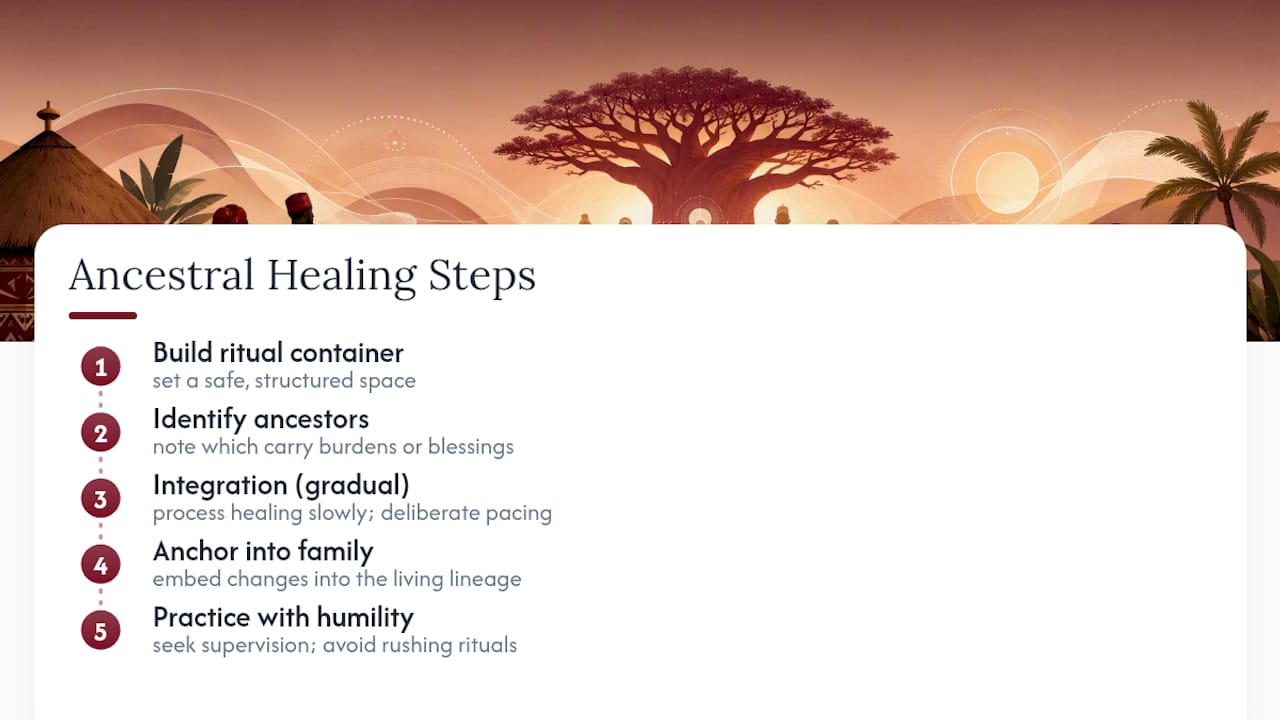
Practitioner manuals go further into procedure. The Ancestral Medicine training manual lays out a stepwise process: build a ritual container first, identify which ancestors carry burdens versus blessings, work through integration gradually, and only then anchor whatever gets healed into the living family. The pacing is deliberate by design. Rushing lineage work, the manual notes, is one of the more common mistakes among untrained practitioners.
Clinicians of Color, writing for mental-health professionals, make a related point: traditional and ancestral practices can safely enter clinical work when therapists stay culturally humble and seek supervision rather than improvising rituals outside their own training. That caution applies just as much to anyone practicing solo at home.
Signs Your Family Line Is Influencing Current Patterns
Some patterns are loud enough to name outright. If three generations of your family have struggled with the same addiction, the same failed relationship dynamic, or the same financial self-sabotage, that’s not coincidence. It’s transmission.
Watch for these behavioral signs:
- Repeating relationship dynamics that don’t match your own history but feel painfully familiar
- Chronic shame or guilt with no clear personal source
- Family narratives that get repeated verbatim across generations, almost like scripts
- Sudden emotional reactions to ordinary situations that feel bigger than the moment calls for
Some people also describe spiritual signals: recurring dreams featuring unfamiliar relatives, a symbol or animal that keeps appearing, or a strong felt sense of a specific ancestor’s presence. These experiences are widely reported in ancestral healing traditions, but they deserve some caution. A repeating dream is worth sitting with; it is not, by itself, a diagnosis or a directive.
If patterns include suicidal thoughts, active addiction, self-harm, or symptoms of trauma that disrupt daily functioning, that’s a signal to bring in a licensed mental-health professional alongside, not instead of, any ancestral practice. Family patterns like family secrets that create generational wounds often surface exactly this way, quietly, for years, before someone finally names them.
How to Begin Ancestral Healing Safely
Starting ancestral work doesn’t require a teacher, a lineage expert, or a weekend retreat. It requires intention and a willingness to go slowly.
- Set your intention. Write down, in one or two sentences, what you’re hoping to understand or shift. Vague intentions produce vague results.
- Gather what you know. Names, birthplaces, stories, even fragments. You don’t need a full family tree, just enough to feel connected to real people rather than abstractions.
- Set a boundary before you start. Decide how much time you’ll spend and what you’ll do if something feels overwhelming. This is not optional; it’s the safety net.
- Try one small practice. A family altar with a photo and a candle, or a journaling prompt like “What did this person survive, and what did it cost them?”
- Find a trauma-informed practitioner if patterns run deep. Look for someone who is transparent about their training, explains aftercare, and never guarantees a specific outcome.
Pro Tip: Treat any practitioner who promises guaranteed results or asks you to disclose unrelated personal information as a red flag. Ethical ancestral work is customized, paced, and honest about its limits.
Coercive rituals, demands for large sums of money before any explanation of the process, or pressure to skip your own boundaries are the clearest warning signs that a practice or provider isn’t operating safely.
How Mother Odessa Approaches Ancestral Work
Mother Odessa has practiced West African spiritual traditions for more than 40 years, and that experience shapes a working model built on customization rather than templates. No two rituals follow the same script, because no two lineages carry the same burdens or blessings.
Privacy runs through every part of the practice. Client situations are treated as confidential, and the ritual approach adjusts to each person’s specific family history, goals, and cultural context rather than applying a generic formula. This grounding in a specific tradition, rather than a blended or improvised approach, is part of what distinguishes serious ancestral practice from surface-level ritual.
What to Expect From Ancestral Healing
Most people notice smaller shifts before big ones: a pause before reacting the way a parent or grandparent used to, a stronger sense of belonging within the family line, or an unexpected repair in a strained relationship. A single ritual can mark a moment. Lasting change usually comes from ongoing work, often practices woven together with therapy over months, not one afternoon.
Track your own progress with something concrete: fewer reactive outbursts, more comfort naming family history out loud, or a felt sense of support rather than isolation. Those are realistic, documented benefits of ancestral reconnection, not overnight transformation.
Why This Work Deserves Care, Not Shortcuts
Ancestral healing asks something uncomfortable of most people: to sit with family history instead of running from it. That’s worth taking seriously, because the alternative, letting inherited patterns run unexamined, tends to cost more over a lifetime than the discomfort of looking directly at them.
Cultural humility matters here more than technique. Traditions carry context that shouldn’t be flattened into a trend, and borrowing practices without understanding their roots does a disservice to both the tradition and the person seeking help. Proceed with curiosity, not urgency, and let the pace of the work match your own readiness.
— Psychic
Ready for Guided Ancestral Ritual Work?
Reading about ancestral healing gets you understanding. Working with someone who has spent 40 years practicing West African ancestral traditions gets you a ritual built specifically around your family’s history, not a generic ceremony pulled from a catalog. Mother Odessa’s approach starts with your actual situation: which ancestors carry weight in your line, what patterns you’re trying to shift, and what outcome you’re realistically working toward.
Every client engagement begins with details about your specific circumstances, followed by a personalized ritual and a written report you keep. Aftercare guidance comes with each service, so you’re not left wondering what happens next. If lineage patterns are showing up as recurring relationship struggles, explore the Spiritual Healing & Clarity collection or look into the Seven African Powers Ceremony for lineage-focused ritual support. Start by browsing the collection that matches what you’re carrying, and request a reading that speaks to your specific family history.
Sources
For readers who want to go deeper into structured practice or clinical integration, these sources go beyond what fits in a single article:
- Chapter Twelve – The Healing Power of Relating Directly with Our Ancestors – Ancestral Wisdom
- Ancestral Healing Practitioner Training Manual (Ancestral Medicine, 5th ed.)
- Ancestral healing and mental health — Clinicians of Color