
A family altar healing ceremony is a regular, intentional practice where a household gathers around a sacred space to foster spiritual healing, emotional bonding, and family unity through shared prayer, meditation, and ritual. The practice does not require a specific religion or elaborate setup. It asks only for consistency, heart, and a willingness to show up together. For anyone working through generational patterns, emotional distance, or a desire for deeper spiritual connection, this kind of ceremony offers a grounded and accessible starting point.
What is a family altar healing ceremony and why does it matter?
A family altar healing ceremony is defined as a consistent, intentional practice where household members gather regularly for prayer, meditation, or gratitude sharing to support emotional and spiritual health. The ceremony typically runs 5–10 minutes daily, making it one of the most time-efficient healing practices available to families. That short window, practiced consistently, builds a rhythm that changes how a family relates to itself over time.
The altar itself is the physical center of the ceremony. It holds objects that carry meaning: a candle, a photograph of an ancestor, a stone collected on a meaningful day, or a flower from the garden. These items are not decorative. They signal to everyone present that this space is set apart for healing and reflection.
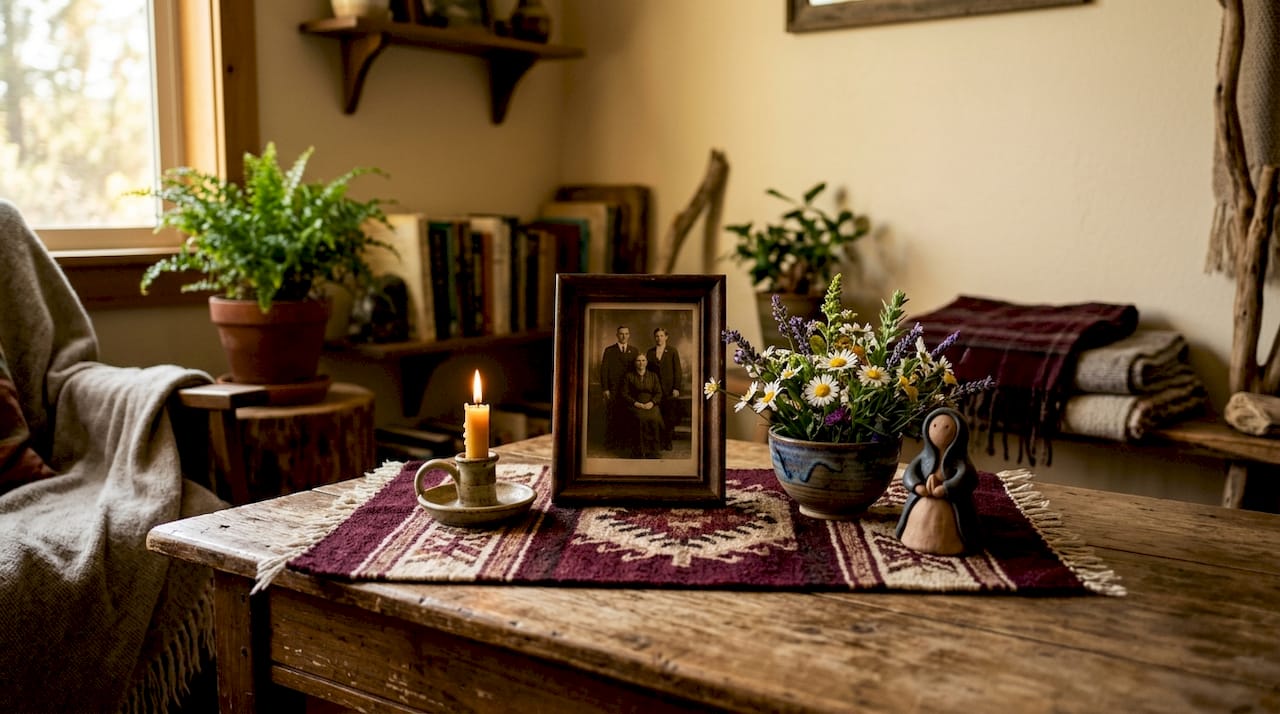
The term “family altar” has roots across many spiritual traditions, from West African ancestral practices to Christian household worship to Indigenous ceremonial customs. The underlying principle is the same across all of them. A physical, dedicated space creates a consistent cue for the mind and body to shift into a state of openness. Motherodessa’s work, rooted in West African traditions with over 40 years of experience, draws directly from this understanding. Healing is not abstract. It lives in the body, in the room, and in the repeated act of gathering.
How to create a healing altar at home
A family healing altar can be set up with items already in your home, often at zero cost. Common objects include a cloth to define the space, candles, photos of ancestors or loved ones, flowers, stones, and small personal items that carry emotional weight. The total cost of an intentional setup typically falls between $0 and $20. That low barrier is deliberate. The power of the altar comes from meaning, not expense.
Here are the core elements to consider when building your altar:
- A defined surface. A small tray, shelf, or corner of a table works. Size does not determine effectiveness.
- A cloth or base layer. This visually separates the altar from everyday clutter and signals its purpose.
- Candles. One or two candles are enough. Lighting them marks the beginning of the ceremony.
- Ancestor photos or personal images. These connect the ceremony to lineage and memory.
- Natural objects. Stones, dried flowers, or leaves bring grounding energy and can be swapped seasonally.
- A personal item from each family member. This builds shared ownership of the space.
The altar should stay living and dynamic, not static. Rotating objects with the seasons or in response to what the family is working through keeps the practice relevant. A fixed, unchanged altar becomes background noise. An altar that reflects current emotional reality stays meaningful.
Pro Tip: Let each family member choose one item to place on the altar. Participation in the setup creates investment in the practice. Children especially respond to having their own chosen object present.
How to conduct a healing ceremony and build a lasting ritual rhythm
A healing ceremony gains its power from repetition, not from any single session. Consistent rhythm is the single most important factor in making family altar rituals work. Families who fix a time and location for the ceremony report stronger engagement than those who practice whenever it feels convenient.
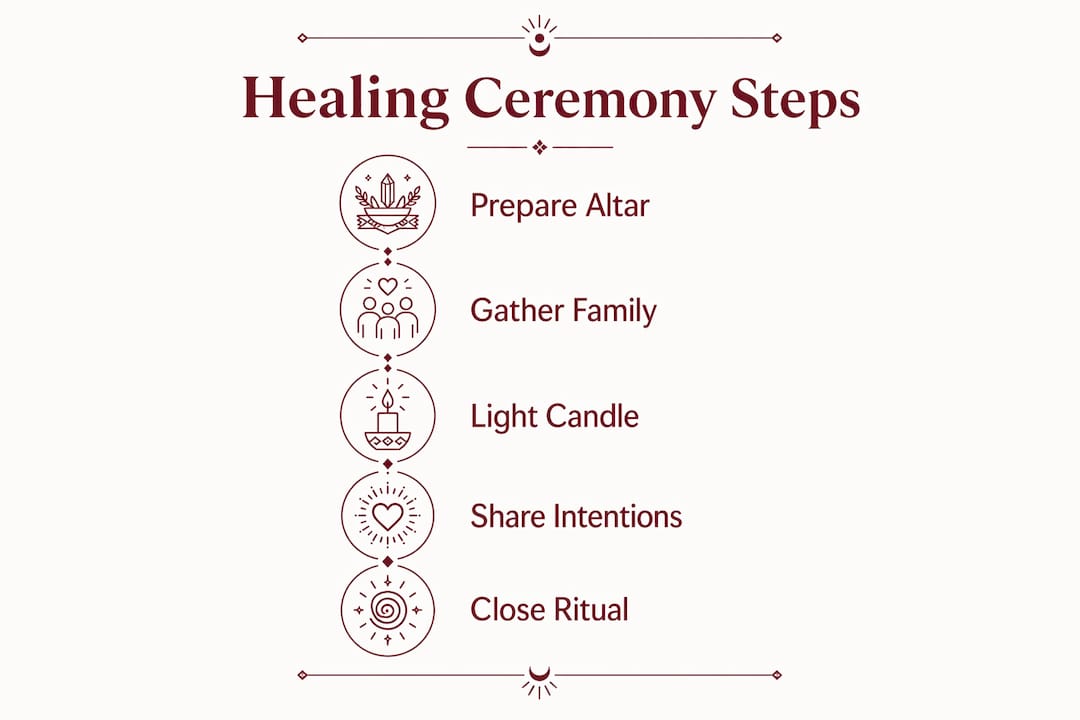
A simple ceremony structure looks like this:
- Gather at the altar. Everyone stands or sits together. Even two minutes of shared presence matters.
- Light the candle. This act serves as a ritual anchor. Lighting a candle at the same time each day creates a neurological trigger that shifts the mind into reflection and calm. The body learns to associate the flame with stillness.
- Open with a shared breath or moment of silence. This transitions everyone out of the noise of the day.
- Share one gratitude or one concern. Keep it brief. The goal is emotional honesty, not performance.
- Offer a prayer, affirmation, or scripture reading. Adapt this to your family’s spiritual background. There is no single correct form.
- Close with intention. Name something the family is working toward, healing from, or calling in.
Engaging children is not complicated. Give them a role. Let them light the candle, choose the opening word, or place a flower. Children who participate in family healing traditions from an early age carry those patterns into adulthood. That is exactly how generational healing spreads forward.
Pro Tip: If the family cannot gather daily, choose three fixed days per week and protect those times. Consistency on three days beats irregular attempts at seven.
How does a family altar ceremony support breaking generational patterns?
The altar functions as a physical reflection of the internal healing work a family is doing. Healing altars signal to the nervous system that this is a safe zone for emotional transparency, including grief, vulnerability, and difficult truths. That signal is not symbolic. It is physiological. The body responds to repeated ritual cues by lowering its defenses.
Generational patterns, such as emotional shutdown, resentment, and disconnection, survive because they are never named in a safe space. The altar ceremony creates that space. Consider what shifts when a parent says, at the altar, “I am carrying something heavy from my own childhood.” That admission, made in a ritual context, does something that a casual conversation cannot. It breaks the silence that keeps old patterns alive.
The collective act of sharing at the altar builds emotional bonds and interrupts cycles of isolation and resentment. Families that practice this regularly report deeper trust and a greater willingness to address conflict directly. The altar does not resolve conflict. It creates the conditions in which resolution becomes possible.
“The altar is not where healing ends. It is where healing begins to feel safe enough to happen.”
Ancestral healing is another layer of this work. Placing photos of ancestors on the altar and acknowledging their lives, including their pain and their strength, connects the family to a longer story. Motherodessa’s approach to restoring family lineage blessings draws on this principle directly. Healing does not start with you. It moves through you, backward and forward across generations.
Common misconceptions about healing altar practices
The most damaging expectation a family can bring to this practice is that the altar will fix things quickly. Healing altars regulate internal emotional and physiological states. They do not resolve external conflicts on a schedule. Families who approach the altar expecting immediate results often abandon the practice before it has had time to work.
Several other misconceptions are worth addressing directly:
- “We need to agree spiritually.” The ceremony adapts to varied spiritual levels and beliefs. One family member may pray, another may simply sit in silence. Both are valid.
- “The altar needs to look a certain way.” A small tray on a shelf works as well as an elaborate setup. Appearance is not the measure of sincerity.
- “Children will not take it seriously.” Children respond to ritual more naturally than adults. Their engagement is often the most genuine in the room.
- “We have to do it every single day.” Consistency matters more than frequency. A practice done three times a week with full presence outperforms a daily habit done distractedly.
- “If nothing changes in a month, it is not working.” Internal shifts happen before external ones. Patience is not passive. It is part of the healing.
The altar stays meaningful when it stays living and relevant. Update it. Let it reflect what the family is actually going through. That honesty is what makes the ceremony real.
Key Takeaways
A family altar healing ceremony works because consistent, shared ritual creates the physical and emotional conditions for generational healing, nervous system regulation, and lasting family reconnection.
| Point | Details |
|---|---|
| Definition of the practice | A family altar healing ceremony is a regular, intentional gathering around a sacred home space for prayer, meditation, and shared ritual. |
| Setup requires minimal cost | A functional altar uses household items and typically costs between $0 and $20 to create. |
| Ritual anchors drive results | Lighting a candle at the same time daily creates a neurological shift that supports reflection and emotional openness. |
| Generational healing is the deeper goal | Shared ritual breaks cycles of emotional isolation and resentment by creating a safe space for honest family expression. |
| Patience is non-negotiable | Healing altars regulate internal states gradually. Expecting quick external fixes leads to abandoning the practice too soon. |
What I have seen this practice actually do
After working with families across many different spiritual backgrounds, the pattern I observe most consistently is this: the altar does not do the healing. The family does. The altar simply makes it harder to avoid.
Most families carry unspoken things. Grief that was never named. Resentments that calcified into distance. Patterns passed down so quietly that no one noticed them arriving. The ceremony creates a moment, every day or every few days, where those things have a place to surface. That is not a small thing. That is the whole thing.
What surprises people most is how quickly children shift the energy of the practice. Adults come to the altar guarded. Children come curious. Watching a child place a stone on the altar and say what it means to them has a way of opening adults up in ways that no amount of direct conversation can. The ceremony creates permission.
Start smaller than you think you need to. One candle. One minute of silence. One shared word. Build from there. The benefits of ancestral reconnection do not require a grand beginning. They require a genuine one.
— Psychic
Motherodessa’s spiritual healing services for your family
Family altar ceremonies are powerful on their own. They become even more effective when supported by personalized spiritual guidance rooted in deep tradition.
Motherodessa brings over 40 years of experience in West African spiritual healing to every client she works with. Her spiritual healing rituals are designed for exactly the situations families face: generational curses, emotional disconnection, love and relationship repair, and the need for protection and clarity. No two rituals are the same because no two families carry the same wounds. If your family altar practice has surfaced something deeper that needs direct spiritual attention, Motherodessa’s health and healing ritual offers a guided, personalized path forward.
FAQ
What is a family altar healing ceremony?
A family altar healing ceremony is a regular, intentional practice where household members gather around a sacred space for prayer, meditation, or gratitude sharing to support emotional and spiritual health. Sessions typically run 5–10 minutes daily and focus on building connection and breaking generational patterns.
What items do you need to create a healing altar?
A healing altar requires only simple household items such as a cloth, candles, ancestor photos, flowers, and personal objects. The total setup typically costs between $0 and $20, and the meaning behind each item matters far more than its cost.
How often should a family perform altar healing rituals?
Daily practice is ideal, but three consistent sessions per week with full family presence produces stronger results than irregular daily attempts. Consistency and intention matter more than frequency.
Can family altar ceremonies help break generational patterns?
Shared ritual at the altar creates a safe space for emotional honesty, which directly interrupts cycles of isolation, resentment, and emotional disconnection passed down through families. The altar does not resolve conflict instantly. It builds the conditions for healing over time.
Do all family members need to share the same spiritual beliefs?
Family altar healing ceremonies adapt to varied spiritual backgrounds and belief levels. One person may pray, another may sit in silence, and both forms of participation are equally valid within the practice.