
Healing the family tree is the deliberate process of breaking intergenerational cycles of pain, trauma, and harmful behaviors that persist across three or more generations. In psychological terms, this practice is called intergenerational or ancestral trauma healing. It draws on both spiritual frameworks, such as ancestral honoring and ritual, and clinical approaches like Family Systems Therapy and Family Constellations. The goal is not to erase the past but to stop it from silently running your present. When you understand how dysfunction travels through bloodlines, you gain the power to redirect your family’s future.
What does healing the family tree mean, exactly?
Healing the family tree means consciously identifying and interrupting the patterns your ancestors passed down, whether those patterns show up as addiction, emotional unavailability, financial instability, or cycles of abuse. The term “healing the family tree” is widely used in spiritual communities, while psychologists call the same work intergenerational trauma therapy or systemic family healing. Both frameworks agree on one core truth: what happened to your grandparents does not have to define your children.
The process operates on two levels simultaneously. At the personal level, you examine your own behaviors, emotional triggers, and belief systems to trace their origins. At the systemic level, you recognize that your family functions as an interconnected emotional unit where one person’s unresolved pain affects everyone else. Motherodessa’s work in West African spiritual traditions has long recognized this truth, treating the family line as a living system that responds to intentional ritual and healing.
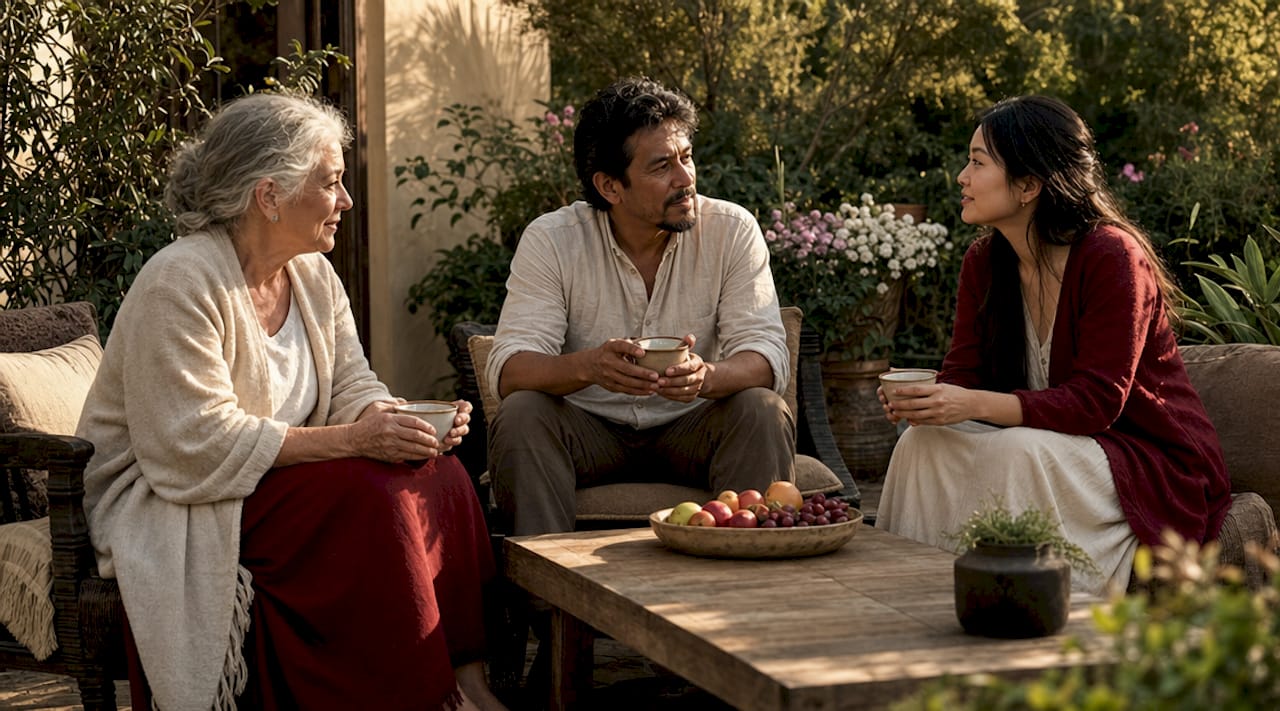
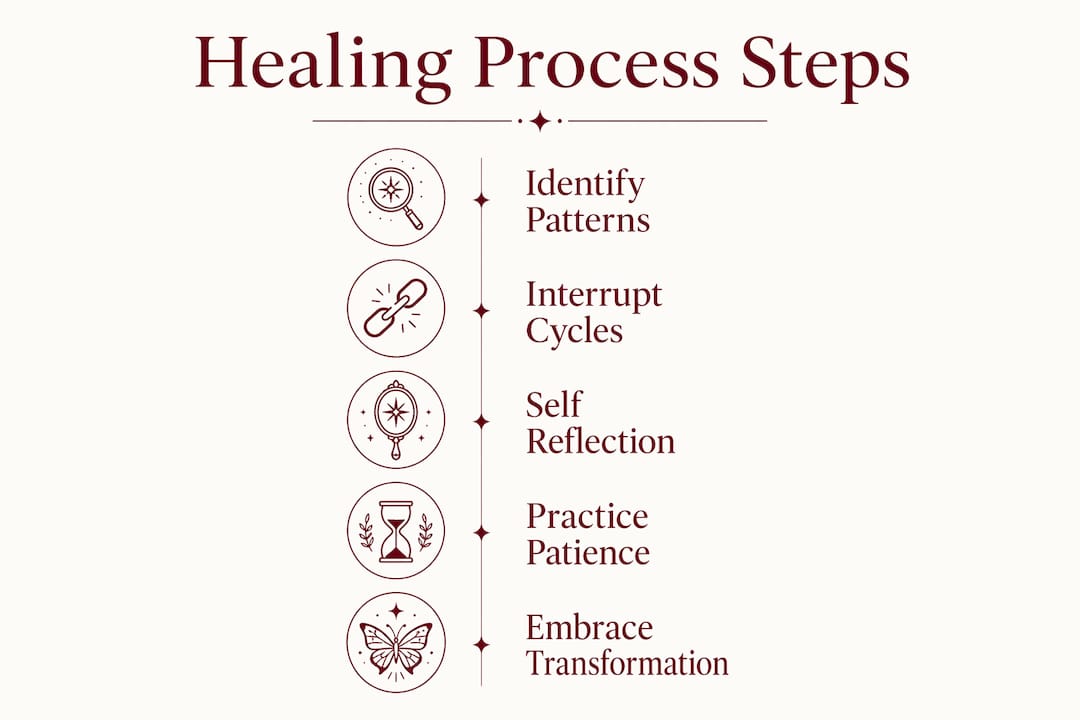
Healing is not a single event. It is a practice that unfolds over years, requiring patience, self-awareness, and a willingness to grieve the family you wished you had before building the one you deserve.
How does trauma pass down through family lines?
Trauma travels through families by three primary routes: parental modeling, family narratives, and epigenetic changes. Understanding each one makes the healing process far more concrete and less mysterious.
Parental modeling is the most visible route. Children absorb the emotional regulation strategies, conflict styles, and coping behaviors of their caregivers before they can speak. A parent who responds to stress with rage teaches a child that rage is the appropriate stress response. That child grows up and repeats the pattern with their own children, not because they choose to but because it is the only template they were given.
Family narratives are the stories, secrets, and silences that shape a family’s identity. A family that never discusses a suicide, a bankruptcy, or an affair does not erase those events. It buries them, and buried events generate shame, anxiety, and unexplained fear in descendants who have no conscious knowledge of what happened. Research confirms that trauma passes through parental modeling, family stories, and epigenetic changes affecting gene expression. This means the body itself carries ancestral memory.
Epigenetics is the biological mechanism that surprises most people. Traumatic experiences can alter how genes are expressed without changing the DNA sequence itself. Those altered expressions can be inherited by the next generation. Studies on Holocaust survivors and their descendants, as well as research on communities affected by famine and war, show measurable physiological differences linked to ancestral stress.
Common generational patterns include:
- Addiction and substance dependency passed through both genetic predisposition and learned coping
- Cycles of domestic abuse rooted in normalized patterns of control
- Chronic financial instability tied to scarcity mindsets and risk avoidance
- Emotional unavailability stemming from unprocessed grief or attachment wounds
- Anxiety disorders amplified by nervous systems primed for threat across generations
Each of these patterns has a traceable origin. Naming that origin is the first act of healing.
What are the main frameworks for healing the family tree?
Two primary frameworks address ancestral healing: spiritual approaches and psychological approaches. They are not mutually exclusive. Many people find the deepest healing when both are used together.
| Framework | Core Method | Focus | Best For |
|---|---|---|---|
| Spiritual (West African traditions) | Ancestral rituals, prayer, offerings | Honoring lineage, breaking spiritual contracts | Those seeking energetic and soul-level healing |
| Spiritual (Christian) | Prayer, sacramental rites, intercession | Healing through faith and forgiveness | Faith-based practitioners |
| Family Constellations | Facilitated group or individual sessions | Revealing hidden systemic loyalties | Uncovering unconscious family roles |
| Family Systems Therapy | Talk therapy with a systemic lens | Rebalancing emotional dynamics | Clinical psychological healing |
| Ancestral Honoring Practices | Altars, genealogy work, ritual acknowledgment | Reconnecting with and releasing ancestors | Spiritual and cultural identity work |
Family therapy treats families as interconnected emotional units, working to rebalance unconscious roles rather than treating one person in isolation. This systemic view is what separates family healing from individual therapy. The problem is never just one person. It is the pattern between people.
Family Constellations, developed by Bert Hellinger, takes this further by mapping the invisible loyalties that bind family members to ancestral pain. A person may unconsciously repeat a great-grandparent’s fate out of a misplaced sense of love or belonging. Constellations work makes those loyalties visible so they can be released.
Spiritual frameworks, particularly those rooted in West African traditions like the practices Motherodessa specializes in, approach the family line as a spiritual system. Reconnecting with ancestral roots is understood as a prerequisite for genuine healing, not a supplement to it. Rituals designed for protection, reconciliation, and abundance work on the energetic level that psychology alone cannot reach.
Pro Tip: If you are new to this work, start by researching your family history three generations back. Write down the recurring themes you notice. That map becomes your healing blueprint.
What practical steps can you take to begin healing your family lineage?
Starting the process of healing your family lineage does not require a therapist, a ritual practitioner, or a dramatic confrontation. It requires honesty and a willingness to look inward first.
-
Acknowledge the history without assigning blame. Recognizing that your parents were shaped by their parents, who were shaped by theirs, removes the need to villainize anyone. Acknowledgment is not excusing harm. It is understanding its origin so you can stop carrying it forward.
-
Set clear emotional boundaries. Successful family healing requires clear boundaries to sustain healthy interactions. A boundary is not a wall. It is a defined limit that protects your emotional well-being while allowing genuine connection to remain possible.
-
Build emotional regulation skills. Emotional maturity includes the ability to tolerate feedback without defensiveness and to regulate your nervous system during difficult family interactions. Practical tools include grounding exercises, deliberate pausing before responding, and practicing empathy even when it is uncomfortable.
-
Disrupt old patterns with small, consistent actions. Naming your feelings instead of suppressing them. Saving a small amount of money each week when your family pattern is financial chaos. Telling the truth in a conversation where your family pattern is silence. These micro-actions accumulate into systemic change over time.
-
Practice self-compassion throughout the process. The family healing journey is slow and often takes years to break deep patterns and build new habits. Expecting rapid transformation leads to discouragement. Expecting gradual progress leads to resilience.
Pro Tip: Journaling your emotional responses after family interactions is one of the most underused tools in this work. Patterns become visible on paper in ways they never do in the moment.
What are common misconceptions about healing the family tree?
The biggest misconception is that healing the family tree means achieving perfect family unity. It does not. Healing means holding complex family relationships while maintaining your own emotional health. Some relationships improve dramatically. Others reach a peaceful distance. Both outcomes are valid.
A second misconception is that “keeping the peace” equals healing. Keeping the peace typically means suppressing your own needs to avoid conflict. True healing requires the courage to stand beside discomfort rather than avoid it. Silence in the face of dysfunction is not neutrality. It is participation.
Consider these common traps that slow or derail the healing process:
- Waiting for an apology before beginning your own healing work
- Expecting all family members to change simultaneously
- Confusing forgiveness with reconciliation (you can forgive without resuming contact)
- Believing that healing requires revisiting every painful memory in detail
- Assuming that resistance from family members means failure
“Healing starts with grieving the family you hoped for, not the one you have.”
Seeking apologies or validation is often a significant pitfall. Success in this work is measured by your internal regulation and your ability to set boundaries, not by whether others change their behavior. This reframe is difficult but liberating. It returns agency to you.
Resistance from family members is also common and expected. When one person in a system begins to change, the system often pushes back to restore its familiar balance. Therapists call this homeostasis resistance. It is not a sign that you are doing something wrong. It is a sign that the system is responding to real change.
How does healing the family tree transform long-term family dynamics?
When one person commits to this work, the effects extend far beyond their own life. Ancestral healing can shift family systems even when other members do not participate, because one member’s transformation creates a ripple effect through the entire relational network. You cannot change a system from the outside. But you can change it from within by changing yourself.
The long-term outcomes of sustained family healing include healthier relationships built on boundaries and emotional safety rather than obligation and fear. They include improved emotional regulation that makes you a more present parent, partner, and friend. They include the possibility of genuine reconciliation with estranged family members, not forced reunion but authentic reconnection built on new terms.
For some families, the outcome is not reconciliation but peaceful closure. A relationship that cannot be repaired can still be released with dignity. That release is itself a form of healing.
Pro Tip: When you notice yourself reacting to a family member with disproportionate emotion, pause and ask: “Is this mine, or is this older than me?” That question alone can interrupt a generational pattern in real time.
The transformation is also generational in the forward direction. Children raised by a parent who has done this work inherit a fundamentally different emotional template. They grow up with a nervous system that knows how to regulate, a vocabulary for feelings, and a model of relationships built on respect. That is the most powerful gift this work produces.
Key takeaways
Healing the family tree requires breaking intergenerational trauma cycles through both self-regulation and systemic awareness, using spiritual and psychological frameworks together for the deepest and most lasting results.
| Point | Details |
|---|---|
| Core definition | Healing the family tree means ending harmful patterns passed across three or more generations. |
| Transmission routes | Trauma travels through parental modeling, family narratives, and epigenetic gene expression changes. |
| Dual frameworks | Spiritual rituals and psychological therapies like Family Constellations address different but complementary layers. |
| Practical starting point | Begin with acknowledgment, boundary-setting, and nervous system regulation before expecting external change. |
| Realistic expectations | Healing is non-linear, takes years, and does not require all family members to participate or change. |
Why this work is harder and more worthwhile than most people expect
I have worked alongside people carrying wounds they did not create and did not choose. What strikes me every time is how much courage it takes to stop blaming the past long enough to actually change the present. Most people come to this work expecting clarity and leave with complexity. That is not a failure. That is the work doing what it is supposed to do.
The part that conventional advice consistently gets wrong is the timeline. People expect healing to feel like progress. Often it feels like grief. You grieve the parent who could not show up. You grieve the childhood that deserved better. You grieve the version of yourself that spent decades compensating for wounds you did not understand. That grief is not a detour. It is the road.
What I have found, working with clients across many years, is that the people who make the most lasting change are not the ones who push hardest. They are the ones who learn to sit with discomfort without running from it or collapsing into it. They build the capacity to feel difficult emotions and remain functional. That capacity is what changes a family line. Not a single ritual, not a single breakthrough session. The daily practice of choosing a different response.
I also want to name something that rarely gets said directly: you do not need your family’s permission to heal. You do not need their acknowledgment, their apology, or their participation. The healing happens in you first. Everything else follows from that.
— Psychic
Ready to go deeper into your healing journey?
Understanding the meaning of family healing is the first step. Taking action is the next one. Motherodessa offers a full collection of spiritual healing rituals rooted in 40+ years of West African healing tradition, each one personalized to your specific situation and lineage. Whether you are seeking protection from inherited patterns, reconciliation with estranged family members, or a deeper connection to your ancestral roots, no two rituals are the same. If you are ready to move from understanding to transformation, explore the reconciliation and reunion ritual or browse the full healing collection to find the right starting point for your journey.
FAQ
What does healing the family tree mean in simple terms?
Healing the family tree means identifying and breaking harmful patterns, behaviors, and traumas that have been passed down through multiple generations. The goal is to stop those patterns from continuing into your own life and the lives of your children.
Do all family members need to participate for healing to work?
No. One person’s transformation can create a ripple effect through the entire family system even without other members’ involvement. Healing begins with the individual who chooses to change.
What is the difference between spiritual and psychological family healing?
Spiritual approaches use ritual, prayer, and ancestral honoring to address energetic and soul-level patterns. Psychological approaches like Family Systems Therapy and Family Constellations address unconscious behavioral and relational dynamics. Both target the same intergenerational wounds from different angles.
How long does healing the family tree take?
The process is lifelong and non-linear. Deep generational patterns typically take years to shift, and progress often looks like improved emotional regulation and boundary-setting rather than dramatic external change.
Is forgiving family members required for healing?
Forgiveness and reconciliation are separate acts. You can do the internal work of releasing resentment without resuming contact or excusing harmful behavior. Healing starts with grieving the family you hoped for, not forcing acceptance of the one that caused harm.