
Ancestral guidance is the practice of drawing wisdom and spiritual support from one’s ancestors to heal relationships, release generational wounds, and restore harmony within families. This practice sits at the center of how ancestral guidance aids reconciliation, connecting personal pain to its deeper roots in lineage and lived history. Emerging research in epigenetics and cultural health models confirms what West African and Indigenous traditions have long taught: unresolved ancestral trauma shapes present-day behavior, conflict, and disconnection. Spiritual practitioners like Motherodessa have worked with this truth for over 40 years, helping people break cycles that no amount of surface-level conversation can reach.
How ancestral guidance aids reconciliation through emotional healing
Ancestral trauma is stored in the body as epigenetic memory, not just as a story in the mind. That distinction changes everything about how healing works. Intellectual analysis alone cannot release what the nervous system has absorbed across generations. Embodied practices, including ritual, meditation, breathwork, and prayer, reach the places that talk therapy often cannot.
Ancestral wisdom for healing works because it treats pain as relational, not individual. When a family carries patterns of estrangement, addiction, or rage, those patterns rarely start with one person. They travel through bloodlines, shaped by unprocessed grief, displacement, or betrayal that ancestors never had the tools to resolve. Recognizing that origin shifts the work from blame to understanding.
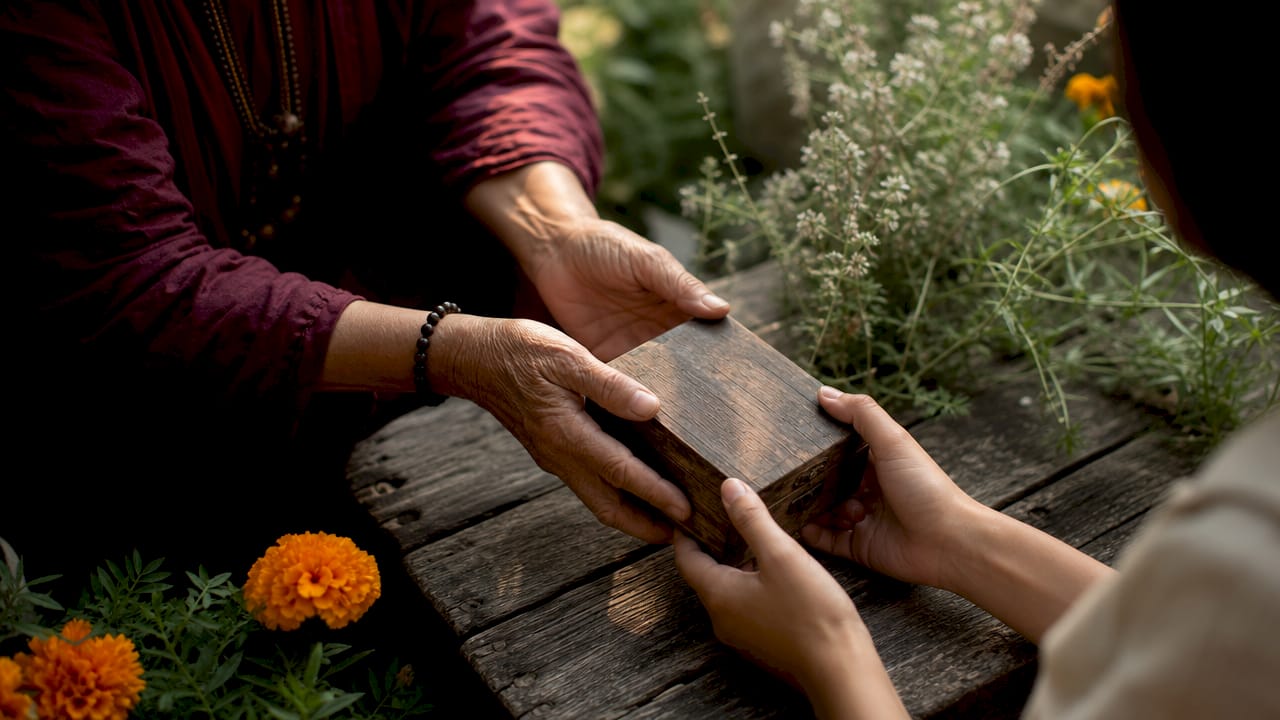
Rongoā Māori medicine offers a striking model here. Its philosophy holds that healing requires reconnecting to ancestors, land, and community to restore what practitioners call “mauri,” or life essence. Loneliness, in this framework, is not a mood. It is a spiritual barrier to reconciliation. That framing resonates across cultures, from West African traditions to Indigenous American practices.
Dr. Arletha Donnyale Lizana, a scholar of ancestral healing, describes this work as lived experience rather than theory. Rituals and meditative dialogue with ancestors create a container for releasing accumulated pain. The body relaxes its defenses. Forgiveness becomes possible not because someone decided to forgive, but because the emotional charge underneath the conflict has been addressed at its source.
Pro Tip: Start with breath before any ritual. Three slow, conscious breaths signal to your nervous system that you are safe enough to open. That small act of presence is the foundation of every ancestral healing practice.
What role does shared heritage play in community reconciliation?
Community-based models prove that shared heritage bridges social divides in ways that direct negotiation often cannot. The Kofi Annan Foundation documented a 15-month program in Tripoli, Lebanon, that engaged 59 youth across religious and social lines. The program used shared heritage as its common ground, and it measurably strengthened social cohesion among participants.
That outcome matters because it shows heritage is not just personal. It is a neutral platform. When two people or groups in conflict discover a shared ancestor, a shared story, or a shared cultural practice, the conversation shifts. They are no longer opponents. They are kin with a common origin.
The program used heritage tours and inclusive storytelling as its primary tools. Youth participants developed skills in dialogue, cultural appreciation, and perspective-taking. Those skills transferred directly into their communities, reducing tension and opening space for forgiveness.
| Program Feature | Detail |
|---|---|
| Duration | 15 months |
| Participants | 59 youth in Tripoli, Lebanon |
| Primary tools | Heritage tours, storytelling, cultural workshops |
| Outcome | Strengthened social cohesion across religious divides |
| Organizing body | Kofi Annan Foundation |
Reconciliation through heritage works at the personal level too. Families that share stories across generations, visit ancestral homelands, or practice cultural rituals together report stronger bonds and greater capacity for forgiveness. The mechanism is the same whether the scale is a neighborhood or a living room.
Pro Tip: When facilitating a difficult family conversation, begin with a shared story rather than the conflict itself. Ask an elder to share a memory. That act of storytelling lowers defensiveness and reminds everyone in the room that they belong to something larger than the current dispute.
How does ancestral wisdom support healing from chronic patterns?
The Ancestral Wisdom Health Model applies this same principle to physical and emotional health in BIPOC communities. The model integrates plant-based medicine, ancestral rituals, and evidence-based nutrition to build trust and long-term engagement with care. That combination addresses not just symptoms but the generational conditions that created them.
The numbers behind this work are significant. Diabetes affects 37 million Americans and costs $327 billion annually. Ancestral lifestyle habits, including whole foods, purposeful movement, community bonds, and adequate rest, directly counter the conditions that drive those numbers. Returning to those habits is not nostalgia. It is evidence-based prevention.
Motivational interviewing and healing circles create safe spaces where people can process pain and replace harmful stress responses with culturally grounded ones. That process is itself a form of reconciliation with self and lineage. When someone reclaims an ancestral diet or movement practice, they are not just improving their health. They are honoring a relationship with their ancestors that was severed by displacement or assimilation.
Ancestral health practices that support self-reconciliation include:
- Traditional whole foods diets rooted in the foods your ancestors cultivated and prepared
- Purposeful movement such as dance, walking, or labor-based activity tied to cultural memory
- Community bonds maintained through regular gathering, shared meals, and storytelling
- Healing circles that provide space to name and release inherited stress patterns
- Rest and natural rhythms aligned with seasonal and ancestral patterns of sleep and renewal
Each of these practices reconnects you to a lineage that knew how to sustain life. That reconnection is ancestral wisdom for healing in its most practical form.
What are practical ways to use ancestral guidance in personal relationships?
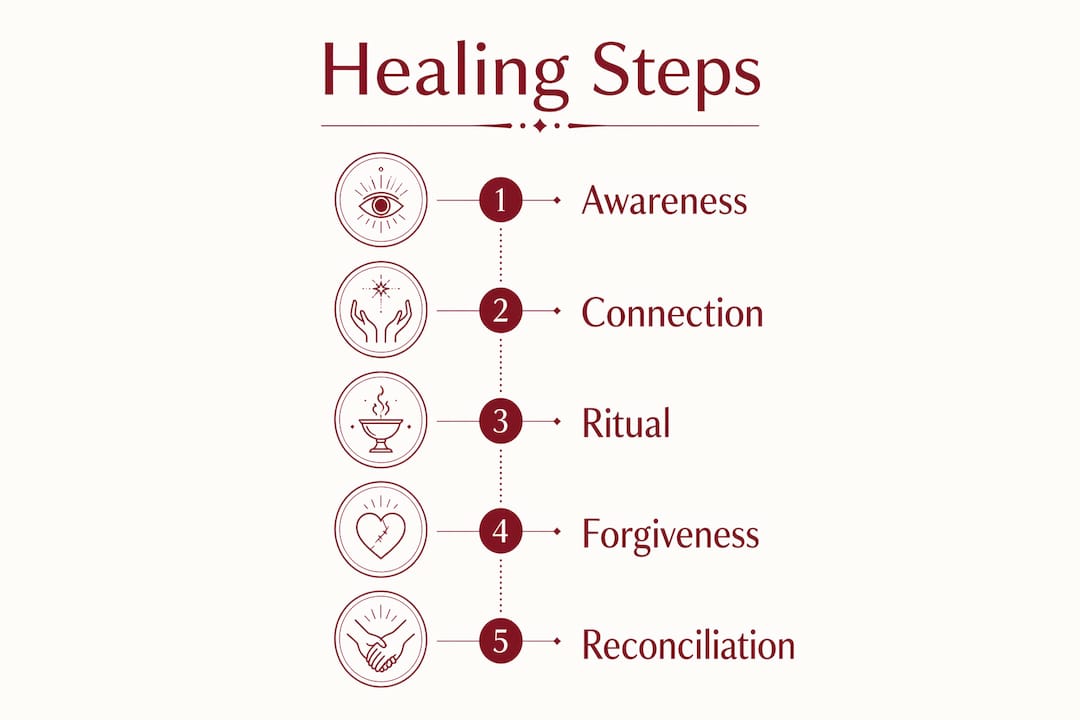
Spiritual guidance and reconciliation meet most powerfully in personal practice. The role of ancestors in healing is not passive. You actively invite their presence and wisdom through specific, repeatable acts. The following steps give you a structure to begin.
- Create a simple altar. Place photographs, objects, or symbols connected to your ancestors in a dedicated space. This physical act signals your intention to open a relationship with your lineage.
- Begin a daily practice of acknowledgment. Speak your ancestors’ names aloud each morning. You do not need elaborate ritual. Naming them is enough to start.
- Write letters to your ancestors. Address unresolved pain, ask for guidance, or simply express gratitude. Writing externalizes what lives internally and creates space for new perspective.
- Research your family history. Understanding the hardships, migrations, and losses your ancestors faced builds compassion for the patterns you carry. Knowledge replaces judgment.
- Practice storytelling within your family. Share what you learn. Invite older relatives to share their memories. Stories carry healing that facts alone cannot.
- Engage in cultural practices tied to your heritage. Cook traditional foods, learn ancestral languages, or participate in cultural ceremonies. These acts restore the connection that restores family lineage blessings across generations.
Reconciliation is a collective, relational practice rather than a solitary burden. Reaching out and being a vessel for healing means you do not carry the work alone. You invite your living family members and your ancestors into the process together.
Pro Tip: Avoid forcing reconciliation on a fixed timeline. Ancestral healing moves at the pace of trust. If a family member is not ready to engage, continue your own practice. Your healing changes the field for everyone connected to you, whether they participate directly or not.
Key Takeaways
Ancestral guidance aids reconciliation by addressing the generational roots of conflict through embodied ritual, shared heritage, and culturally grounded practice rather than surface-level conversation alone.
| Point | Details |
|---|---|
| Ancestral trauma is physical | Epigenetic memory stored in the body requires embodied healing, not just intellectual understanding. |
| Heritage creates neutral ground | Shared cultural stories and practices reduce defensiveness and open space for forgiveness. |
| Health and reconciliation connect | Ancestral lifestyle habits lower chronic disease risk and restore harmony with one’s lineage. |
| Collective practice heals faster | Reconciliation works best as a relational effort, not a solitary one. |
| Small rituals build real change | Daily acknowledgment, altar creation, and storytelling are proven entry points for ancestral healing. |
Why I believe ancestral healing is the most underused path to reconciliation
Most people approach family conflict as a communication problem. They want better scripts, cleaner boundaries, or a skilled mediator. Those tools have their place. But after working in spiritual healing for decades, I have seen what happens when someone finally addresses the ancestral layer beneath the conflict. The shift is not gradual. It is often immediate and profound.
The hardest part is holding paradox. Your ancestors were both wounded and wise. They passed down pain and they passed down strength. Honoring them does not mean excusing harm. It means seeing the full picture clearly enough to stop repeating what no longer serves you.
Reconciliation through heritage asks you to be a vessel, not a hero. You are not fixing your family alone. You are opening a channel that allows healing to move through you toward everyone connected to your line. That is a different kind of work. It requires less force and more presence.
Start with breath. Start with one name spoken aloud. Start with one story asked of an elder before it is too late. The role of ancestors in healing is not ceremonial. It is structural. They built the foundation you stand on. Working with them, rather than around them, changes everything.
— Psychic
Motherodessa’s spiritual healing resources for ancestral reconciliation
Ancestral healing requires more than intention. It requires the right ritual, personalized to your lineage and your specific situation.
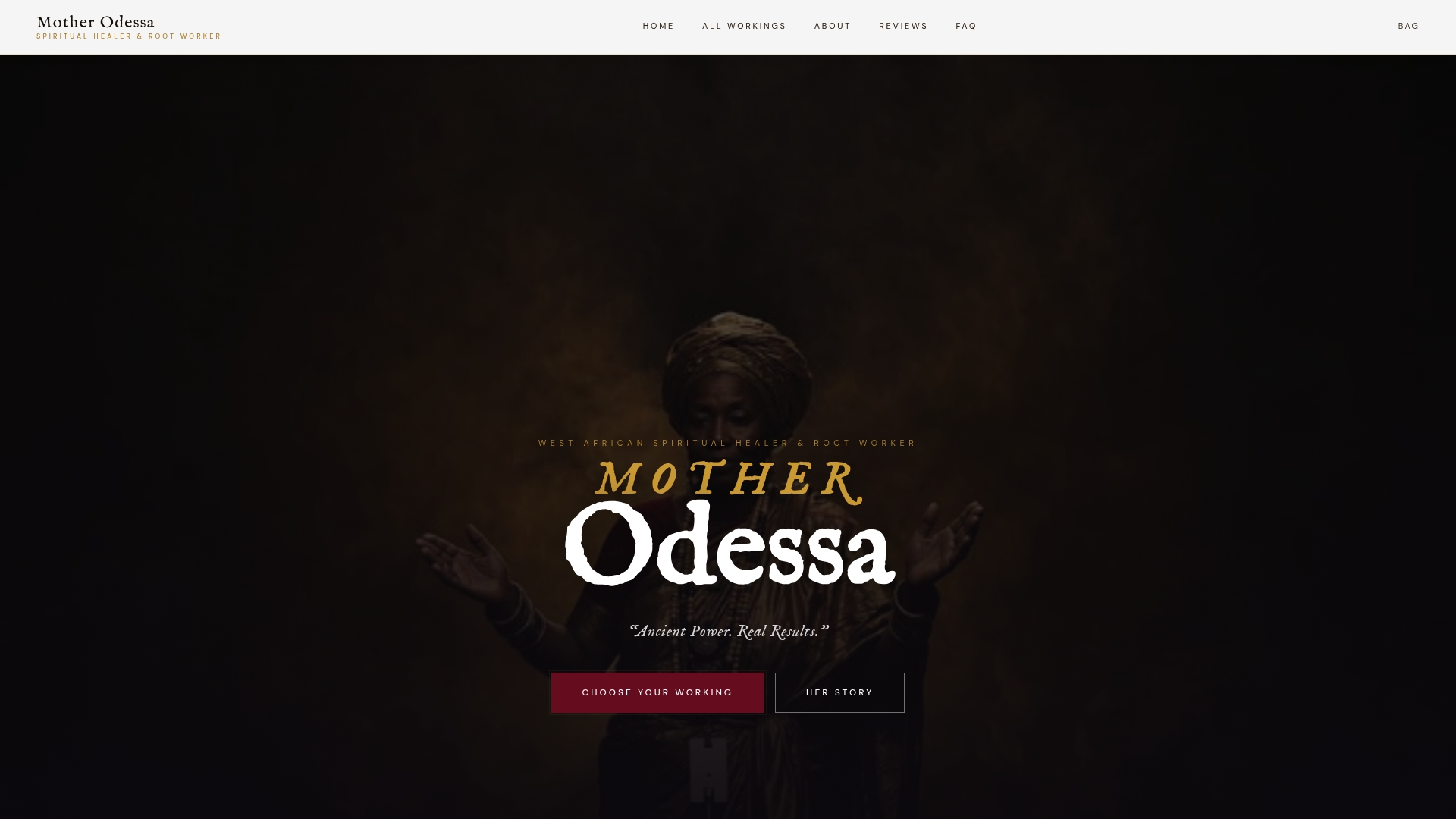
Motherodessa has spent over 40 years working with individuals and families to break generational curses, restore estranged relationships, and clear the spiritual weight that keeps people stuck. Her spiritual healing rituals are rooted in West African traditions and customized to each client’s circumstances. No two situations are the same, and no two rituals are identical. For those carrying the weight of family conflict or seeking deeper reconciliation with their lineage, Motherodessa’s love and relationship rituals offer a direct path to healing that honors both the living and the ancestors who came before.
FAQ
What is ancestral guidance in the context of reconciliation?
Ancestral guidance is the practice of drawing wisdom and spiritual support from one’s ancestors to heal relational wounds and break generational patterns. It treats conflict as rooted in lineage rather than solely in individual behavior.
How does ancestral trauma affect present-day relationships?
Ancestral trauma is stored in the body as epigenetic memory and shapes emotional responses, conflict patterns, and relational behavior across generations. Embodied healing practices like ritual and meditation address this at its source.
Can ancestral practices help reconcile estranged family members?
Ancestral practices including altar creation, storytelling, and shared cultural rituals create conditions for forgiveness by shifting the emotional charge beneath the conflict. A 15-month program in Tripoli demonstrated that shared heritage significantly strengthened social cohesion among divided groups.
What is the Ancestral Wisdom Health Model?
The Ancestral Wisdom Health Model integrates plant-based medicine, ancestral rituals, and evidence-based nutrition to improve health outcomes in BIPOC communities. It treats chronic disease as partly rooted in the severing of ancestral lifestyle practices.
How do I start using ancestral guidance for personal healing?
Begin by creating a simple altar, speaking your ancestors’ names aloud daily, and researching your family history to build compassion for the patterns you carry. These small, consistent acts open the channel for deeper ancestral healing over time.