
Family curses are defined by researchers as recurring harmful patterns, including addiction, abuse, poverty, and mental illness, that transmit across generations through a combination of biological inheritance and learned behavior. The clinical term for this phenomenon is intergenerational trauma, and it explains why family curses repeat across generations far more precisely than supernatural explanations alone. Studies document these effects across three to four generations, driven by epigenetic changes in stress-response genes and reinforced by family environments that model the same destructive cycles. Understanding the science behind these patterns does not make them inevitable. It makes them breakable.
Why family curses repeat across generations: the science of inherited trauma
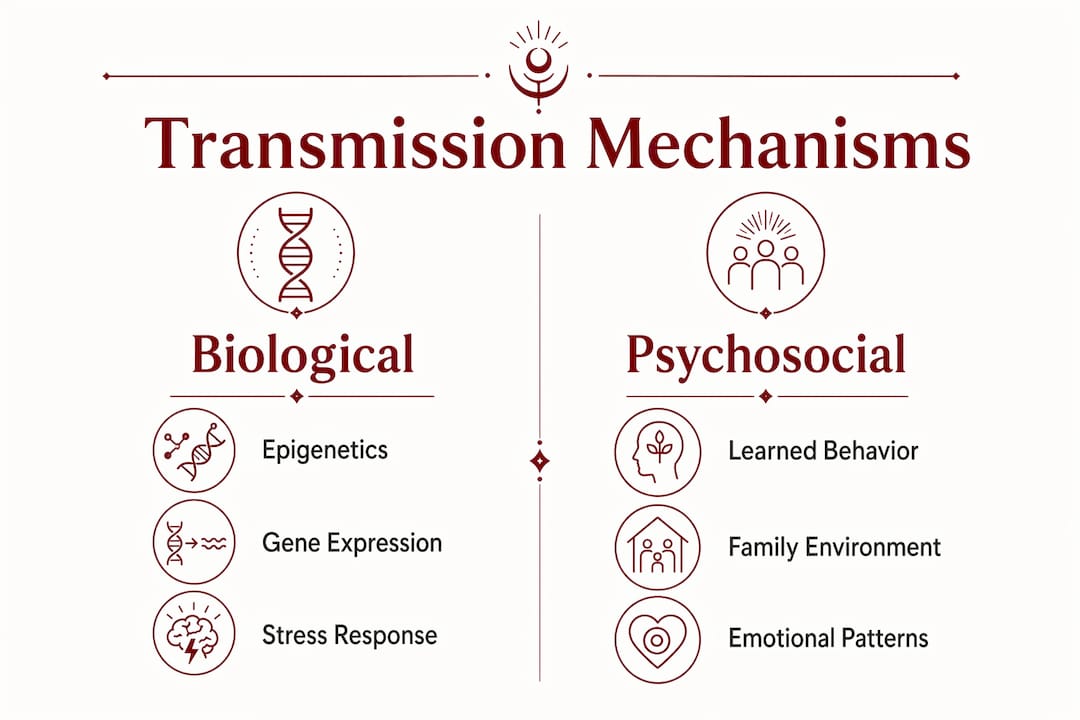
Generational trauma transmits through two distinct mechanisms: biological inheritance and social learning. Neither operates in isolation. Together, they create a self-reinforcing cycle that can persist for decades without conscious intervention.
The epigenetic mechanism
Trauma physically changes how genes are expressed in the body. Specifically, epigenetic modifications can switch stress-response genes like NR3C1 and FKBP5 on or off, altering how descendants respond to stress, anxiety, and threat. This means a grandmother who survived severe poverty or violence may pass a heightened stress-response system to her grandchildren, even if those grandchildren never experience poverty or violence themselves. The body carries the memory even when the mind does not.
Research published in Frontiers in Psychiatry confirms that trauma exposure coordinates both molecular and psychosocial processes across interacting generational systems. This is not metaphor. It is measurable biology. Descendants of trauma survivors show statistically higher vulnerability to anxiety disorders, depression, and stress dysregulation compared to the general population.
The psychosocial mechanism
Biology alone does not explain the full picture. Children raised by traumatized parents absorb behavioral templates through daily observation. A parent who copes with stress through alcohol teaches a child that alcohol is the appropriate response to stress. A parent who responds to conflict with silence teaches a child that silence is safety. These lessons become automatic, operating below conscious awareness well into adulthood.
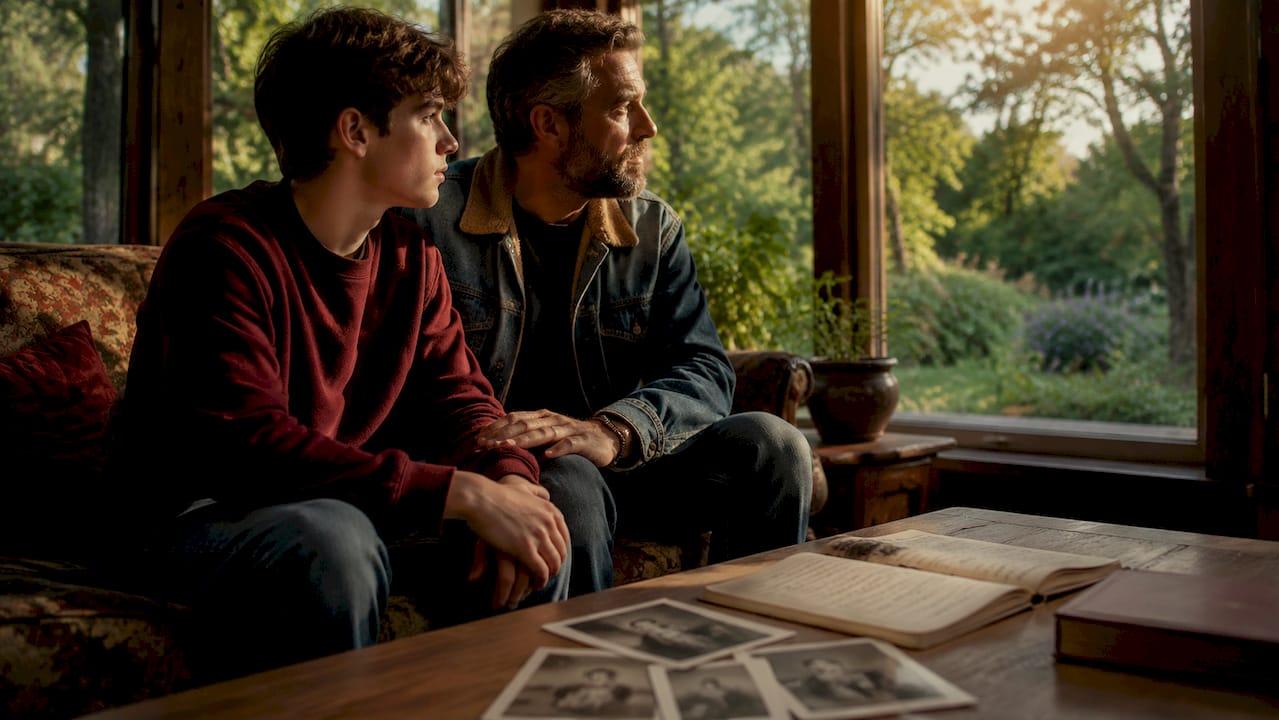
Pro Tip: If you find yourself reacting to situations in ways that feel older than your own experience, that reaction may belong to a parent or grandparent. Naming it as inherited, rather than personal, is the first step toward changing it.
| Mechanism | How it transmits | What it affects |
|---|---|---|
| Epigenetic (biological) | Gene expression changes in stress-response genes | Anxiety, depression, stress reactivity |
| Psychosocial (behavioral) | Modeled behavior, attachment patterns, family rules | Coping strategies, relationship styles, emotional regulation |
| Environmental | Poverty, discrimination, systemic disadvantage | Access to resources, chronic stress exposure |
How learned behaviors and family environments keep curses alive
The psychological transmission of intergenerational issues is often more visible than the biological one, yet it is just as powerful. Attachment theory, developed by John Bowlby and expanded by researchers like Mary Main, establishes that a parent’s unresolved trauma directly shapes the attachment style of their child. A parent who has not processed grief or fear cannot consistently provide the emotional safety a child needs. That child then grows up with an insecure attachment style, which affects every relationship they form as an adult.
Family secrets and silence about trauma create more anxiety in children than the trauma itself. When a family refuses to speak about an alcoholic grandfather, a suicide, or a history of abuse, children sense the weight of that silence without understanding its source. They fill the vacuum with shame, fear, or a vague sense that something is wrong with them. That unacknowledged grief becomes its own inheritance.
Common patterns that sustain inherited family problems include:
- Addiction cycles: A child raised in a home where substance use is the primary stress response learns to replicate that response under pressure.
- Abuse patterns: Children who witness or experience abuse are statistically more likely to enter abusive relationships as adults, not because they want to, but because the pattern feels familiar and therefore normal.
- Financial self-sabotage: Families with a history of poverty often develop unconscious beliefs that wealth is dangerous, undeserved, or temporary. These beliefs drive financial decisions that recreate scarcity.
- Emotional unavailability: Parents who were never taught to name or process emotions raise children who also cannot access their emotional lives, perpetuating disconnection across generations.
Environmental factors compound all of these. Systemic poverty, racial discrimination, and chronic community stress create conditions where trauma is continuously renewed rather than resolved. Healing becomes harder when the environment keeps generating the original wound.
Pro Tip: Write down three behavioral patterns you recognize in both yourself and a parent. Not to assign blame, but to identify the specific cycle you are working to change. Vague healing attempts are far less effective than targeted, specific interventions.
Spiritual and biblical perspectives on generational curses
Many people first encounter the concept of generational curses through religious or spiritual frameworks rather than psychology textbooks. The most cited biblical reference is Exodus 34:7, in which God speaks of “visiting the iniquity of the fathers upon the children unto the third and fourth generation.” This passage has generated centuries of theological debate.
Biblical scholars clarify that “visiting iniquity” describes natural consequences, not supernatural condemnation. A father’s alcoholism naturally affects his children. A mother’s unresolved rage shapes her daughter’s emotional world. Scripture does not teach that individuals are spiritually bound by their ancestors’ sins. It observes that harmful patterns have consequences that ripple outward. The distinction matters enormously for healing. Condemnation closes doors. Consequences can be interrupted.
Faith and grace provide the theological framework for freedom from these cycles. Deliverance ministry within Christian traditions focuses on prayer, confession, and renouncing ancestral patterns as a path to liberation. West African spiritual traditions, which form the foundation of Motherodessa’s practice, approach the same problem through ritual, ancestral communication, and energetic clearing. Both frameworks share a core conviction: the past does not have to define the future.
| Framework | View of generational curses | Path to freedom |
|---|---|---|
| Biblical / Christian | Natural consequences of sin, not unbreakable spiritual bonds | Faith, repentance, personal accountability, grace |
| West African spiritual | Ancestral energy and unresolved spiritual debts affecting descendants | Ritual, ceremony, ancestral healing, energetic clearing |
| Psychological / scientific | Epigenetic and behavioral transmission of trauma | Therapy, awareness, intentional behavioral change |
Reframing “curses” as “patterns” offers a more practical healing roadmap regardless of your spiritual tradition. The word “curse” implies powerlessness. The word “pattern” implies something that can be identified, studied, and changed.
How to break family curses and heal generational trauma
Breaking inherited family problems requires a specific, sustained approach. Vague intentions to “be different” rarely interrupt cycles that have operated for generations. The following steps reflect what research and clinical practice identify as most effective.
- Identify the exact pattern. Name the specific behavior, belief, or emotional response you are working to change. “My family has anger issues” is too broad. “I shut down emotionally when I feel criticized, exactly as my father did” is specific enough to work with.
- Engage trauma-informed therapy. Attachment-focused and cognitive-behavioral therapies significantly reduce the long-term effects of generational trauma. Therapists trained in intergenerational trauma can help you identify subconscious family rules that drive your behavior without your awareness.
- Break the silence. Open, honest family conversations about painful history reduce the anxiety that silence creates. You do not need to relitigate every wound. You need to acknowledge that the wound exists.
- Rewire through consistent practice. Healing generational trauma is a lengthy process requiring months or years of re-parenting yourself and rewiring neural pathways. Expect setbacks. Measure progress in months, not weeks.
- Incorporate spiritual and ritual healing. For many people, psychological work alone does not address the full weight of inherited suffering. Spiritual ceremonies, ancestral healing rituals, and practices rooted in traditions like those Motherodessa offers can provide a dimension of release that talk therapy cannot replicate. Exploring ancestral roots for healing is a documented complement to psychological work, not a replacement for it.
Pro Tip: Individuals can interrupt inherited cycles through conscious awareness and intentional change. Agency is not a luxury. It is the mechanism of healing.
What 40 years of working with families has taught me
The heaviest thing I see people carry is not their own pain. It is pain they inherited from someone who never had the tools to process it. Clients come to me carrying grief that is not theirs, anxiety that arrived before they were old enough to name it, and a bone-deep sense that something in their family line is broken. They are right that something is broken. They are wrong that it cannot be fixed.
Science now confirms what spiritual traditions have known for centuries: emotions can be inherited from parents who could not process their own trauma. A child does not need to be told about a parent’s war trauma or childhood abuse to feel its weight. The body knows. The nervous system knows. And the nervous system can be retrained.
What I have found, working across both spiritual and psychological frameworks, is that neither approach alone is sufficient for most people. Therapy without spiritual grounding can feel cold and mechanical. Spiritual practice without psychological awareness can become avoidance dressed in ritual. The families I have seen truly heal are the ones who bring both tools to the table. They understand the biology, they do the therapeutic work, and they honor the spiritual dimension of what they are carrying. That combination is not weakness. It is the most courageous thing a person can do.
Do not let the weight of your family’s history convince you that you are its prisoner. You are its turning point.
— Psychic
Ready to break what has been passed down to you?
Understanding why these patterns repeat is powerful. Acting on that understanding is where real change begins. Motherodessa has spent over 40 years helping individuals and families address the spiritual roots of inherited suffering through personalized rituals grounded in West African healing traditions.

Whether you are carrying patterns of financial struggle, broken relationships, or emotional pain that feels older than your own life, Motherodessa’s spiritual healing services offer a tailored path forward. For those specifically seeking to address inherited family patterns, the generational curse breaking ceremony is designed to address the ancestral roots of recurring harm. Every ritual is personalized. No two situations are treated the same.
FAQ
What is the difference between a family curse and generational trauma?
A family curse is the spiritual or cultural term for recurring harmful patterns passed down through a family line. Generational trauma is the clinical term for the same phenomenon, explained through epigenetic changes and learned behavior rather than supernatural causes.
Can generational trauma really be passed down biologically?
Yes. Research documents that trauma causes epigenetic modifications in stress-response genes like NR3C1 and FKBP5, increasing descendants’ vulnerability to anxiety and depression even without direct trauma exposure.
How many generations can a family curse last?
Studies document trauma effects across three to four generations through both biological and psychosocial transmission mechanisms. Without conscious intervention, these patterns can persist indefinitely.
What type of therapy works best for breaking generational patterns?
Attachment-focused therapy and trauma-informed cognitive-behavioral therapy are the most researched approaches. They identify subconscious family rules and help regulate emotional patterns inherited from caregivers.
Can spiritual healing complement psychological therapy for generational curses?
Yes. Spiritual ceremonies and ancestral healing rituals address dimensions of inherited suffering that talk therapy alone may not reach. Many practitioners and clients find the two approaches reinforce each other when used together.
Key takeaways
Family curses repeat across generations because trauma transmits through both epigenetic biological changes and learned psychosocial behaviors, creating self-reinforcing cycles that require deliberate, sustained effort to interrupt.
| Point | Details |
|---|---|
| Dual transmission mechanism | Generational trauma spreads through both gene expression changes and modeled family behavior. |
| Silence amplifies harm | Unspoken family trauma creates more anxiety in children than the original trauma itself. |
| Spiritual and scientific views align | Both frameworks agree that inherited patterns can be identified and broken through intentional action. |
| Specific intervention beats vague intent | Naming the exact behavioral pattern you are changing produces far better results than general healing goals. |
| Healing takes sustained time | Rewiring neural pathways and breaking generational cycles requires months to years of consistent effort. |