
Authentic West African–rooted spiritual practice is a divination-guided, lineage-backed system of personalized ritual work, performed by trained practitioners such as a Babalawo or Iyanifa, that addresses concrete needs like love, money, protection, curse removal, and personal transformation. Motherodessa is one such practitioner, with extensive experience delivering custom ceremonies, spells, and readings rooted in this tradition. The practice is not decorative or symbolic in a vague sense. It operates as a practical knowledge system: Ifá divination diagnoses the problem first, then the ritual prescription follows. Balance, agency, and measurable life change are the goals.
Key Takeaways
Authentic West African–rooted spiritual practice is a divination-first, lineage-backed system that diagnoses your situation before prescribing any ritual, delivering written reports and aftercare for concrete needs like love, money, protection, and curse removal.
| Point | Details |
|---|---|
| Divination comes first | A legitimate practitioner diagnoses with Ifá before designing any ritual prescription. |
| Lineage signals authenticity | Babalawo or Iyanifa titles, earned through formal initiation, are the core credibility markers. |
| Written deliverables are standard | Expect a divination report, ritual plan, offerings list, and defined aftercare from any credible provider. |
| Red flags are specific | Guaranteed instant results, pressure to buy more rituals, and skipped divination are clear warning signs. |
| Motherodessa fits the checklist | 40+ years of experience, divination-first methodology, written reports, and strict confidentiality. |
Table of Contents
- Why does West African ritual work exist, and what does it actually do?
- How do you recognize authentic practice before you hire?
- What questions should you ask before hiring a practitioner?
- What does the process actually look like, and what will you receive?
- What ethical problems should you watch for?
- How does Motherodessa meet the authenticity checklist?
- What actually makes ritual work meaningful
- Motherodessa’s services and how to get started
- Sources
Why does West African ritual work exist, and what does it actually do?
The functional purpose of these traditions is not mysticism for its own sake. Ritual work in the Yoruba-rooted tradition exists to restore balance when life is disrupted, remove blockages that prevent progress, and create conditions for specific outcomes: a relationship repaired, a financial path cleared, a curse broken, a business protected.
Divination sits at the center of all of it. Ifá, the sacred corpus associated with the deity Òrúnmìlà, functions as the diagnostic foundation. Before any ritual is designed, the divination session identifies what is actually happening in the client’s situation. Anthropological fieldwork in Benin confirms that Ifá reframes contemporary problems into traditional spiritual idioms, allowing practitioners to offer practical, transformation-focused ritual prescriptions rather than generic remedies.
The core goals of genuine ritual work include:
- Restoring balance after loss, conflict, or spiritual disruption
- Creating agency by giving the client a clear, actionable ritual path
- Removing blockages tied to ancestral patterns, curses, or negative spiritual forces
- Targeting specific outcomes in love, money, protection, or personal transformation
Long-term urban fieldwork across West African cities shows divination remains a trusted, trans-ethnic system that affirms personal agency in modern life. That finding matters for anyone hiring today: the method is not a relic. It is a living, practical knowledge system.
How do you recognize authentic practice before you hire?
Authenticity in this tradition is observable. You do not have to take a practitioner’s word for it. Several concrete signals separate genuine practice from imitation.
Lineage and initiation are the first check. A legitimate Ifá practitioner holds the title of Babalawo (male) or Iyanifa (female), earned through formal initiation and years of training in the Odù Ifá corpus. Ethnographic research confirms that the oral corpus and initiation practices are the central authenticity markers in this tradition, because the knowledge cannot be self-taught from books alone.
Divination-based diagnosis is the second signal. A real practitioner diagnoses before prescribing. They do not offer a ritual package before understanding your situation. The divination session comes first; the ritual design follows from what it reveals.
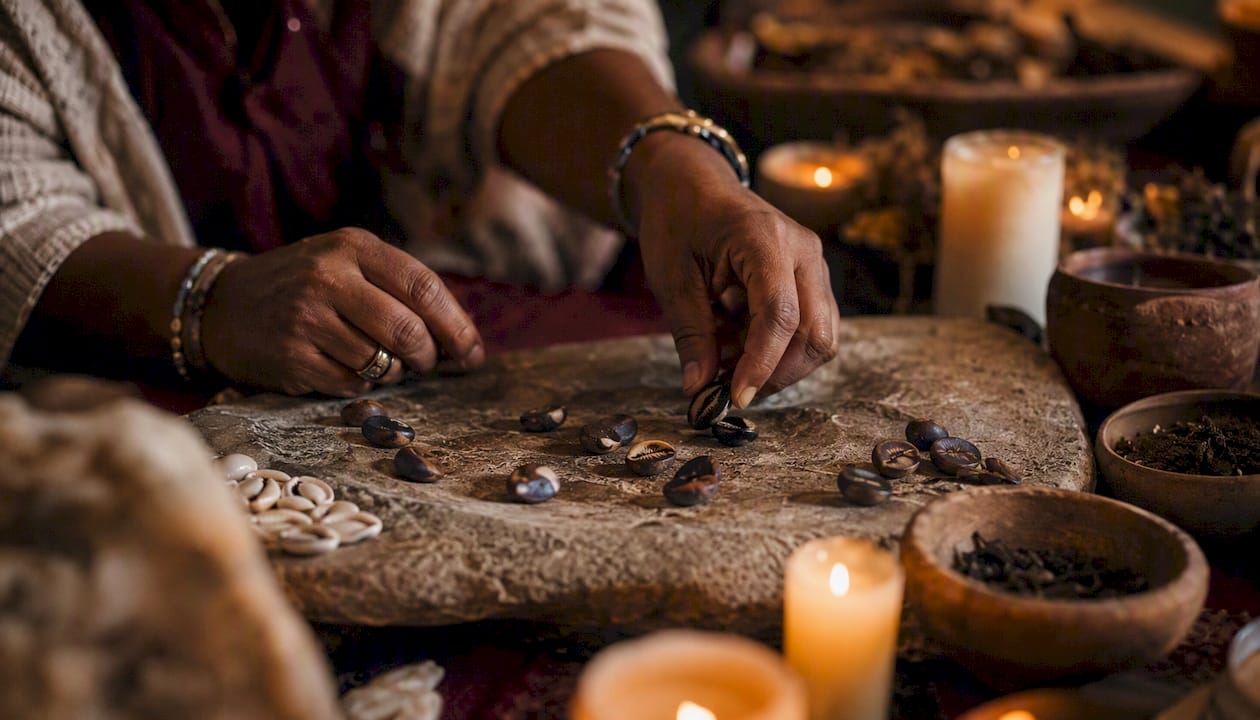
Transparency and documentation matter too. Authentic providers deliver a written divination report, a clear list of ritual steps or offerings, and defined communication windows for follow-up. Confidentiality is standard. If a practitioner refuses to explain what they found in divination or what the ritual will involve, that is a problem.
Culturally consistent materials round out the picture. Ceremonial elements, offerings, and ritual objects should align with the tradition being practiced. Vague references to “energy work” or generic “spiritual cleansing” with no cultural grounding are a warning sign.
Pro Tip: Ask the practitioner to explain the logic behind the ritual prescription they recommend. An authentic Babalawo or Iyanifa can trace the prescription back to the Odù that appeared in divination. If they cannot, or will not, the diagnosis may not have happened.
What questions should you ask before hiring a practitioner?
Use this sequence when evaluating anyone you are considering hiring.
- Pre-contact research. Search for the practitioner’s name alongside their lineage claims. Look for recorded testimonials, published client experiences, and any documentation of their training or initiation.
- Intake conversation. Ask directly: What is your lineage? Who initiated you? What divination method do you use? What will you diagnose, and what will you deliver in writing?
- Payment and deliverables. Confirm what you receive: a written divination report, a ritual plan, an offerings list, and defined aftercare steps. Confirm the timeline before paying.
- Aftercare. Ask what follow-up looks like. A practitioner who disappears after payment is a red flag.
Sample questions to ask during initial contact:
- “Can you describe your initiation and lineage?”
- “Will I receive a written report from the divination session?”
- “What does the ritual prescription include, and why does it address my situation?”
- “What is the realistic timeline for this work?”
- “What aftercare or follow-up do you offer?”
Red flags to avoid:
- Guaranteed instant results or promises of a specific outcome within a fixed number of days
- Pressure to purchase additional rituals before the first is complete
- Refusal to explain the divination method or what it found
- Coercive framing, such as claiming they can “bend someone’s will” against that person’s consent
- No written plan, no deliverables, no aftercare
Strong providers emphasize fit, clear intake, realistic framing, and integration rather than dramatic promises. Trustworthy healers conduct a diagnostic assessment before prescribing rituals, avoid coercive claims, and pair spiritual work with practical guidance.
What does the process actually look like, and what will you receive?
A legitimate engagement follows a consistent arc regardless of the specific ritual type.
Typical process flow:
- Intake and divination — the practitioner gathers your situation details and performs the diagnostic divination session
- Ritual design — the prescription is built from what divination reveals, tailored to your specific need
- Procurement and preparation — ceremonial materials and offerings are gathered or prepared
- Performance and delivery — the ritual is performed; you receive a written report and ritual documentation
- Integration and aftercare — follow-up guidance on what to do, observe, or avoid in the days after
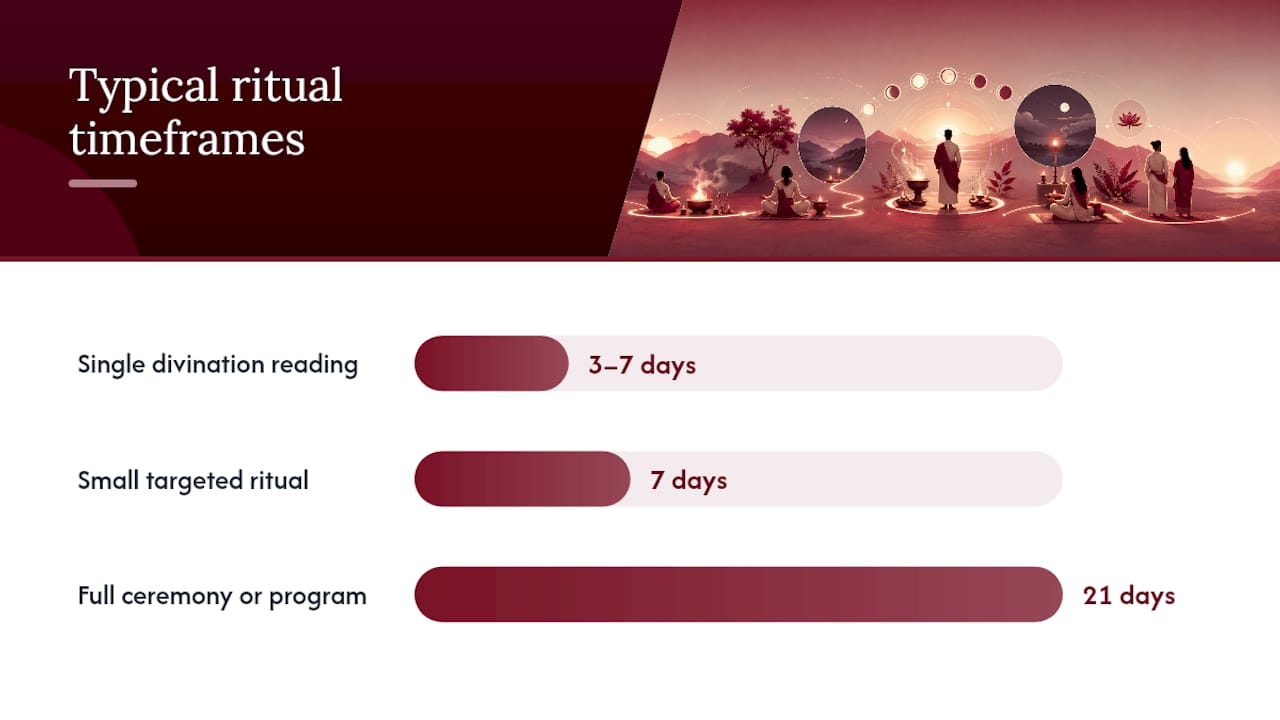
| Ritual type | Typical timeframe |
|---|---|
| Single divination reading | 3–7 days from intake to delivery |
| Small targeted ritual (love, money, protection) | 7 days |
| Full ceremony or multi-step program | 21 days |
Common deliverables include a written divination report, a ritual instructions document, an offerings list, defined aftercare steps, and a communication window for questions. Digital report-based services, like those Motherodessa offers, deliver these as written documents. In-person ceremonies involve additional preparation time and material costs.
Realistic outcome framing: ritual work creates conditions and removes obstacles. It does not override free will or guarantee a specific result by a specific date. Practitioners who claim otherwise are not operating within the tradition’s own ethical framework. For a detailed look at how multi-step ritual processes unfold, the stages involved are worth reviewing before you commit.
What ethical problems should you watch for?
Commercialization and cultural dilution have introduced real problems into the market for West African ritual services. Knowing what distorted practice looks like protects you.
Foreign influence and the pressure to sell at volume can strip Ifá-based services of their diagnostic rigor. When divination is skipped and a practitioner jumps straight to a ritual package, the prescription has no foundation. The result is a generic service dressed in traditional language.
Ethical principles in legitimate practice include:
- Consent — no ritual targeting another person without their knowledge should be framed as ethically neutral
- Non-coercion — a practitioner should never pressure you to buy more services to “complete” work that was never properly diagnosed
- Lineage respect — the practitioner should be able to name their tradition and training, not claim vague “ancestral gifts”
- Privacy and confidentiality — your situation and personal details stay between you and the practitioner
A common misuse pattern: a practitioner performs a cold reading (general observations framed as specific divination findings), then uses the emotional response to sell escalating ritual packages. Each new problem “discovered” requires another purchase. This is manipulation, not divination.
If a practitioner claims to have diagnosed a curse on you within the first two minutes of contact, without a formal divination session, treat that as a sales tactic, not a spiritual finding.
How does Motherodessa meet the authenticity checklist?
Motherodessa maps directly to the hiring criteria above. The methodology is divination-first: every service begins with a diagnostic reading before any ritual is designed. That structure is not a marketing claim; it is the operational sequence that distinguishes genuine practice from generic spiritual services.
The trust signals Motherodessa offers:
- 40+ years of practitioner experience across love, money, protection, curse removal, and personal transformation work
- Documented methodology — divination-based diagnosis followed by a written ritual plan and aftercare guidance
- Written deliverables — clients receive a divination report and ritual documentation, not just a verbal conversation
- Client testimonials reflecting transformative outcomes, including reunited couples and broken generational curses
- Privacy and customization — no two rituals are identical, and client situations are held in strict confidence
Her long experience is not a generic credential. In a tradition where knowledge is transmitted through lineage and practice, active work represents a depth of exposure to the Odù corpus that cannot be replicated by self-study. For clients interested in how cultural roots strengthen ritual work, that depth is the difference between a tailored prescription and a generic remedy.
What actually makes ritual work meaningful
The question people rarely ask before hiring is not “will this work?” It is “what am I actually asking for?” Ritual work in the West African tradition is not a shortcut. It is a structured process of diagnosis, prescription, and integration. The divination session reveals what is actually happening, not just what the client fears or hopes. That distinction changes everything about how the work is designed.
Realistic expectations matter as much as the ritual itself. A ceremony can clear a path; it cannot walk it for you. The integration period, what you do after the ritual, is where the change takes root.
Motherodessa’s services and how to get started
Motherodessa offers custom rituals, divination reports, ceremonies, spells, charms, and readings for love, money, protection, curse removal, and personal or business transformation, all delivered as written digital reports with aftercare guidance. Every engagement begins with a diagnostic divination session, so the ritual prescription fits your actual situation rather than a generic template.
For readers ready to address a specific need, the spiritual healing and clarity collection covers the full range of diagnostic and ritual services. Relationship-focused needs, including reconciliation and love repair, are served through the love and relationships collection. Business and financial work is available through the money and abundance collection.
All services are handled with strict confidentiality. Your situation is never shared, and every ritual is built around your specific circumstances. The right first step is the diagnostic divination reading, which gives you a written report and a clear picture of what the work involves before you commit to a full ritual program.
Sources
- F%C3%A1_Divination_Well_being_and_Coolness_in_B%C3%A9nin_West_Africa
- How to Choose the Right Shamanic Session for Your Healing Journey - The Reporter Desk
- 7 Ways to Choose a Trustworthy Spiritual Healer