
Client history is the foundation of effective ritual design, determining which symbols, objects, and spiritual interventions will actually resonate with a specific person. Without understanding a client’s background, a practitioner is guessing. With it, every element of a ritual can be chosen with purpose. The role of client history in ritual design extends from the first intake conversation through every symbolic choice made during the ceremony itself. Motherodessa’s 40-plus years of experience in West African-rooted spiritual healing demonstrate exactly why no two rituals should ever look the same.
How client history shapes personalization in ritual design
Personalization in spiritual ritual begins with a structured intake process that captures far more than a client’s presenting concern. Intake questions cover a person’s history, family configuration, symptoms, and existing spiritual practices to customize healing rituals. This means a practitioner learns whether a client grew up in a faith tradition, experienced spiritual trauma, or carries unresolved ancestral grief before a single ritual element is selected. That context changes everything.
The impact of client background shows up in concrete choices. A client who grew up with Catholic imagery may respond powerfully to candle-based rituals. A client with a history of financial instability may need a ritual that addresses both the spiritual and psychological weight of scarcity. Psychotherapy practitioners integrate a client’s spiritual comfort and preferences to co-create ritual healing plans, treating the intake as a collaboration rather than a checklist.
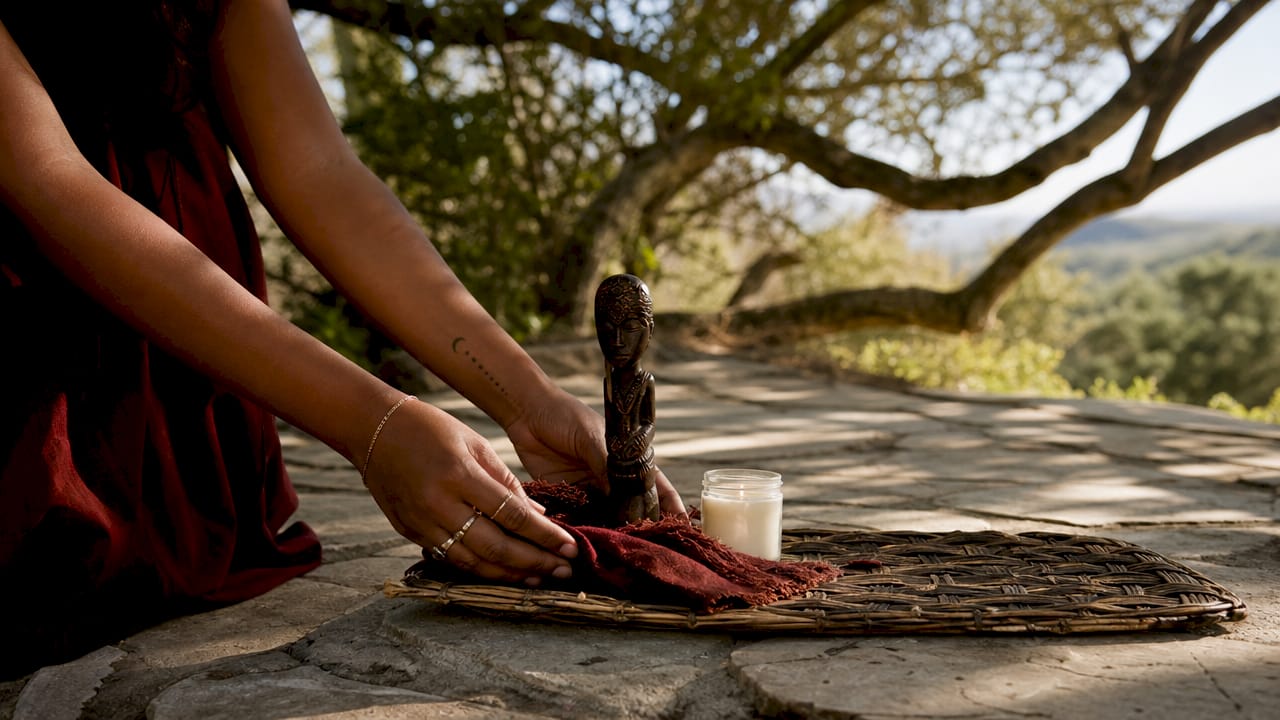
Client history significance also surfaces in what practitioners must avoid. A client who has had negative experiences with certain symbols, religious institutions, or spiritual figures needs those elements removed or substituted. Ignoring that history does not just reduce efficacy. It can retraumatize.
Key elements a thorough intake should capture include:
- Family configuration and ancestral relationships, including estrangements or losses
- Existing spiritual practices and comfort level with different traditions
- Significant life disruptions, such as grief, financial collapse, or relationship trauma
- Cultural background and religious upbringing, which shape symbolic resonance
- Previous ritual or therapeutic experiences and their outcomes
Pro Tip: Ask clients to bring one object that feels spiritually significant to them before the first session. What they choose tells you more about their symbolic world than any intake form question.
Standard rituals vs. client-history-informed rituals
The difference between a generic ritual and a client-centered one is not just depth. It is effectiveness. A standard ritual applies the same structure, symbols, and sequence to every person regardless of their background. A client-history-informed ritual treats those same structural elements as starting points, not fixed rules.
| Feature | Standard ritual | Client-history-informed ritual |
|---|---|---|
| Symbol selection | Fixed, tradition-based | Drawn from client’s personal and cultural references |
| Object use | Prescribed materials | Substitutions made based on client’s meaningful artifacts |
| Intention setting | General (love, protection, abundance) | Specific to client’s named circumstances and history |
| Practitioner role | Executor of tradition | Collaborator and interpreter of client narrative |
| Outcome focus | Broad spiritual alignment | Targeted transformation tied to client’s actual situation |
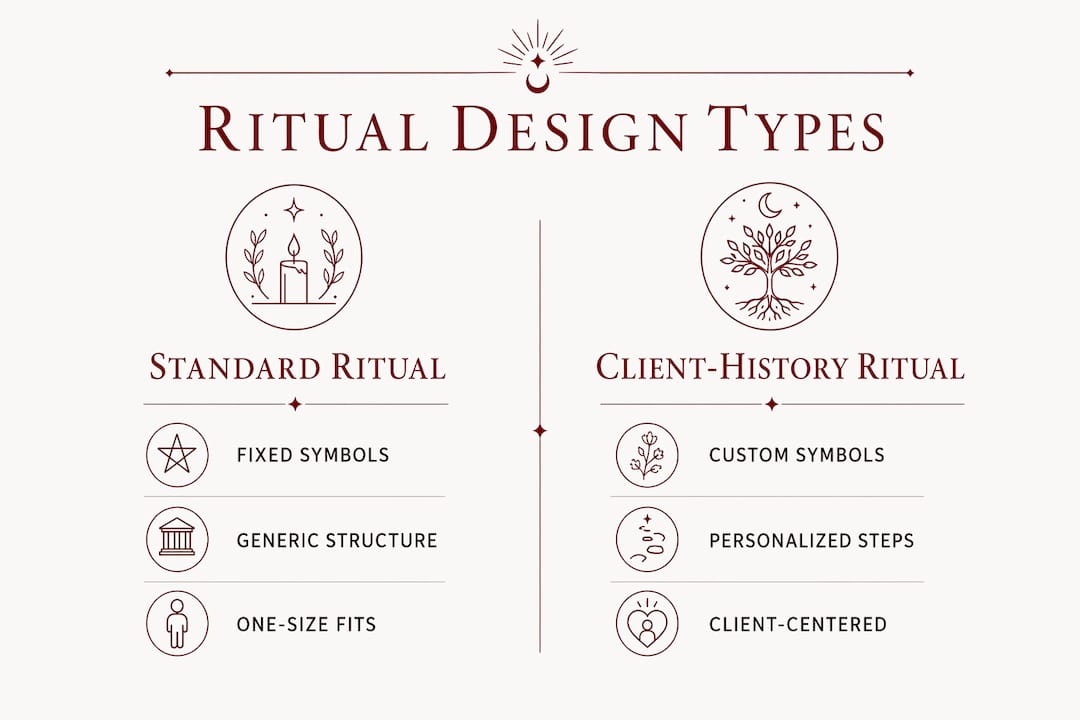
The customized rituals outperform standard practices precisely because they speak to a person’s lived reality. A protection ritual designed for someone who has experienced workplace harassment looks different from one designed for someone navigating a difficult family dynamic. Both need protection. Neither needs the same ritual.
Cultural influences in rituals add another layer. A client from a Yoruba lineage may find certain Orisha invocations deeply activating. A client with no connection to that tradition may need those same spiritual forces expressed through different symbolic language. The practitioner’s job is to hold the spiritual core constant while adapting the form.
Practical considerations in collecting and applying client history
Gathering client history for ritual design requires both structure and sensitivity. Faith-counseling intake forms are designed to collect spiritual history and tailor faith-based interventions, covering everything from current faith practice to spiritual crises. Pastoral care intake forms go further, including distinct sections for medical history, prior counseling outcomes, and any involvement with occult practices. These categories exist because they define what is safe and appropriate for a given client.
Clinical spiritual assessments must precede intervention selection to avoid guesswork and improve outcomes. This is not bureaucratic caution. It is the difference between a ritual that heals and one that inadvertently reopens wounds. A client with a history of psychosis, for example, may need a gentler, more grounded ritual approach than someone without that background.
Best practices for collecting and applying client history include:
- Use written intake forms before the first session so clients can reflect privately
- Ask open-ended questions about spiritual experiences rather than yes/no checkboxes
- Create space for clients to name what they do not want included in any ritual
- Cross-reference spiritual history with emotional and relational history for patterns
- Revisit history at key points in a longer ritual process, since circumstances change
Common pitfalls to avoid:
- Assuming cultural background predicts spiritual preference
- Collecting history without explaining how it will be used
- Overloading a ritual with personal symbolism until the structure collapses
- Treating intake as a one-time event rather than an ongoing conversation
Pro Tip: When a client shares a painful memory during intake, note the emotional charge, not just the event. Rituals that address the feeling beneath the story tend to produce deeper shifts than those targeting the story itself.
How client circumstances drive ritual substitutions and symbolic adaptation
Ritual adaptation is not a compromise. It is the mechanism by which a tradition stays alive and relevant across generations and individual circumstances. Rituals function as living memory systems shaped dynamically by client history, preserving symbolic grammar while adapting to current social circumstances. This means the core structure of a ritual holds its power even when specific elements are replaced.
The most documented form of adaptation is substitution. An ancestral spirit ritual was adapted by using a mother’s clothing as a substitute for her physical presence while keeping all core symbols intact. The ritual still worked because the symbolic function, honoring and invoking the ancestor, remained unchanged. The object changed. The meaning did not.
The table below summarizes common substitution types and their symbolic purpose in client-centered ritual design:
| Substitution type | Original element | Client-driven replacement | Symbolic function preserved |
|---|---|---|---|
| Ancestral representation | Physical presence of family member | Clothing, photograph, or heirloom | Ancestral connection and memory |
| Sacred space | Traditional ritual location | Client’s home or meaningful place | Grounding and safety |
| Offering material | Prescribed herbs or foods | Culturally familiar equivalents | Gratitude and spiritual exchange |
| Invocation language | Traditional chant or prayer | Client’s native language or personal prayer | Intention and spiritual alignment |
| Symbolic color | Tradition-specific hue | Color meaningful to client’s personal history | Emotional resonance and focus |
Ritual adaptation commonly uses substitution to preserve symbolic function while responding to a client’s lived realities without altering core ritual structure. This is why the importance of client narrative cannot be overstated. A practitioner who knows that a client’s grandmother always wore blue can incorporate that color into a healing ritual and transform a generic element into a deeply personal anchor.
Memory incorporation works the same way. When a client’s personal history is woven into the ritual’s symbolic fabric, the ritual stops being something done to them and becomes something done with them. That shift in agency is itself part of the healing.
Key takeaways
Effective ritual design requires client history as its primary input, not an optional supplement.
| Point | Details |
|---|---|
| History precedes ritual selection | Systematic intake of spiritual, personal, and family history must happen before any ritual is chosen or designed. |
| Substitution preserves meaning | Replacing ritual elements with client-specific objects maintains symbolic function while deepening personal resonance. |
| Intake forms are design tools | Structured forms capturing medical, counseling, and spiritual data define what rituals are safe and appropriate for each client. |
| Cultural context shapes symbolism | A client’s cultural and religious background determines which symbols activate meaning and which fall flat. |
| Collaboration improves outcomes | When practitioners treat intake as a co-creative conversation, clients engage more fully and rituals produce stronger results. |
Why client history is the most underused tool in spiritual practice
After working in this space for decades, the pattern I see most often is not bad ritual design. It is incomplete intake. Practitioners who rush past the history-gathering phase because they trust their intuition are leaving the most powerful design information on the table.
The transformative potential of weaving client stories into rituals is not theoretical. I have seen a generational curse broken not by a more powerful ritual, but by a more specific one. The practitioner finally asked the right question about the client’s grandmother, learned about a betrayal that had echoed through three generations, and built the ritual around that specific wound. That is what client-centered ritual practices actually look like in practice.
What I find most practitioners resist is the vulnerability of admitting they do not know enough yet. Asking detailed questions about a client’s past can feel like it undermines authority. The opposite is true. The more precisely you understand someone’s history, the more precisely you can design something that reaches them. Generic rituals produce generic results. Specific rituals produce specific healing.
The spiritual guidance best practices that consistently produce results all share one feature: they treat the client’s story as the primary source material, not a background detail.
— Psychic
Explore personalized rituals built around your story
Motherodessa has spent over 40 years designing rituals that begin with one question: what has your life actually looked like? Every spiritual healing session starts with a thorough understanding of your personal history, your cultural background, and the specific circumstances you are navigating right now. No two clients receive the same ritual because no two lives are the same. Whether you are working through a relationship rupture, a financial pattern that keeps repeating, or a spiritual block you cannot name, Motherodessa builds the ritual around your reality. Explore the full custom ritual offering and take the first step toward healing that actually fits your life.
FAQ
What is the role of client history in ritual design?
Client history defines which symbols, objects, and ritual structures will resonate with a specific person. Practitioners use intake information covering family background, spiritual practices, and life disruptions to customize every element of a ritual.
Why does personal history affect ritual efficacy?
A ritual built around a client’s actual experiences, cultural references, and emotional wounds activates meaning in a way that generic rituals cannot. Effective intake identifies client comfort, disruptions, and symbolic elements to design rituals that produce real outcomes.
How do practitioners gather client history for ritual planning?
Most practitioners use structured intake forms covering spiritual background, medical history, prior counseling, and cultural context. Systematic gathering of religious-spiritual history is a prerequisite for selecting appropriate ritual interventions.
Can ritual elements be changed without losing their meaning?
Yes. Substitution is a recognized and well-documented practice in ritual design. Replacing a prescribed object with a client-specific one, such as a family heirloom or a piece of clothing, preserves the symbolic function while making the ritual personally meaningful.
How does cultural background influence ritual design?
Cultural background shapes which symbols carry weight, which invocations feel authentic, and which materials hold spiritual significance for a client. Practitioners who understand a client’s cultural influences in rituals can select elements that activate genuine resonance rather than borrowed tradition.