
Most people walk into a spiritual guidance session with good intentions and walk out feeling vague. Not because the session failed, but because they never learned the spiritual guidance session best practices that turn a conversation into a genuine breakthrough. Whether you’re working with a spiritual director for the first time or you’ve been in the practice for years, how you prepare, listen, and follow through determines everything. This article gives you a concrete, experience-tested framework for getting real results from every session.
Table of Contents
- Key takeaways
- 1. Spiritual guidance session best practices start before you arrive
- 2. Practice active, contemplative listening during the session
- 3. Establish and protect ethical boundaries
- 4. Reflect and journal between sessions
- 5. Choose a spiritual guide who fits your actual needs
- 6. Use conscious spiritual practices to deepen each session
- What I’ve learned about patience and real spiritual growth
- Deepen your spiritual work with Motherodessa
- FAQ
Key takeaways
| Point | Details |
|---|---|
| Prepare before every session | Define your intentions and quiet your mind before arriving to maximize focus and depth. |
| Listen more than you speak | Contemplative listening and shared silence open doors that advice-seeking closes. |
| Protect your autonomy | Healthy boundaries keep the guide in a supportive role without creating dependency. |
| Reflect and journal between sessions | Post-session writing consolidates insights and reveals patterns you’d otherwise miss. |
| Choose your guide carefully | Compatibility, values alignment, and professional integrity matter more than credentials alone. |
1. Spiritual guidance session best practices start before you arrive
The single biggest mistake seekers make is showing up unprepared. You wouldn’t walk into a job interview without thinking about what you want to say. A spiritual guidance session deserves the same respect.

Start by defining one or two specific intentions for the session. Not vague wishes like “I want to feel better,” but focused questions: “Why do I keep avoiding this decision?” or “What is blocking my sense of peace right now?” Written intentions create a container for the conversation.
From a preparation standpoint, consider these steps:
- Spend 10 to 15 minutes in meditation or quiet prayer before the session
- Turn off notifications and find a private, comfortable space if meeting remotely
- Review any notes from your last session to identify threads worth continuing
- Write down any dreams, moments of clarity, or emotional shifts since your last meeting
Pro Tip: Set a timer for five minutes and free-write your current emotional state before the session. This clears mental clutter and gives your guide something real to work with from the first minute.
Sessions typically run 50 to 60 minutes and are spaced four to six weeks apart. That interval is intentional. It gives you time to live with what surfaces, not just talk about it.
2. Practice active, contemplative listening during the session
Most seekers come to spiritual guidance sessions looking for answers. That instinct, while understandable, actually works against you. The deeper purpose of these sessions is not to receive advice. It’s to notice what’s already moving within you.
“The guide’s role is to help seekers notice God’s movement rather than provide solutions, emphasizing listening over advising.” (Sharp Spiritual Direction)
Experienced spiritual directors prioritize contemplative questioning over advice-giving, using shared silence and trust to encourage deeper self-exploration. This means your job during the session is to stay open, not to perform or arrive at conclusions quickly.
Resist the urge to fill every silence. Silence in a guidance session is not awkward. It’s where the most honest material tends to surface. Let your guide ask the question, and then actually sit with it before responding.
One practical technique: when your guide asks something that catches you off guard, say “Let me sit with that for a moment” before answering. That pause is where real awareness lives.
Pro Tip: If you find yourself giving long, polished answers, you’re probably managing the conversation rather than opening to it. Shorter, messier answers are usually more honest and more useful.
Also worth knowing: spiritual direction does not replace clinical therapy or crisis care. If you’re dealing with severe distress, a licensed mental health professional should be part of your support system alongside your spiritual guide.
3. Establish and protect ethical boundaries
A healthy guidance relationship has clear structure. Without it, the dynamic can drift into emotional dependency or confusion about roles. Knowing the boundaries going in protects both you and your guide.
Here are the key boundary areas to understand:
- Autonomy: A healthy guide avoids becoming the center of your spiritual life. Their goal is to strengthen your direct relationship with the Divine, not to become indispensable.
- Financial fairness: When no fixed fee exists, best practices recommend donating an amount equal to one hour of your own professional earnings. This reflects the value of the work without creating financial strain.
- Confidentiality: Ethical counselors maintain confidentiality except where mandated by law, such as situations involving harm or abuse. Ask about this policy in your first session.
- Fit: If something consistently feels off after several months, trust that signal. Not every guide is right for every seeker.
Ethical spiritual guidance requires clear professional boundaries and avoids any imposition of the guide’s personal values onto the seeker. You should never feel pressured, judged, or pushed toward conclusions that don’t feel authentic to your own experience.
If you sense a boundary issue, name it directly. A skilled guide will welcome that conversation. One who doesn’t is showing you something important.
4. Reflect and journal between sessions
The session itself is only part of the work. What you do in the weeks that follow determines how much of it actually lands.
Mindful reflection and journaling between sessions help consolidate discoveries and promote genuine growth. Think of your journal as a running conversation with yourself about what the sessions are surfacing.
Here is a simple structure to follow between sessions:
- Within 24 hours: Write down the three most significant things that came up. Include any images, phrases, or feelings that stayed with you.
- Week two: Note any moments in daily life that seem connected to what surfaced in the session. Patterns often show up here.
- Week three: Write freely about any resistance you’re noticing. Resistance is usually pointing at something worth exploring.
- Week four: Review your earlier entries and identify one question you want to bring to the next session.
This four-week rhythm keeps the session alive rather than letting it fade into background noise. You’ll also arrive at your next meeting with richer material, which makes the conversation deeper from the start.
5. Choose a spiritual guide who fits your actual needs
Compatibility is not a luxury. It’s a requirement for effective spiritual sessions. A guide who is technically skilled but personally misaligned with your values will slow your growth, not accelerate it.
| What to evaluate | Why it matters |
|---|---|
| Shared or compatible values | Prevents friction over core beliefs and worldview |
| Communication style | Affects how safe you feel being honest |
| Professional background and training | Signals commitment to ethical practice |
| Their own ongoing spiritual practice | Skilled directors engage in their own direction and supervision |
| Initial gut response after meeting | Trusting your intuition after a first meeting is often the clearest signal |
Most guides offer an initial exploratory conversation before committing to an ongoing relationship. Use that meeting fully. Ask direct questions about their approach, their training, and how they handle situations where they disagree with a seeker’s choices.
Choosing a spiritual director involves evaluating personal connection, shared values, and professional integrity. If after three or four sessions something still feels misaligned, it’s appropriate to seek someone else. Switching guides is not failure. It’s discernment in action.
6. Use conscious spiritual practices to deepen each session
Beyond the conversation itself, specific contemplative practices can significantly increase what you get from each meeting. These are not complicated. They are simply intentional.
Consider adding these to your spiritual practice:
- Breath prayer: A short phrase repeated in rhythm with your breathing, used to center yourself before or during a session
- Lectio Divina: A slow, meditative reading of a text that invites personal reflection rather than intellectual analysis. Structured contemplative practices like Lectio Divina can effectively cultivate deeper spiritual awareness.
- Gratitude practice: Spending five minutes daily naming specific things you’re grateful for shifts your awareness toward abundance rather than lack
- Forgiveness work: Bringing unresolved resentment into the session or working through it privately using a structured practice clears space for new insight
- Body awareness: Noticing where you hold tension or ease in your body during the session gives your guide important information and gives you access to wisdom your mind might be avoiding
The goal is not to add more tasks to your day. It’s to cultivate a quality of attention that makes the session feel less like an appointment and more like a continuation of an ongoing inner conversation.
Best practices for guidance evolve with experience. What works in your first year may shift in your second. Stay curious about what’s actually helping rather than loyal to any single method.
What I’ve learned about patience and real spiritual growth
In my experience, the people who get the most from spiritual guidance are not the ones who come in with the most questions. They’re the ones willing to sit with uncertainty long enough to let something genuine emerge.
I’ve seen seekers give up on the process after two or three sessions because it didn’t feel productive yet. What they didn’t know is that the first three to six months often involve real discomfort as trust builds. That discomfort is not a sign something is wrong. It’s a sign something is happening.
The question is almost always more useful than the answer. When I’m in a session and a question lands in a way that creates silence, that’s the moment I pay attention to. Not because the silence is dramatic, but because it means the question touched something real.
My honest take: if you’re treating spiritual guidance like a consultation where you receive advice and leave with a plan, you’re using the wrong model. The work is slower, quieter, and more internal than that. Trust your own instincts about what feels true. Stay committed even when progress feels invisible. Ethical integration of spiritual care with clear boundaries is what makes the transformative potential of these sessions real, not just theoretical.
— Psychic
Deepen your spiritual work with Motherodessa
Applying these best practices in your sessions is powerful. Pairing that inner work with the right energetic support takes it further.
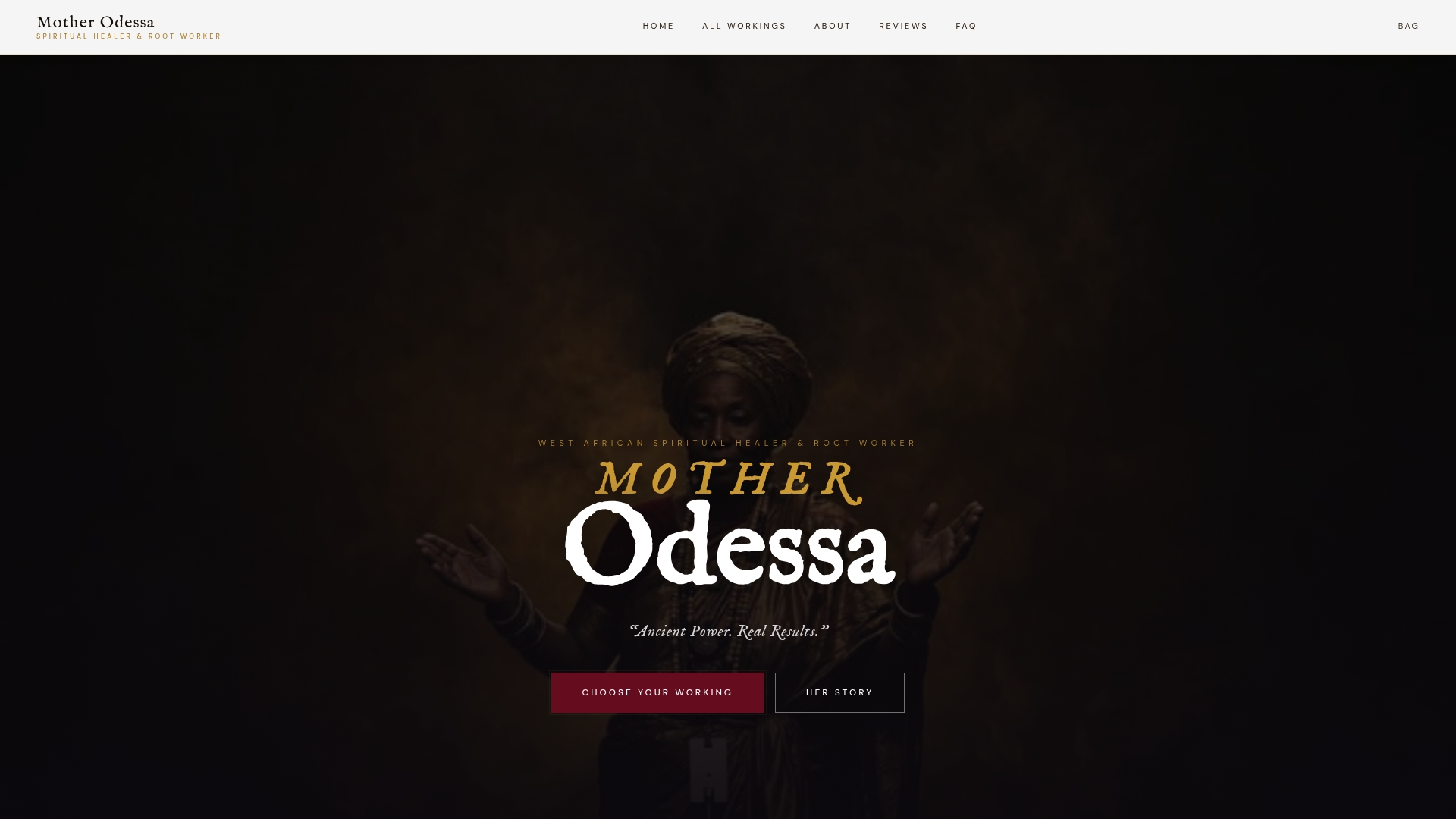
Motherodessa has spent over 40 years helping clients clear what blocks them and open to what they’re seeking. Her Spiritual Cleansing Bath Ritual is designed to remove stagnant energy and renew your spiritual clarity, making it an ideal complement to the reflection work you do between sessions. If abundance or financial clarity has come up in your guidance sessions, the Money & Abundance Ritual offers a personalized, tradition-rooted approach to shifting that energy. Every ritual Motherodessa offers is customized to your specific situation. No two are the same.
FAQ
How long should a spiritual guidance session last?
Sessions typically last 50 to 60 minutes and are scheduled every four to six weeks. This interval allows time for reflection and integration between meetings.
What’s the difference between spiritual direction and therapy?
Spiritual direction focuses on your relationship with the Divine and inner spiritual life, while therapy addresses mental health and psychological wellbeing. Spiritual guidance is complementary to clinical care, not a replacement for it.
How do I know if my spiritual guide is the right fit?
Pay attention to how you feel after the first exploratory conversation. Trusting your intuition after an initial meeting is one of the most reliable indicators of compatibility.
Should I journal between spiritual guidance sessions?
Yes. Writing between sessions helps you track patterns, consolidate insights, and arrive at your next meeting with clearer material. Even brief entries made within 24 hours of a session are highly effective.
What should I do if my guidance relationship doesn’t feel right?
Name the concern directly with your guide first. If the issue persists, it’s appropriate to seek a different guide. Changing guides is a normal part of the discernment process, not a failure.