
Personalized business rituals are intentional, symbolic, repetitive practices designed around the specific values, goals, and identity of an individual or organization. Understanding how personalized business rituals differ from generic routines is the first step toward building practices that actually stick. Generic rituals follow a template. Personalized ones are built from the inside out, shaped by real needs, cultural roots, and the people who will carry them forward. Motherodessa’s approach to spiritual healing reflects this same principle: no two people receive the same ritual because no two situations are the same.
How personalized business rituals differ from generic workplace routines
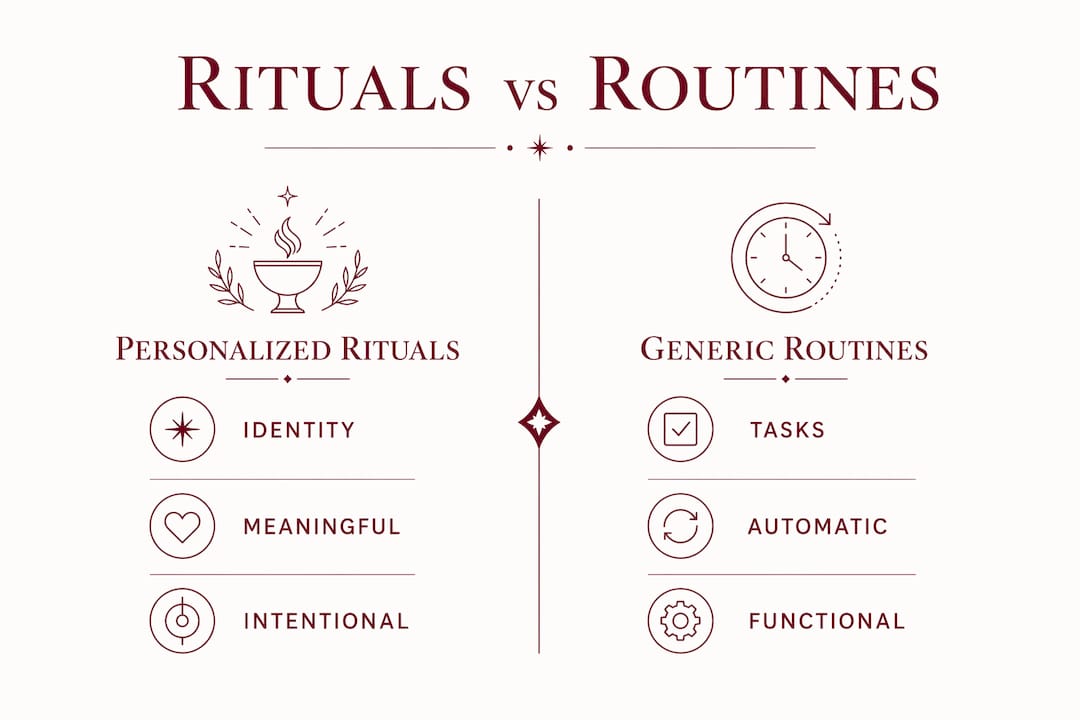
Rituals and routines are not the same thing, even when they look similar from the outside. SHRM defines rituals as repetitive, symbolic practices that codify enterprise values and maintain their form even when leadership changes. That staying power is what separates a ritual from a task. A task ends when the work is done. A ritual continues because it carries meaning.
Routines are behavioral sequences that reduce cognitive load. Habits are automatic responses triggered by context. Rituals are different because they are tied to identity and community, not just efficiency. An annual ethics pledge is a ritual. A morning standup meeting is a routine. Checking email first thing is a habit. The distinction matters because only rituals build shared culture.
| Element | Ritual | Routine | Habit |
|---|---|---|---|
| Purpose | Identity and values | Task sequencing | Automatic efficiency |
| Structure | Formalized, symbolic | Flexible, goal-driven | Triggered by context |
| Community role | Builds shared meaning | Coordinates work | Individual behavior |
| Durability | Survives leadership changes | Tied to current process | Tied to individual |
Personalized rituals go one step further. They are not just formalized. They are shaped around the specific person or team they serve. A generic onboarding ritual looks the same for every new hire. A personalized one reflects the team’s actual values, the individual’s role, and the cultural context of the organization. That specificity is what makes customized rituals outperform standard practices in building lasting identity.
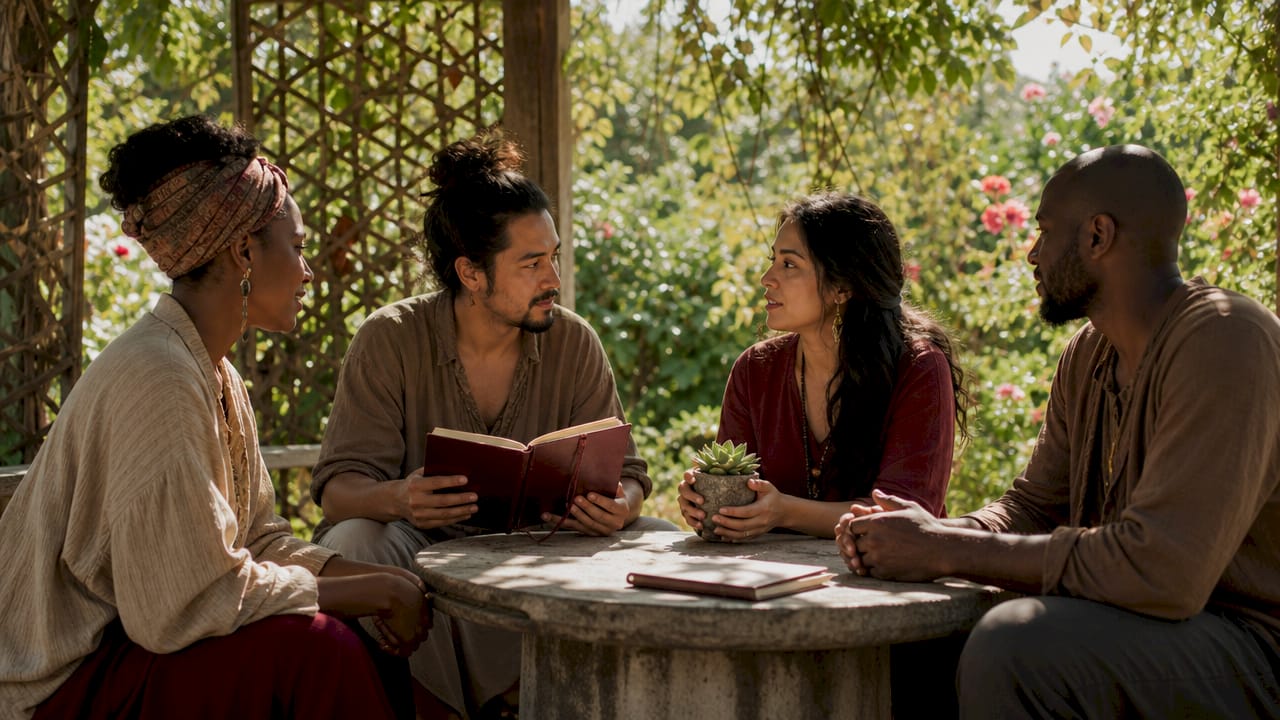
How do ritual outcomes shape their design?
The goal of a ritual determines its structure. A ritual built for individual productivity looks nothing like one built for team cohesion, and both look different from a ritual designed to mark a major organizational transition.
Leadership rituals are a clear example. The 70-20-10 time allocation rule is a personalized leadership ritual where a leader dedicates 70% of their time to core priorities, 20% to development, and 10% to exploration. This ritual protects energy and reflects personal values. It is not a company policy. It is a deliberate, repeatable structure that a leader builds around their own life stage and goals. Khozema Shipchandler, a recognized voice on leadership practice, stresses that these rituals must be adapted across different career and life stages to remain meaningful.
The RenDanHeYi model, developed at Haier Group, shows how ritual design scales to organizational structure. RenDanHeYi dismantles hierarchy into autonomous micro-enterprises of 10–15 people, each carrying full profit-and-loss responsibility. The rituals inside these micro-enterprises, including accountability check-ins and shared goal reviews, are built around autonomy rather than compliance. That is a fundamentally different ritual design than what you find in a traditional corporate hierarchy.
| Ritual model | Primary goal | Structure | Who creates it |
|---|---|---|---|
| 70-20-10 time rule | Individual focus | Personal time blocks | The individual leader |
| RenDanHeYi check-ins | Team accountability | Fixed peer review | The micro-enterprise team |
| Annual ethics pledge | Organizational values | Formal ceremony | Leadership with staff input |
| Team celebration ritual | Connection and belonging | Recurring social event | Co-created by team |
Pro Tip: Match the ritual’s frequency to its purpose. Daily rituals build habits of mind. Weekly rituals build team rhythm. Annual rituals mark identity and commitment. Mixing these up is one of the most common design mistakes.
What practical steps build lasting personalized rituals?
Designing a ritual that lasts requires more than good intentions. Effective ritual design starts with three elements: a clear purpose, a fixed frequency, and co-creation with the people who will participate. Cost is not a factor. Consistency is.
The steps below reflect what works in practice:
- Identify the purpose. Ask what the ritual is meant to reinforce. Is it accountability, belonging, celebration, or transition? A ritual without a clear answer to this question becomes noise.
- Fix the frequency. Choose a schedule and protect it. A ritual that happens “whenever we get around to it” is not a ritual. It is a suggestion.
- Co-create with participants. Michael Norton, a Harvard Business School professor who studies ritual behavior, recommends bottom-up ritual creation over top-down mandates. Teams that build their own rituals show stronger buy-in and longer participation.
- Transmit the meaning. Sanyin Siang, an executive coach and Duke University professor, warns that rituals survive only when their meaning is actively communicated to newcomers. Form without meaning produces empty ceremony.
- Audit regularly. Not every ritual deserves to continue. Removing unnecessary rituals reduces noise and sharpens focus on what actually matters.
“A ritual’s efficacy lies in the specific behaviors and signals enacted during it, not just in the scheduled event itself.” — Antoine Buteau
Top-down imposed rituals consistently trigger resistance. The reason is simple: people do not feel ownership over something handed to them. Co-created rituals that evolve with the team’s needs outlast mandated ones by a wide margin. The role of client history in ritual design follows the same logic. A ritual built around who you actually are carries more weight than one built around who someone assumes you to be.
Pro Tip: Before adding a new ritual, audit your existing ones. Ask whether each one still serves its original purpose. If it does not, reshape it or remove it. Adding more rituals without removing old ones creates overload, not culture.
How do rituals support identity, wellbeing, and belonging?
Rituals do measurable work inside organizations and individuals. Ritualized work activities increase perceived job meaning by 16%. That is not a small number. It means that the act of making work symbolic, rather than purely functional, changes how people experience their contribution.
The benefits of well-designed personalized rituals include:
- Belonging. Shared rituals signal group membership. A team lunch, a weekly win-share, or a project close-out ceremony all say: you are part of this.
- Stress reduction. Predictable, meaningful rituals reduce anxiety by creating structure around uncertainty. This is especially true during organizational change.
- Value reinforcement. Rituals embed what an organization actually believes, not just what it says it believes. An ethics pledge repeated annually carries more weight than a policy document.
- Personal growth. For individuals, rituals mark transitions and reinforce commitment. They are the difference between a goal and a practice.
- Spiritual alignment. For those working with spiritual practices, rituals connect daily action to deeper purpose. This is where spiritual investment yields business returns in ways that conventional productivity tools cannot replicate.
The spiritual dimension of ritual is not separate from the professional one. West African traditions, which form the foundation of Motherodessa’s practice, have long understood that personal wellbeing and professional vitality are connected. A cleansing ritual before a major business decision is not superstition. It is a deliberate act of preparation that aligns internal state with external action.
What I have learned about rituals that truly resonate
After working with people across decades of spiritual practice, one truth stands out: no two people need the same ritual. The form matters far less than the fit. I have seen elaborate ceremonies fall flat because they were designed for someone else’s situation. I have also seen simple, quiet practices produce profound shifts because they were built around the person’s actual life.
The biggest mistake I see is treating rituals as performance. When a ritual becomes about looking intentional rather than being intentional, it loses its power. The same applies in organizational settings. A team that goes through the motions of a weekly check-in without genuine engagement is not practicing a ritual. It is performing one.
What sustains a ritual is meaning, not structure. Structure is the container. Meaning is what fills it. When meaning fades, the ritual must either be renewed or released. Holding onto empty forms out of habit is the opposite of what ritual practice is meant to do. The willingness to let a ritual evolve, or end, is itself a sign of maturity in practice.
Personalized spiritual rituals tailored to your needs at Motherodessa
Motherodessa brings over 40 years of experience in West African spiritual traditions to every ritual she designs. No two clients receive the same approach because no two situations are the same.
Whether you are seeking clarity, financial alignment, or protection, Motherodessa’s spiritual healing collection offers rituals built specifically around your circumstances. For those drawn to cleansing and renewal, the Spiritual Cleansing Bath Ritual provides a structured, personalized path to clearing what no longer serves you. Every ritual is conducted with full privacy and grounded in tradition that has guided clients across the globe through real transformation.
Key takeaways
Personalized business rituals differ from generic ones because they are built around specific identities, goals, and communities rather than applied as universal templates.
| Point | Details |
|---|---|
| Rituals vs. routines | Rituals build identity and values; routines sequence tasks; habits automate behavior. |
| Purpose shapes design | Individual productivity rituals differ structurally from team cohesion or transition rituals. |
| Co-creation drives longevity | Bottom-up, participant-built rituals outlast top-down mandates in every organizational context. |
| Meaning must be transmitted | Rituals lose power when newcomers receive the form without understanding the purpose behind it. |
| Audit before adding | Removing outdated rituals sharpens focus more than adding new ones to an already full calendar. |
FAQ
What makes a business ritual “personalized”?
A personalized business ritual is built around the specific values, goals, and identity of the individual or team it serves, rather than copied from a generic template. Its structure, frequency, and symbolism reflect the actual situation of the people practicing it.
How do personalized rituals differ from habits?
Habits are automatic behaviors triggered by context and focused on individual efficiency. Personalized rituals are intentional, symbolic, and tied to identity or community, and they require conscious participation to remain meaningful.
Can a ritual become ineffective over time?
Yes. Rituals lose effectiveness when their meaning is no longer communicated or understood, especially by newcomers. Auditing and reshaping rituals regularly keeps them aligned with their original purpose.
How does the RenDanHeYi model use personalized rituals?
The RenDanHeYi model at Haier Group organizes teams of 10–15 people into autonomous micro-enterprises, each with its own accountability rituals built around shared profit-and-loss responsibility rather than top-down directives.
Do spiritual rituals follow the same design principles as business rituals?
Yes. Both require a clear purpose, consistent practice, and personal relevance to the practitioner. Spiritual rituals like those offered by Motherodessa are personalized to individual circumstances, which is exactly what makes them effective where generic approaches fail.
— Psychic