
A money attraction ritual is a spiritual practice that combines deliberate intention-setting with symbolic tools to create internal alignment toward financial abundance. The practice does not replace earning, saving, or budgeting. Instead, it shifts your mental and emotional state from scarcity and fear to openness and expectancy, making you more attuned to financial opportunities as they arise. Tools like candles, incense, herbs, coins, and money bowls each carry symbolic weight, and rituals using these tools serve as a bridge between your intentions and your daily actions around money.
What does a money attraction ritual mean and how does it work?
A money attraction ritual works by shifting your internal state, not by conjuring cash from thin air. The core mechanism is psychological and symbolic alignment. When you perform a ritual with focused intention, you move from a mindset dominated by financial anxiety to one of expectancy and readiness. That shift changes how you perceive and respond to opportunities.
Consider what happens when you are consumed by financial stress. You miss the freelance lead in a casual conversation. You dismiss the business idea because you assume it will fail. Ritual practice interrupts that pattern. Shifting from scarcity to openness creates a symbolic bridge between your intentions and your actions, making you more likely to notice and act on real financial possibilities.
Here is what that internal shift produces in practical terms:
- Increased opportunity awareness: You begin noticing financial leads, connections, and ideas you previously filtered out.
- Greater confidence in money decisions: Ritual reinforces a belief that abundance is possible for you, which affects how you negotiate, invest, and spend.
- Reduced financial paralysis: Fear-based thinking often leads to inaction. Ritual replaces that freeze response with forward momentum.
- Daily mindfulness around money: A visible ritual object, like a money bowl, acts as a behavioral cue that keeps your financial intentions in conscious focus.
Pro Tip: Treat your ritual as a daily mindset practice, not a one-time event. Practitioners who return to their ritual space consistently report stronger results because repetition reinforces the internal alignment the ritual is designed to create.
The meaning of money rituals is not about superstition. It is about using symbolic action to reprogram how you relate to wealth, opportunity, and your own financial potential.
What are the most common types of money attraction rituals?
Money attraction techniques span multiple spiritual traditions, each with its own symbolic logic and set of tools. Understanding the differences helps you choose a practice that resonates with your beliefs and personal situation.
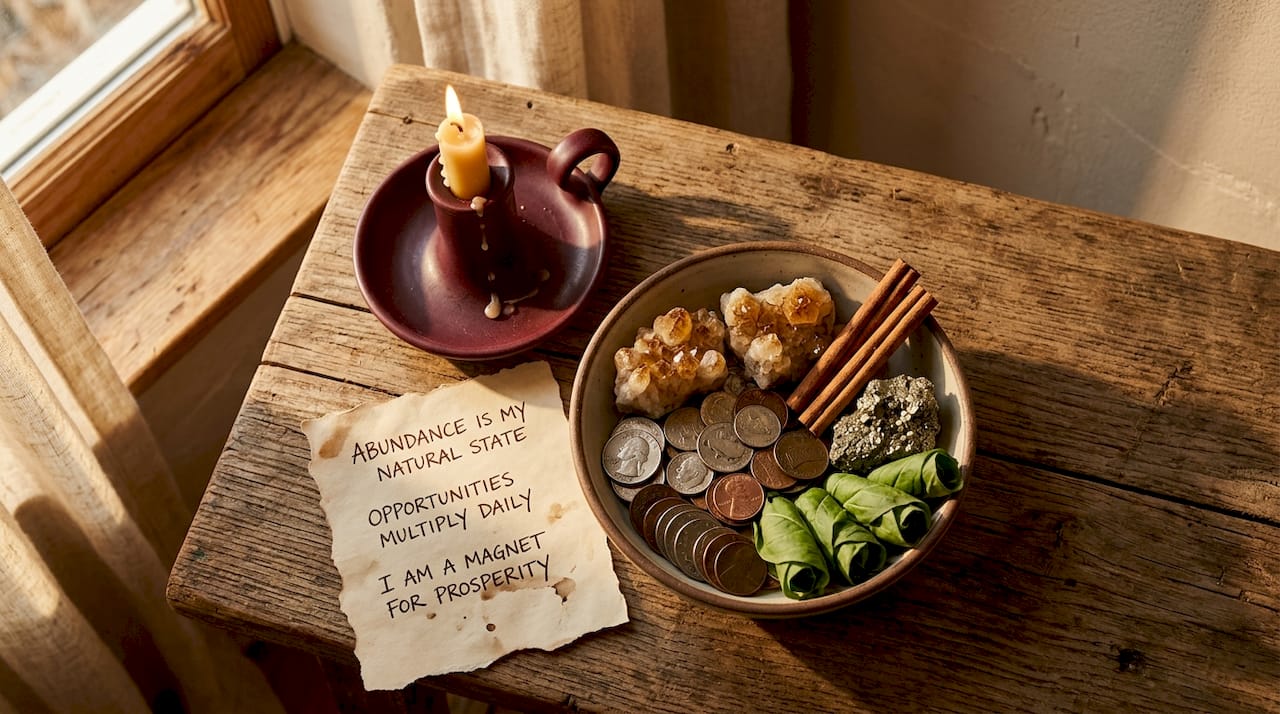
Money bowl rituals are among the most accessible forms of money manifestation practice. A money bowl is an ongoing intention tool, not a quick luck charm. Money bowls combine symbolic ingredients like coins, crystals, herbs, and written intentions, then remain visible in your space as a daily reminder of your financial focus. The visibility is the point. Seeing the bowl each morning reinforces your intention before the day pulls your attention elsewhere.
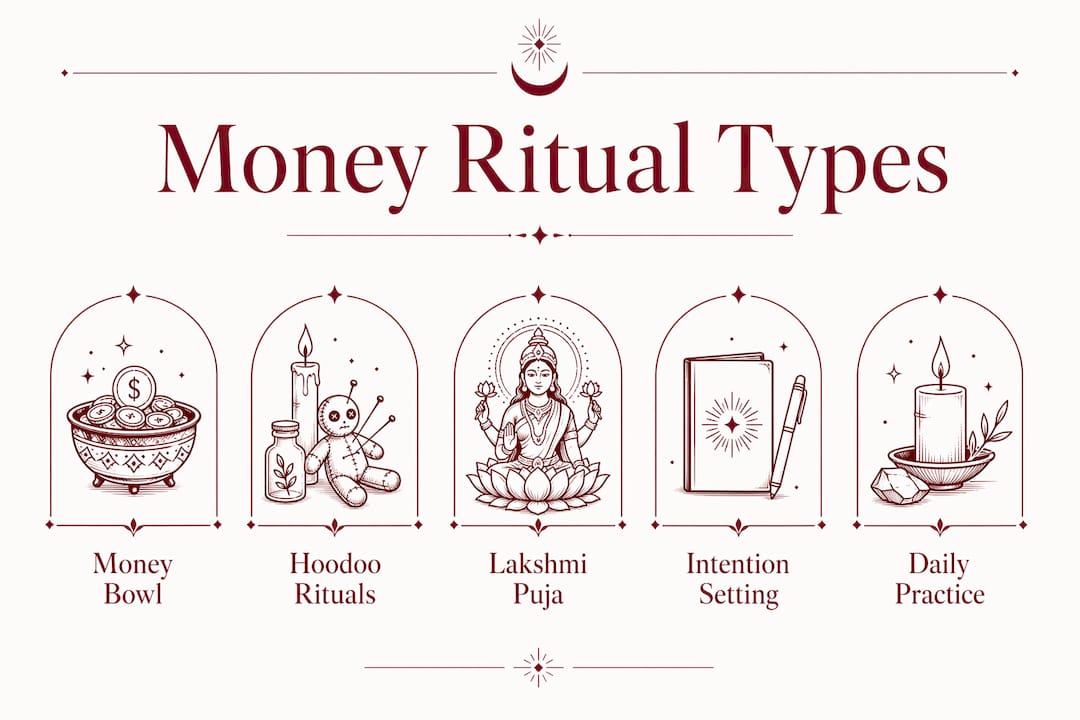
Hoodoo money drawing rituals operate through sympathetic magic, a system where ritual objects do not just represent attraction but actively perform it. Lodestones and charged coins are the primary tools, and timing matters significantly. Practitioners align their work with waxing or full moon phases to maximize the pulling energy of the ritual. Intentions must be written in present tense and kept specific. Vague wording weakens the work.
Hindu Lakshmi puja represents a devotional approach rooted in consistent practice and reverence. Friday night Lakshmi worship involves lighting eight ghee lamps, chanting mantras, and offering pink flowers and lotus seeds. The ritual is not performed once and forgotten. Consistent practice over time is believed to gradually improve financial conditions by deepening the devotee’s connection to prosperity energy.
The table below compares these three traditions across key dimensions:
| Tradition | Primary tools | Timing | Core principle |
|---|---|---|---|
| Money bowl ritual | Coins, crystals, herbs, written intentions | Ongoing, daily visibility | Manifestation through sustained awareness |
| Hoodoo money drawing | Lodestone, charged coins, candles | Waxing or full moon | Sympathetic magic, active attraction |
| Hindu Lakshmi puja | Ghee lamps, mantras, flowers, lotus seeds | Friday nights, consistent practice | Devotional alignment, gradual abundance |
Each tradition approaches the meaning of money rituals differently, but all three share one principle: sustained, intentional practice outperforms a single isolated act.
How to create a simple money bowl ritual at home
A money bowl is the most practical entry point for anyone exploring money manifestation practices. The process is straightforward, but the intention behind each step is what gives it meaning.
- Choose your bowl. Select a bowl that feels significant to you. Ceramic, wood, or metal all work. Avoid plastic. The material should feel grounded and intentional.
- Add your base layer. Place coins at the bottom, ideally ones that carry personal meaning or come from different countries to symbolize abundance flowing from multiple directions.
- Layer in prosperity herbs. Cinnamon, basil, and bay leaves are widely used in money manifestation practices for their traditional associations with wealth and opportunity.
- Add crystals. Citrine and pyrite are the most commonly used stones for financial intention work. Place them on top of the herbs.
- Write your intention. Use present tense and be specific. “I receive steady income from work I love” is stronger than “I want more money.” Present-tense, specific intentions are a consistent requirement across Hoodoo, folk magic, and contemporary manifestation practice.
- Place the bowl visibly. Your home office, desk, or a prominent shelf works well. The goal is daily visual contact. A visible money bowl creates an attentional loop that links your ritual intention with everyday financial mindfulness.
- Maintain the ritual. Refresh the herbs monthly, add a coin when you receive unexpected income, and revisit your written intention regularly to keep the energy current.
The most common mistake people make is treating the bowl as a passive luck charm. Ritual work complements practical money management, it does not replace it. Pair your bowl with concrete financial actions: track your income, follow up on leads, and pay attention to where money flows in and out of your life.
Pro Tip: After setting up your bowl, spend two minutes each morning looking at it and mentally affirming your intention. This small habit is what separates practitioners who see results from those who set up a bowl and forget about it.
You can also explore types of money manifestation offerings to understand how different symbolic tools carry different energetic purposes, which helps you build a ritual that fits your specific financial goals.
How do cultural roots shape the meaning of money rituals?
The cultural framework behind a ritual is not decorative. It is structural. When you understand why a tradition uses specific tools, timing, and language, the ritual carries more personal weight and produces stronger internal alignment.
Several key principles emerge across traditions:
- Sympathetic magic logic: In Hoodoo and folk magic, objects do not merely symbolize a desired outcome. They enact it. A lodestone does not represent attraction. It performs attraction. This distinction changes how practitioners approach intention and maintenance. Keeping ritual objects charged with present-tense intention and regular attention is not optional. It is the mechanism.
- Devotional consistency in Hindu practice: Lakshmi worship is not a one-time petition. It is a relationship built through repeated, reverent practice. The gradual improvement in financial conditions attributed to this ritual reflects the cumulative effect of sustained devotional focus.
- Lunar and planetary timing: Both Hoodoo and various folk magic traditions use lunar cycles to amplify ritual work. Waxing moon phases are associated with growth and drawing in, making them the preferred window for money attraction work. This timing aligns the practitioner’s intention with a natural cycle, reinforcing the sense of working with larger forces rather than against them.
- Cultural specificity strengthens personal connection: A ritual borrowed wholesale without understanding its roots tends to feel hollow. Understanding why cultural roots matter in spiritual practice helps you engage with ritual tools more authentically, which deepens the mindset shift the ritual is designed to produce.
The benefits of money rituals are most fully realized when the practice connects to a tradition or symbolic system that genuinely resonates with you. Generic rituals performed without context tend to fade quickly. Rooted ones become habits.
Key takeaways
Money attraction rituals work because they shift your internal relationship with wealth from fear to expectancy, and that shift changes how you perceive and act on financial opportunities.
| Point | Details |
|---|---|
| Ritual meaning | A money attraction ritual uses intention and symbolic tools to create financial alignment, not instant wealth. |
| Psychological mechanism | Rituals shift mindset from scarcity to openness, increasing opportunity awareness and financial confidence. |
| Common ritual types | Money bowls, Hoodoo lodestone work, and Hindu Lakshmi puja each use distinct tools and timing principles. |
| Practical application | Present-tense intentions, visible placement, and consistent maintenance determine a ritual’s effectiveness. |
| Cultural roots matter | Understanding the tradition behind a ritual deepens personal connection and strengthens the mindset shift it produces. |
What I have learned from watching ritual work up close
After more than four decades working with clients across continents, I can tell you the most common misconception about money attraction rituals is that they are a substitute for financial effort. They are not. The clients who see the most meaningful shifts are the ones who treat ritual as a daily mindset practice and pair it with real financial action, whether that is following up on a business opportunity, having a difficult conversation about money, or finally opening a savings account.
What ritual actually does is change the internal filter through which you experience your financial life. A client who once dismissed every opportunity as “not for someone like me” starts noticing the same opportunities and thinking “why not me?” That is not magic in the theatrical sense. That is a profound and measurable shift in how the mind processes possibility.
I have also observed that the practitioners who stay consistent, who return to their ritual space daily even when nothing dramatic is happening, build something more durable than luck. They build financial mindfulness. They track where money comes from. They notice patterns. They act with more intention. The ritual becomes a container for a whole new relationship with abundance.
The spiritual and the practical are not opposites here. They reinforce each other. If you are serious about understanding money attraction, start with the internal work. The external results follow.
— Psychic
Ready to go deeper with personalized ritual support?
If this article has clarified what a money attraction ritual means and you are ready to move beyond DIY practice, Motherodessa offers personalized ritual work rooted in more than 40 years of West African spiritual tradition.

No two clients receive the same ritual. Motherodessa assesses your specific financial situation, spiritual background, and personal goals before designing any working. Her money and abundance rituals are built for people who want more than a generic spell. They are built for people who want real alignment. If financial blocks feel deeper than mindset, her debt clearing ritual addresses the energetic roots of financial stagnation directly. Explore the full money and abundance collection to find the right starting point for your journey.
FAQ
What is a money attraction ritual?
A money attraction ritual is a spiritual practice that uses symbolic tools like candles, coins, herbs, and written intentions to shift your mindset from financial scarcity to openness and expectancy. The goal is internal alignment that supports better financial awareness and decision-making, not instant wealth.
Do money rituals actually work?
Money rituals work by creating an attentional loop that keeps your financial intentions in conscious focus, making you more likely to notice and act on real opportunities. They are most effective when paired with practical financial actions rather than used as a passive substitute for effort.
What tools are used in a money attraction ritual?
Common tools include coins, citrine and pyrite crystals, cinnamon and basil herbs, written intentions, candles, and lodestones depending on the tradition. Hoodoo practitioners also use charged coins timed to lunar phases, while Hindu Lakshmi puja uses ghee lamps, mantras, and lotus seeds.
How often should you perform a money ritual?
Consistent daily practice produces stronger results than occasional one-time rituals. Returning to your ritual space each morning, even briefly, reinforces the mindset alignment that makes the practice effective over time.
What is the difference between a money bowl and a money spell?
A money bowl is an ongoing, visible intention tool that you maintain and refresh over time, while a money spell is typically a focused working performed at a specific moment, often timed to lunar phases. Both use symbolic tools and present-tense intentions, but the bowl functions as a continuous behavioral cue rather than a single act.