
Most business leaders evaluate ROI through spreadsheets, not spiritual practice. Yet the research telling a different story is building fast. Why spiritual investment yields business returns is no longer a fringe conversation. From peer-reviewed meta-analyses to structural equation modeling across global workplaces, the data now shows that organizations creating conditions for spiritual engagement outperform peers on employee retention, ethical behavior, and measurable financial outcomes. This article breaks down exactly how that mechanism works and what you can do about it.
Table of Contents
- Key takeaways
- What spiritual investment actually means in business
- The science connecting spirituality to business outcomes
- Nuances, challenges, and misconceptions
- Practical ways to invest spiritually as a leader
- The long view on spiritual returns in business
- My take on spirituality’s real business value
- How Motherodessa supports your spiritual investment journey
- FAQ
Key takeaways
| Point | Details |
|---|---|
| Spirituality drives ESG compliance | Workplace spirituality predicts better ESG behavior including sustainability and ethics outcomes. |
| Mindfulness improves performance measurably | A 2025 meta-analysis of 99 RCTs confirmed small but significant gains in task and adaptive performance. |
| Faith-friendly cultures reduce turnover | Supporting spiritual expression at work links directly to higher job satisfaction and organizational commitment. |
| Coercion erases the benefit | Mandated spirituality programs backfire. Voluntary, inclusive approaches are the only implementation that works. |
| Spiritual investment is a leadership asset | Viewed as governance and culture rather than an HR perk, it produces the strongest, most durable financial signals. |
What spiritual investment actually means in business
Before you can understand the return, you need to get precise about the investment itself. Spiritual investment in a business context is not the same as religious practice or personal faith life. It refers to the deliberate creation of conditions where employees can find meaning, connect their work to a higher purpose, and bring their full human identity to what they do professionally.
The concept has three overlapping components:
- Workplace spirituality: the organizational dimension, including culture, purpose alignment, and leadership values that acknowledge the inner life of employees
- Mindfulness and reflective practices: structured programs or habits that train attention, reduce reactivity, and build the psychological capacity to respond rather than react under pressure
- Values-aligned leadership: decision-making rooted in integrity, contribution, and long-term impact rather than purely short-term metrics
One important distinction most people miss is the difference between instrumentalized spirituality and authentic spiritual culture. Instrumentalized spirituality means a business adopts meditation apps or purpose statements purely to improve retention numbers. Authentic spiritual culture means the organization genuinely operates from values that treat people as whole human beings. The first is a tactic. The second is a strategy. And the research consistently rewards the second.
Spiritual intelligence, a concept related to emotional intelligence, describes the capacity to access meaning, vision, and value in ways that shape behavior and support well-being. Leaders with high spiritual intelligence tend to build organizations that perform better over time because they make decisions with a broader frame of reference than pure profit maximization.
The science connecting spirituality to business outcomes
This is where the conversation gets concrete. You do not have to take anyone’s word for it.
A 2026 study using structural equation modeling found that workplace spirituality significantly predicts ESG-related behaviors including sustainability, ethics, and employee well-being, with path coefficients of b=0.4075 and b=0.1245. Those numbers translate directly into compliance performance and reputation metrics that investors and customers care about.
On the mindfulness side, a 2025 meta-analysis synthesizing 99 randomized controlled trials found that mindfulness-based programs produce small improvements in task performance (Hedges’ g=0.25). Small does not mean trivial. Across a team of 50 people, consistent performance gains compound into serious competitive advantage.
| Spiritual Practice | Business Outcome | Evidence Type |
|---|---|---|
| Workplace spirituality | Stronger ESG compliance and ethics | Structural equation modeling, 2026 |
| Mindfulness programs | Improved task and adaptive performance | Meta-analysis of 99 RCTs, 2025 |
| Faith-friendly culture | Higher job satisfaction, reduced turnover | Systematic review 2020–2024 |
| Spiritual engagement | Increased organizational commitment | Logit regression study, 2025 |
A systematic review covering studies from 2020 to 2024 found that faith-friendly workplaces improve employee well-being, motivation, engagement, and ethical culture. These are not soft metrics. Engagement drives productivity. Ethical culture reduces liability. Motivation reduces the cost of supervision. Every one of those translates to your bottom line.
“Faith-friendly workplaces create a self-reinforcing cycle of thriving, performance, ethics, and social stability.” — The Business Case for Supporting Faith Beliefs at Work
A 2025 study focusing on Muslim employees in Azad Jammu & Kashmir found that spirituality significantly predicts job satisfaction using logit regression analysis. The finding extends beyond any single religion or tradition. When people feel their spiritual identity is acknowledged and respected at work, they invest more of themselves in the organization’s success.
The 2026 Rockwool Foundation report adds another dimension. It documents that spirituality influences economic behaviors including saving habits, openness to technology adoption, and social norms. For entrepreneurs building teams and customer relationships, those behavioral patterns matter enormously.
Nuances, challenges, and misconceptions
Here is what the research does not say. It does not say you can launch a meditation program in January and expect a measurable revenue bump by Q2. The benefits of spiritual investing are real but they are not instant, and how you implement matters as much as whether you implement at all.
The most critical distinction comes from a 2026 Journal of Business Ethics paper that warns against instrumental use of spirituality that risks undermining the depth and authenticity that makes it work. When spirituality becomes a management gimmick, employees see through it immediately. The result is cynicism, not engagement. You end up with the opposite of what you were looking for.
Several important considerations shape whether your spiritual investment actually pays off:
- Voluntary participation is non-negotiable. Mandated meditation, required gratitude journals, or coerced purpose workshops all backfire. Perceived support from spiritual programs only works when employees feel they have genuine choice.
- Inclusive design matters. A spiritual culture that centers one tradition while marginalizing others creates division. The research rewards approaches that create space for diverse expressions of meaning and purpose.
- Effects vary by context. The business returns from spirituality in a creative agency look different from those in a manufacturing operation. Match your approach to your organizational reality.
- Avoid over-attributing results. Mindfulness effects should be measured against active comparators, not just passive control groups. If you do not track KPIs alongside well-being metrics, you cannot honestly know what the program is contributing.
Pro Tip: Before launching any spiritual investment program, survey your team anonymously about what forms of meaning-making and spiritual expression they already engage in. Build your organizational approach around what already resonates rather than importing a model that has worked somewhere else.
Practical ways to invest spiritually as a leader
Knowing the evidence is one thing. Putting it to work requires specific choices and consistent action. Here is a practical sequence for entrepreneurs and business leaders who want to realize these returns.
-
Articulate purpose that goes beyond profit. Your organizational mission needs to answer the question: “Why does this work matter beyond making money?” Employees who can answer that question with conviction are measurably more engaged and more ethical in their decision-making.
-
Develop spiritual and emotional intelligence in your leadership team. This is not a one-day workshop. It requires ongoing reflection, coaching, and feedback structures that reward leaders for how they treat people, not just for the numbers they produce. Consider building spiritual gift awakening work into your personal leadership development.
-
Integrate spiritual values into governance and CSR. The strongest financial signals come from organizations that treat spirituality as governance rather than a perk. Link your spiritual investment to your ESG reporting, your supplier standards, and your community impact commitments.
-
Create physical and temporal space for reflection. Quiet rooms, structured check-ins, time to think before major decisions. These cost very little. They signal that your organization values the inner life and produces measurably better decision quality.
-
Build in regular spiritual maintenance for yourself as a leader. The research on spirituality’s impact on profits works through a mechanism of meaning, perceived support, and emotional regulation. If you are running on empty spiritually, you cannot create conditions of spiritual richness for others.
-
Treat marketplace chaplaincy and spiritual support as confidential and voluntary. Research on spiritual care as workplace support shows outcomes are tied to perceived support and meaning, not to program visibility or mandatory participation.
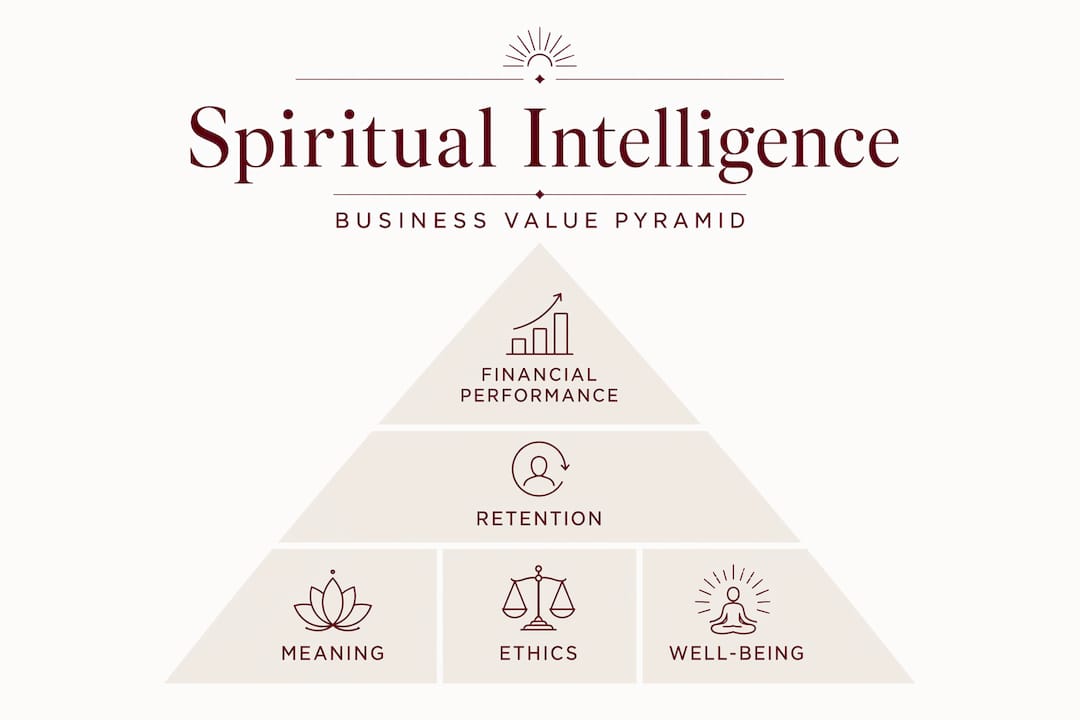
Pro Tip: The return on spiritual investment does not show up first in revenue. It shows up first in retention, then in ethical decision-making quality, and then in reputation. Track those leading indicators before you try to trace the financial output.
The long view on spiritual returns in business
The connection between spiritual investment and business performance is not a coincidence or a cultural moment. It reflects something fundamental about what human beings need to do their best work. When employees experience meaning, purpose, psychological safety, and values alignment, they bring more cognitive and emotional capacity to every challenge they face. That additional capacity shows up as better decisions, stronger relationships with customers, and more ethical behavior under pressure.

Viewing spiritual investment as a strategic business asset means treating it with the same seriousness you give financial planning or talent development. The organizations doing this most deliberately are already seeing the results in their ESG ratings, their retention numbers, and their long-term reputation. The ones who wait for the trend to become undeniable will spend years catching up.
My take on spirituality’s real business value
I have observed for years how business leaders approach spiritual investment. Most start by asking whether it is legitimate. That question already reveals the problem. When you ask whether meaning matters or whether purpose drives performance, you are asking whether human beings are just productivity machines. They are not. And every experienced leader knows it.
What I have learned is that the leaders getting the most out of spiritual investment are not the ones with the most elaborate wellness programs. They are the ones who got clear on their own values first and built their organizations from that clarity outward. The spiritual alignment flows from the leader. You cannot create genuine spiritual culture by rolling out a program. You create it by doing the inner work yourself.
The uncomfortable truth about mandated spirituality is that it creates more damage than no program at all. It signals to employees that their inner life is something management wants to control. Real spiritual investment starts with respecting that the inner life of your people belongs to them. Your job is to create conditions where that inner life can coexist productively with their professional contribution.
What actually works is creating meaning and community. People do not need their organization to be their temple. They need it to be a place where they are treated as fully human, where their work connects to something worth doing, and where the leadership around them operates with integrity. That is the return on spiritual investment that no spreadsheet fully captures but every leader feels when it is present.
— Psychic
How Motherodessa supports your spiritual investment journey
Motherodessa’s work is built on more than 40 years of rooting spiritual practice in West African tradition, with personalized rituals designed for exactly the kinds of challenges entrepreneurs and leaders face. When the spiritual dimension of your business needs attention, generic solutions do not cut it.

The Money & Abundance Ritual is designed specifically to align your energy with financial prosperity and clear the blockages that stand between your intentions and your results. For leaders carrying the weight of past setbacks or accumulated stress, the Spiritual Cleansing Bath Ritual offers a reset that addresses what no business coach can reach. And for those who need protection as they grow, the Spiritual Shield Working provides exactly the energetic grounding serious leaders need. Every ritual is private, personalized, and built around your specific situation. Explore Motherodessa’s offerings at motherodessa.com.
FAQ
What does spiritual investment mean for entrepreneurs?
Spiritual investment in business refers to creating conditions where employees and leaders can find meaning, purpose, and values alignment in their work. It includes practices like mindfulness, values-driven leadership, and faith-friendly workplace culture.
Can spirituality actually improve business performance?
Yes. A 2025 meta-analysis of 99 RCTs found mindfulness-based programs produce measurable gains in task and adaptive performance, and a 2026 study linked workplace spirituality to stronger ESG compliance and ethical behavior.
What is the return on spiritual investment?
The return shows up first in retention, then in ethical decision quality, then in reputation and financial performance. Organizations that treat spiritual investment as governance rather than an HR perk see the strongest and most durable financial signals.
Why does mandated spirituality backfire in business?
Research confirms that the benefits of spiritual investing are tied to perceived support and voluntary participation. When programs are coerced or used purely as management tools, employees become cynical, and the engagement benefits disappear entirely.
How do spiritual principles connect to ESG performance?
Structural equation modeling from 2026 shows that workplace spirituality predicts ESG outcomes including sustainability behaviors and ethical conduct, making it a measurable contributor to the compliance and reputation metrics institutional investors now prioritize.