
A personalized West African prosperity ritual is something you can purchase, integrate into your business strategy, and use safely in the United States — provided you vet the practitioner’s sourcing, confirm legal compliance, and treat the work as a complement to real business effort. The recommended first step is to request a written scope before paying.
Before you commit to any service, run through these steps:
- Request a written scope that names every ingredient and the ceremony sequence.
- Confirm no materials include protected plant or animal species (check USDA and U.S. Fish & Wildlife Service guidance).
- Ask for documented deliverables: a digital ritual report, step-by-step client instructions, and a scheduled follow-up.
- Request written confidentiality terms or an NDA option before sharing business details.
- Ask for anonymized testimonials from prior clients.
Table of Contents
- What are West African abundance rituals for entrepreneurs?
- What materials do practitioners typically use?
- How does a practitioner personalize a ritual for your business?
- What does the process look like from purchase to completion?
- Why does payment matter, and what drives the cost?
- What legal and safety checks should U.S. entrepreneurs run?
- How do you pick a trustworthy practitioner?
- Key Takeaways
- Why these rituals deserve more serious attention than they get
- Motherodessa’s Money & Abundance services
- Selected sources and U.S. compliance resources
What are West African abundance rituals for entrepreneurs?
A West African prosperity ritual is a structured ceremony designed to remove financial blockages, attract customers, and align a business owner’s circumstances with favorable outcomes, drawing on trado-medical and cosmological traditions that have accompanied commerce in West Africa for centuries.
Ethnographic fieldwork in Sierra Leone documents traders routinely using anointing oils, charms, Quranic verses, and ritual prayers alongside ordinary business practices to manage risk, build trust, and interpret profit and loss through spiritual frameworks. These are not fringe behaviors. They are embedded in how informal markets function.
Historically, charms and prestige goods among the BaMboma were tied directly to commercial security and social power, with mobile ritual objects used to protect trade ventures. That continuity between ritual and commerce stretches back well before colonial contact. Ritual materials have also adapted over time, absorbing new trade goods as they became available, which explains why modern practitioners may use items sourced globally.
Scholars studying prosperity practices in Ghana link them to aspirations for social mobility and the status of a recognized leader. Karen Lauterbach’s research on Christianity, wealth, and spiritual power situates these practices within cultural frameworks of legitimacy and economic advancement, not superstition.
Pro Tip: Ask any practitioner whether their work respects lineage-specific norms and whether they will explain the cultural meaning of each ritual element. A practitioner who cannot or will not answer that question is worth reconsidering.
- Rituals adapt to new trade contexts and materials over time.
- Prosperity work is often framed as risk management, not a shortcut.
- The “big man” ideal links ritual success to social legitimacy, not just money.
What materials do practitioners typically use?
The core categories are botanical washes, powdered herbs, anointing oils, charms or talismans, libations, and spoken prayers or chants. Yoruba trado-medical sources describe Awure Aje (wealth medicine) using specific leaves such as Ewe Jenjoko and Ewe Sawerepepe, applied as washes, powders, or infusions to remove financial blockages and attract favor in trade.
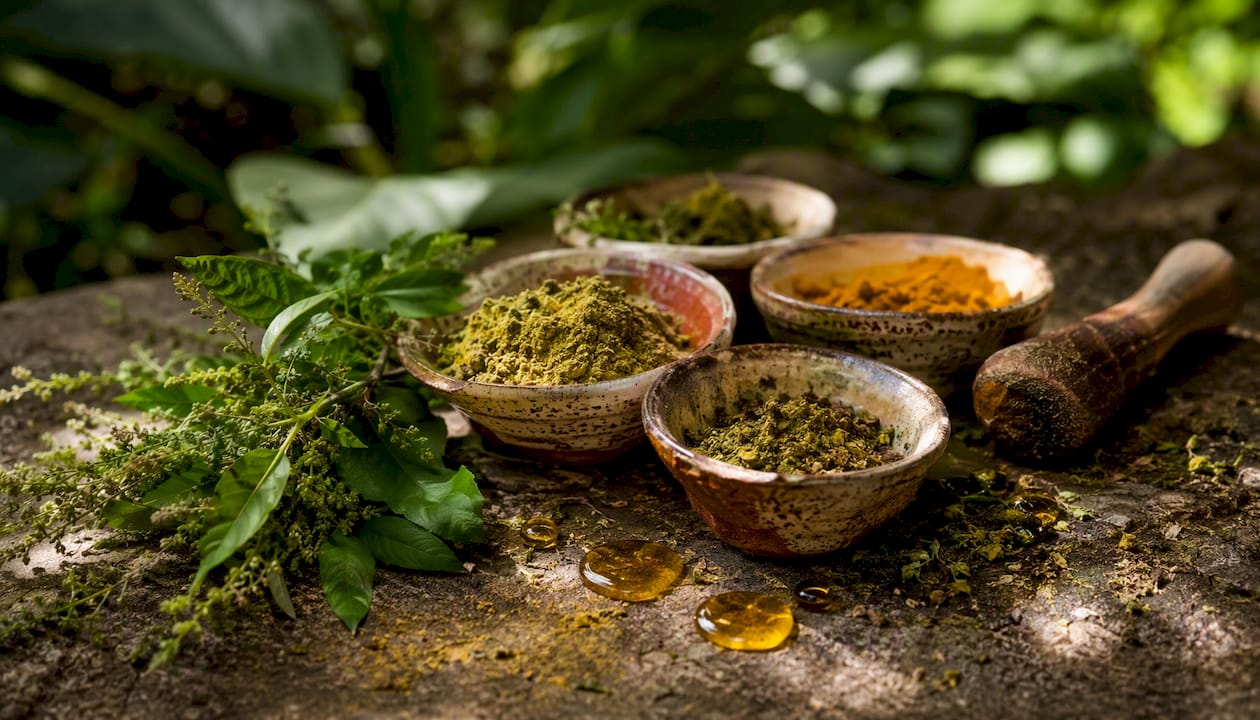
| Material | Intended function | U.S. sourcing/legal note |
|---|---|---|
| Ewe Jenjoko (botanical wash) | Attract favor and customers | Verify plant is not on USDA restricted import list |
| Anointing oils (herb-infused) | Protection and business blessing | Generally permitted; check allergen disclosure |
| Powdered herbs/resins | Cleansing and drawing abundance | Confirm no CITES-listed species |
| Charms/talismans | Ongoing protection from envy | Non-biological items typically unrestricted |
| Libations (water, palm wine) | Ancestral offering and activation | Permitted; note local open-container rules for ceremonies |
| Spoken prayers/chants | Intention-setting and activation | No legal restriction |
Market women in Ghana document practices such as placing ritual objects in money bags and performing protective rites to neutralize “bad money” and guard against sudden financial loss. Ritual handling of money in Tanzania shows prayers over currency used to imbue money with protective power, a practice that translates directly into how some practitioners handle client offerings.
- Botanical washes and powders are the most common physical elements.
- Animal parts banned under U.S. law (e.g., certain bird feathers, ivory) must never appear.
- Allergen and skin-contact risks apply to any topical preparation.
Pro Tip: Always ask for a full ingredient list before purchase. If any item is restricted or you have a known allergy, request a documented alternative. A reputable practitioner will have one ready.
How does a practitioner personalize a ritual for your business?
Personalization starts with an intake that maps your business goals, current obstacles, timeline, and confidentiality requirements. No two businesses face the same combination of factors, and a practitioner who skips this step is offering a generic product, not a tailored ceremony. Trade routes historically spread ritual forms across regions, and practitioners adapted them to local needs; the same logic applies to individual client situations today.
A thorough intake covers:
- Basic business facts: industry, size, revenue stage, and primary market.
- Precise intention: attract new clients, remove a specific blockage, protect against competitor interference, or open a new revenue stream.
- Prior spiritual work: any existing rituals, protections, or ceremonies already in place.
- Sensitive materials: business information you need kept confidential.
- Preferred outcomes: how you will measure whether the ritual has supported your goals.
- Legal restrictions: any materials you cannot legally receive or use in your state.
- Payment and reciprocity terms: agreed scope, cost, and refund policy in writing.
Deliverables from a personalized ritual should include:
- A digital ritual report describing what was performed and why.
- A complete ingredient list with sourcing notes.
- Step-by-step client actions (what you do with materials at home or in your office).
- A scheduled follow-up at 14 or 30 days.
- Written confidentiality terms.
For privacy, ask where your intake notes are stored, whether identifying details are removed from any case studies, and whether an NDA is available.
What does the process look like from purchase to completion?
A typical engagement runs from intake through follow-up in roughly five to six weeks, though simpler packages can move faster.
| Phase | Typical timeframe |
|---|---|
| Intake and goal-mapping | 1–3 days |
| Material preparation and sourcing | 3–10 days |
| Ceremony day | 1 day |
| Digital report delivery | Within a few days of ceremony |
| Client actions period | 7–14 days |
| Follow-up check-in | 30 days after ceremony |
Deliverables checklist:
- Written ritual plan sent before ceremony day.
- Full ingredients list with application instructions.
- Typed or recorded prayers or chants for client use.
- Recommended client actions during the active period.
- Scheduled follow-up with notes on what to observe.
When a business is going through a spiritual dry spell, the timeline matters. Booking during a low-revenue period rather than waiting for a crisis gives the ritual room to work alongside your practical efforts.
Why does payment matter, and what drives the cost?
Payment in West African ritual traditions is not a transaction fee. It is reciprocity. Research on Jálàbí petitionary prayers in Ibadan shows that payment is treated as part of the ritual’s efficacy: compensating a practitioner is culturally understood as necessary for accessing spiritual favor and sustaining the practitioner’s ability to maintain their power. Underpaying or negotiating a scope down to nothing signals a lack of seriousness to both the practitioner and, within the tradition’s logic, to the spiritual forces being invoked.
Cost drivers for personalized abundance rituals:
- Practitioner experience and lineage depth.
- Rarity or legal complexity of sourcing specific materials.
- Ceremony complexity (single-element vs. multi-phase).
- Whether physical materials are shipped to the client.
- Number of follow-up sessions included.
- Rush or priority scheduling.
Package tiers generally fall into three types: a digital-only intake and ritual report; a full ceremony with physical materials sent to the client; and a premium package covering multiple follow-ups, protection work, and bundled ceremonies. The spiritual investment case for paid ritual work rests on this reciprocity logic.
Pro Tip: Request a written scope, a clear refund and cancellation policy, and an itemized materials list before sending any payment. A practitioner who resists this is a red flag.
What legal and safety checks should U.S. entrepreneurs run?
Confirm that every material is legal to import, own, and use in your state before purchasing. Never assume a traditional ingredient is automatically permitted in the United States.
- Ask for full ingredient disclosure before purchase.
- Verify no materials include species listed under CITES or the U.S. Endangered Species Act.
- Avoid any ceremony involving animal parts banned under U.S. law (certain feathers, bones, or ivory).
- Consult USDA APHIS for plant import restrictions and USFWS for animal-derived materials.
- Check local public-health rules if the ceremony involves an in-person gathering.
- Require a written refund and cancellation policy in the purchase terms.
Do: get the full ingredient list in writing, request documented alternatives for any restricted item, and keep records of all communications.
Don’t: accept evasive answers about sourcing, perform public rites that violate local ordinances, or pay before receiving a written scope.
Pro Tip: Include a clause in your purchase agreement requiring lawful sourcing and confirming U.S. consumer protection rights. If a practitioner refuses to add it, walk away.
Practitioners who use spiritual advantage ethically document their sourcing and welcome compliance questions. Those who do not are a liability.
How do you pick a trustworthy practitioner?
Prioritize documented lineage and experience, a clear written process, transparent sourcing, and explicit privacy terms. Those four criteria filter out most bad actors.
- Verify practitioner experience and lineage: how long, under whom, and in what tradition.
- Ask for anonymized testimonials from prior business clients.
- Require a full ingredient list before agreeing to any scope.
- Confirm timeline, ceremony sequence, and follow-up schedule in writing.
- Verify the refund and cancellation policy.
- Request written confidentiality terms or an NDA option.
Red flags:
- Evasive or changing answers about ingredients or sourcing.
- Pressure to pay before you have received a written scope.
- Guarantees of specific financial outcomes (no ethical practitioner makes these).
- Requests for materials that are illegal to import or own in the U.S.
- No written deliverable of any kind.
Sample questions to ask at first contact: “Can you send me a full ingredient list before I pay?” “What is your refund policy if I cancel after intake?” “How do you handle client confidentiality?” “Can you provide anonymized references from business clients?” “What lineage or tradition does your practice come from?”
Ancestral wisdom frameworks that are well-documented and lineage-grounded tend to produce practitioners who welcome these questions rather than deflect them.
Key Takeaways
Personalized West African abundance rituals for entrepreneurs work best when you vet sourcing, confirm legal compliance, and treat the ceremony as a complement to active business practice.
| Point | Details |
|---|---|
| Vet ingredients first | Request a full ingredient list and confirm no protected species before paying. |
| Payment is reciprocity | Transparent, agreed payment is part of ritual efficacy in West African traditions. |
| Expect a written deliverable | A reputable practitioner provides a digital report, client instructions, and a follow-up. |
| Combine ritual with effort | No ceremony replaces practical business work; the two are meant to run together. |
| Motherodessa’s offering | Motherodessa provides personalized Money & Abundance rituals with 40+ years of experience, written deliverables, and privacy guarantees. |
Why these rituals deserve more serious attention than they get
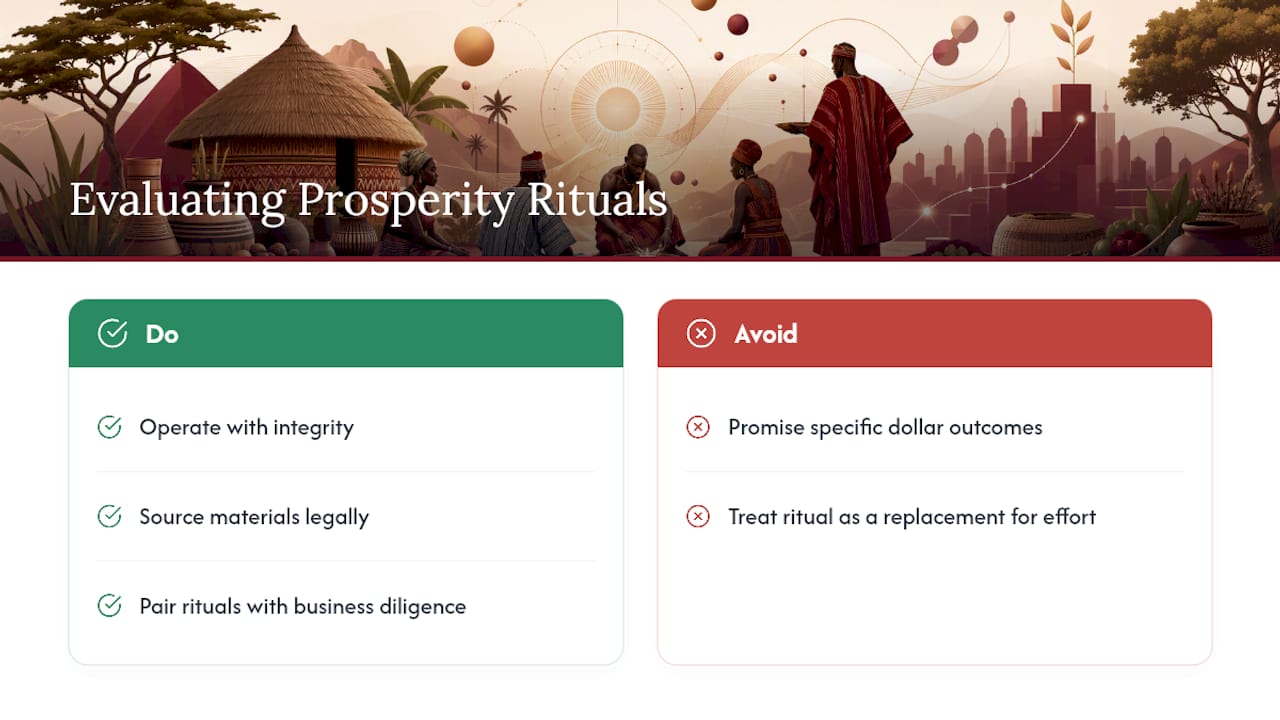
Most U.S. business content treats prosperity rituals as a curiosity at best, a scam at worst. That framing misses what the ethnographic record actually shows: in West African market contexts, ritual practice is a form of risk management, not magical thinking. Traders who use anointing oils and charms are doing what any business owner does when they hire a consultant or buy insurance. They are managing uncertainty with the tools their tradition provides.
The more interesting question is not whether these rituals “work” in a measurable sense. It is whether the practitioner is operating with integrity, the materials are sourced legally, and the client is combining the ceremony with real business diligence. When those three conditions are met, the ritual serves a documented social function: it signals seriousness, focuses intention, and aligns effort with a clear goal. That is not nothing.
What concerns me about how these services are marketed online is the guarantee problem. Any practitioner who promises a specific dollar outcome is selling something the tradition itself does not claim to deliver. The scholarly record is consistent: ritual work is framed as support for effort, not a replacement for it. Buyers who understand that distinction get far more from the experience than those who treat it as a financial shortcut.
Motherodessa’s Money & Abundance services
Motherodessa brings over 40 years of West African–rooted practitioner experience to personalized abundance rituals for entrepreneurs. Every service begins with a private intake, delivers a written ritual report with full ingredient disclosure, and includes a follow-up to assess outcomes.
The Money & Abundance Ritual is the core offering for business owners seeking to remove financial blockages and attract new opportunity. For entrepreneurs who want multi-layered ceremonial support, the Seven African Powers Ceremony draws on multiple spiritual forces and can be customized to specific business intentions. The full Money & Abundance collection lists available packages and add-ons, including protection work for entrepreneurs concerned about envy or competitor interference.
After checkout, you receive an intake form, a full ingredient disclosure, and a ceremony schedule. Confidentiality is standard; NDA terms are available on request. To review all available services or place an order, visit the spiritual healing collection.
Selected sources and U.S. compliance resources
The claims in this article draw on peer-reviewed ethnography, thesis research, and practitioner documentation. For U.S. legal compliance, consult USDA APHIS (for plant import restrictions) and the U.S. Fish & Wildlife Service (for animal-derived materials) directly before purchasing any ritual that involves physical ingredients.
- Role of religion and spirituality in an informal market place in Sierra Leone (ASesay)
- JÁLÀBÍ PRACTICE OF MUSLIM CLERICS AND THE HERMENEUTICS OF PRAYER COMMODIFICATION IN IBADAN, NIGERIA
- Economic change and occultic sika bone: market women’s responses to increased financialization in Ghana (African Studies Review)
- Ritual handling of money and prosperity practices in Tanzania (MDPI, Religions)
- Ogun Awure Ajé | Yoruba medicine for wealth attraction (Yoruba Library)
This article is general information, not legal, financial, or professional advice. Confirm current U.S. import and public-health rules with USDA, USFWS, or a qualified attorney before purchasing any ritual involving physical materials.