
Crisis timing directly shapes whether a West African ritual intervention succeeds, stalls, or needs to be repeated. The core reason: ritual outcomes improve when practitioner readiness, client conviction, and required materials align with the moment of action. When they don’t, even a skilled practitioner is working against the current.
Two rules cover most urgent situations:
- Act now when the crisis is actively worsening, safety is at stake, or a relationship/financial situation is deteriorating in real time. A short-term protective rite can stabilize conditions while a full ceremony is prepared.
- Wait and prepare when core materials are unavailable, your own emotional clarity is shattered, or the practitioner needs time to source consecrated elements and identify a propitious window.
Ethnographic research among the Baatombu (Kaawo healing cult) confirms that a priest’s techniques and a patient’s faith function together as active “healing operators” that increase ritual effectiveness. Neither alone is sufficient. That finding maps directly onto the timing question: if client conviction is absent, rushing the ceremony undermines both operators at once. Motherodessa’s extensive years of experience reflect exactly this principle: every intake begins with an honest assessment of readiness before any rite is scheduled.
Key Takeaways
Crisis timing is the single most controllable variable in ritual effectiveness: aligning practitioner readiness, client conviction, and material preparation with the moment of action determines whether a ceremony holds.
| Point | Details |
|---|---|
| Act now vs. wait | If the situation is actively worsening, deploy a protective rite immediately; wait when materials or conviction are missing. |
| Two-stage approach | Short-term protection followed by a prepared full ceremony consistently outperforms either option alone. |
| Client preparation matters | Your honest intention, personal offerings, and follow-through are structural parts of the ritual, not optional extras. |
| Vet your practitioner | Look for transparent process, 40+ years of experience, client testimonials, and willingness to recommend staged interventions. |
| Motherodessa’s model | Emergency intake, 24–48 hour protective rites, divination-aligned full ceremony within 7–14 days, and documented follow-up. |
Table of Contents
- How West African time shapes what “the right moment” actually means
- Why timing affects ritual outcomes: the mechanisms that actually matter
- When should you act now, and when should you wait?
- What preparation actually looks like before a ritual
- Risks of rushed rituals and red flags to watch for
- How Motherodessa handles urgent timing in practice
- Timing is a shared responsibility, not just a practitioner’s call
- Motherodessa’s urgent ritual services: what to expect
- Sources
How West African time shapes what “the right moment” actually means
Western clock-time and West African event-time are not the same thing, and confusing them is one of the most common mistakes clients make when they’re under pressure.
J.S. Mbiti’s scholarship describes African time as event-oriented and cyclical, with a practical horizon focused on months to a couple of years rather than an open-ended future. Time is measured by what happens, not by what the clock says. A ritual is “on time” when conditions are right, not when a calendar slot opens up.
This shapes ritual scheduling in a concrete way. Candomblé festival ethnography shows that ceremonies begin “when things are ready” and often extend unpredictably — time in practice is task-marked, not clock-marked. Practitioners read signs, assess material readiness, and consult divination before naming a date.
Scholars of African philosophy reinforce this: “waiting on time” is an active preparatory state, not passive delay. Readiness is itself a ritual act. For you as a client, this means that a practitioner who asks for preparation time before scheduling your ceremony is not stalling — they are doing the work correctly.
Why timing affects ritual outcomes: the mechanisms that actually matter
Four concrete mechanisms connect timing to results:
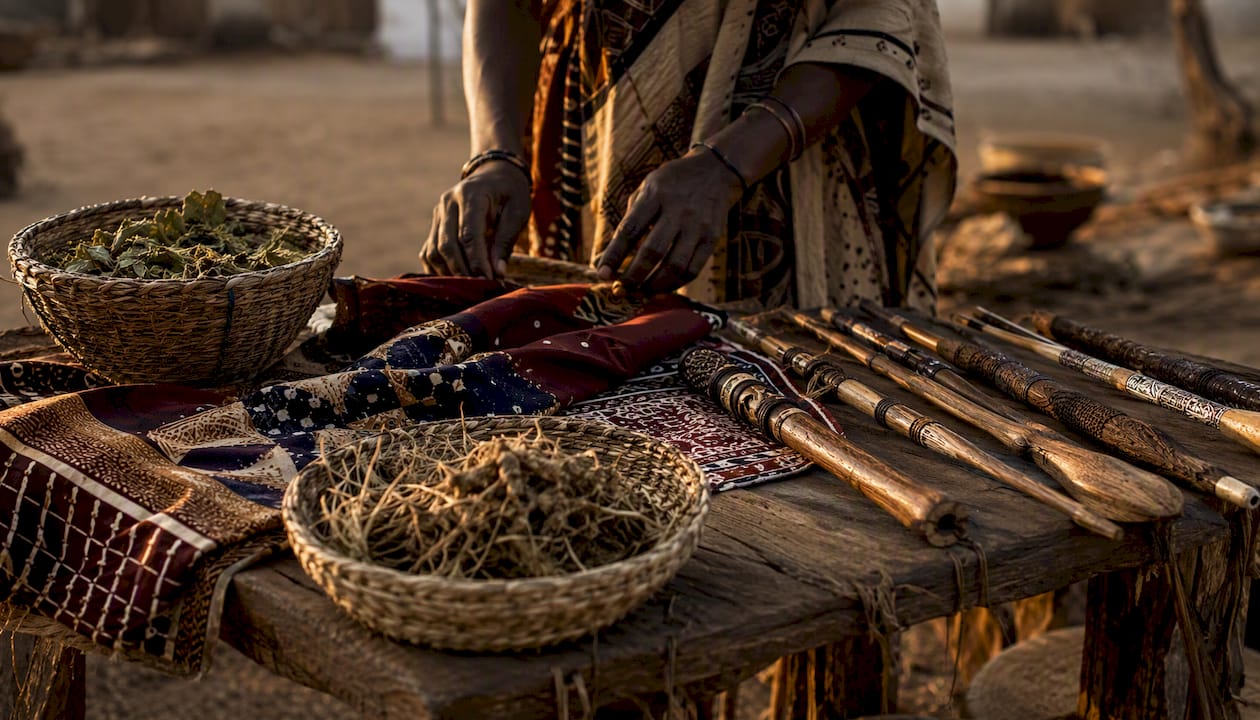
- Material and ingredient readiness. Specific herbs, consecrated objects, and offerings must be sourced and properly prepared. Research on traditional ritual systems confirms that specialists sometimes delay ceremonies to secure rare materials rather than substitute inferior ones — because substitution degrades the outcome.
- Practitioner ritual readiness. A practitioner must enter the rite in the correct spiritual state. Rushed preparation compromises that state, regardless of skill level.
- Client conviction and active participation. Divination in Senegal and the Gambia documents that diviners prescribe tangible remedial acts — donations, offerings, specific behaviors — that are considered essential to completing the remedy. Knowledge alone is never sufficient. Your follow-through is part of the ritual mechanism.
- Synchronization with natural or ancestral markers. Propitious windows identified through divination carry weight. Acting outside them is not impossible, but it requires more effort from both practitioner and client to compensate.
Practitioners report that the “right time” is frequently when a client reaches a moment of inner clarity and commitment. Acting at a moment of high anxiety without client buy-in can produce weak or short-lived outcomes.
Pro Tip: If you’re missing one element — say, a specific offering or a personal item — a short delay to source it correctly can eliminate the need for a costly repeat ceremony. Ask your practitioner which elements are non-negotiable before scheduling.
Understanding why spiritual intervention helps relationships heal also clarifies why client participation is not optional — it is structural.
When should you act now, and when should you wait?
Use this numbered checklist before deciding:
- Is the situation actively worsening? If yes, a short-term protective rite is warranted immediately, even before a full ceremony is ready.
- Is there a hard deadline? A court date, a departure, a final conversation — if the window closes in days, act now with what’s available.
- Are core materials accessible? If the practitioner can source the primary elements within 48–72 hours, proceed. If rare ingredients require weeks, plan a staged approach.
- Do you have emotional clarity? If you’re in acute crisis and cannot clearly state your intention, a grounding or protection rite first will strengthen the full ceremony later.
- Is the practitioner available? A skilled, experienced practitioner who is unavailable is not replaceable by a rushed, less-experienced one.
Mini flow: Safety risk or ongoing harm → act now with a protective rite, schedule the full ceremony within 7–14 days. Missing materials or conviction → secure short-term spiritual boundary protection, then schedule the full ceremony for the next propitious window.
The acceptable trade-off: a minimal-protection rite buys time without compromising the full ceremony’s integrity. Many clients use both — immediate protection followed by a prepared, complete ceremony — and that staged approach consistently outperforms either option alone.
What preparation actually looks like before a ritual
Client checklist before any ceremony:
- Written statement of honest intention (not what you hope for — what is actually true)
- Personal offerings or items connected to the situation (photos, documents, meaningful objects)
- Payment and privacy consent confirmed in advance
- Mental and emotional grounding — even 24 hours of focused intention before the rite matters
Practitioner tasks: divination to identify the propitious window, element sourcing and sanctification, coordination with any required assistants or secondary offerings, and scheduling confirmation.
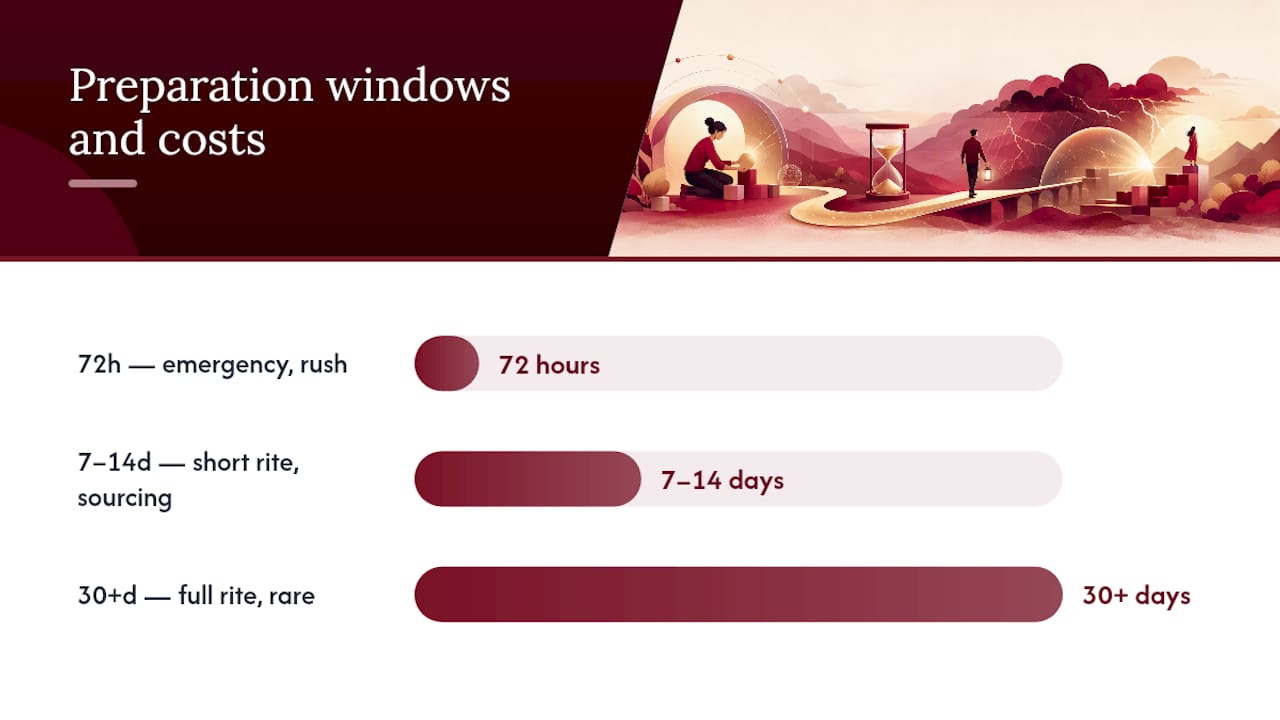
| Window | What can be accomplished | Primary cost drivers |
|---|---|---|
| 72 hours | Emergency protective rite, initial divination | Rush fees, practitioner availability premium |
| 7–14 days | Full short-ceremony with sourced elements | Ingredient sourcing, assistant coordination |
| 30+ days | Complete prepared ceremony, optimal timing | Rare ingredients, extended preparation labor |
Customized rituals consistently outperform generic ones precisely because the preparation phase is treated as part of the ritual itself, not as administrative overhead.
Risks of rushed rituals and red flags to watch for
Rushing a ceremony without proper preparation carries real costs:
- Ineffective outcomes that require repeat work — at additional expense
- Unclean offerings or improperly consecrated elements that can weaken or misdirect the rite
- Wasted money on a ceremony that needed more time to be done correctly
Red flags when vetting a practitioner:
- No transparent explanation of process, materials, or timeline
- Refusal to discuss follow-up or what happens if the first rite is insufficient
- Pressure for immediate payment with no intake process
- No privacy guarantees or confidentiality policy
A reputable practitioner will tell you when not to rush. If someone promises guaranteed results within 24 hours regardless of your situation, that is the red flag, not the reassurance.
Trust signals to look for: documented process, verifiable experience (40+ years is a meaningful benchmark), client testimonials describing specific outcomes, and willingness to recommend a staged approach when the situation calls for it.
How Motherodessa handles urgent timing in practice
Motherodessa’s process for urgent cases follows a structured sequence:
- Emergency intake: situation assessment, identification of immediate risks, and honest timeline disclosure
- Immediate protective rite (when warranted): deployed within 24–48 hours to stabilize the situation
- Rapid divination: identifies the propitious window and required elements for the full ceremony
- Element sourcing and sanctification: no substitutions for core materials
- Full ceremony scheduling: aligned with the divination-identified window, typically within 7–14 days
- Documented follow-up: clear communication about expected signs, timeline, and next steps
For urgent love-reconciliation cases, the Return a Lover Ritual follows this exact staged model. For financial and business situations, the same logic applies — immediate protection, then a prepared abundance ceremony.
Pro Tip: Before your intake call, write down the single most important outcome you need in the next 30 days. Practitioners who work with event-time need a clear anchor point to identify the right propitious window for your specific situation.
Timing is a shared responsibility, not just a practitioner’s call
Clients who commit fully to preparation and follow-through — who complete their offerings, maintain their intention, and stay engaged after the ceremony — consistently report stronger and more lasting outcomes. The practitioner holds the knowledge and the technique. You hold the conviction. Both are required.
If you’re in a crisis right now, use the checklist in this article. If the situation is actively worsening, secure short-term protection first. Then contact a trusted, experienced practitioner to schedule the full ceremony at the right moment. The decision to act is yours. The timing of how you act is where the difference lives.
Motherodessa’s urgent ritual services: what to expect
When timing is critical and the situation can’t wait, Motherodessa’s Spiritual Healing & Clarity collection covers the full range of urgent and prepared ritual options — from immediate protective rites to complete ceremonies for love, money, and curse removal.
What to expect when you engage: a confidential intake process, honest timeline disclosure, emergency protective action within 24–48 hours when the situation warrants it, and a full ceremony scheduled for the next propitious window. Rush fees apply for 72-hour turnarounds; all costs are disclosed before any work begins. Privacy is guaranteed at every stage.
For urgent protection needs or love-reconciliation cases, start with the intake form and specify whether you need immediate protective action or a fully prepared ceremony. Motherodessa will tell you which approach fits your situation — and when.
Sources
- A Healing Cult Met with the Baatombu from the North of Benin: The Kaawo
- When ritual timing requires delay: element sourcing and ceremonial scheduling in traditional systems
- Concept of Time in African Traditional Religion
- Divination and ritual remedies in Senegal and the Gambia