
Why privacy is the foundation of traditional West African spiritual healing
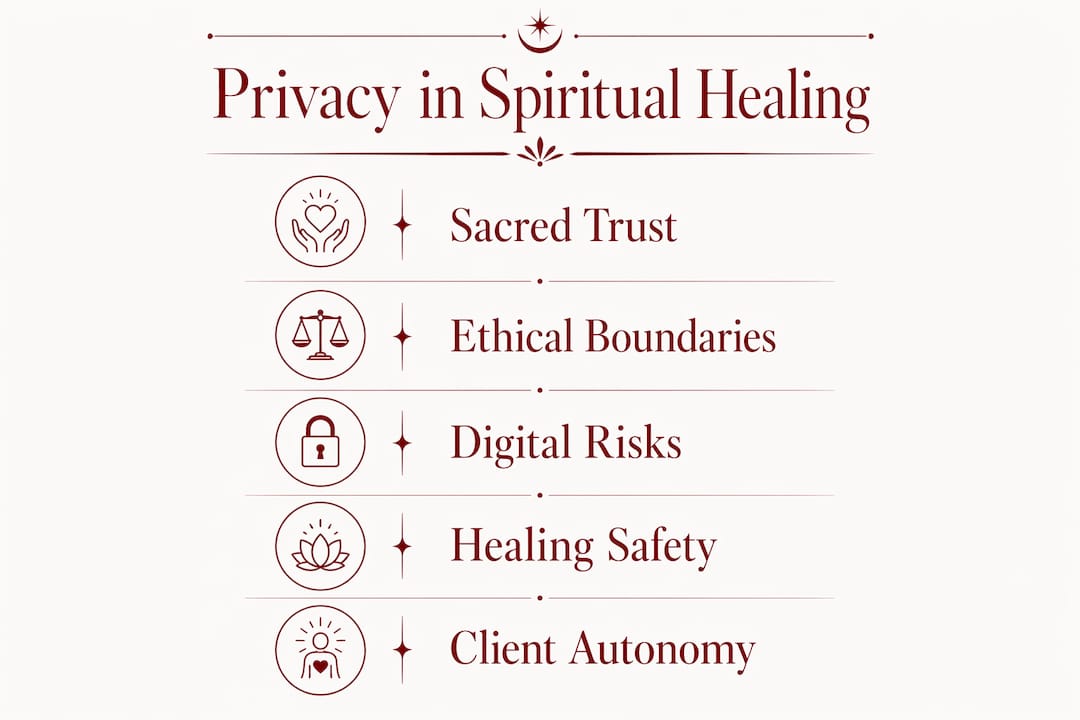
Privacy is not a courtesy in traditional West African spiritual healing. It is the container that makes healing possible at all. Without it, the ritual space collapses into performance rather than transformation.
Here is what that means in practice:
- Privacy creates radical honesty. When clients know their disclosures stay sealed, they stop editing themselves. That unfiltered truth is what a healer actually works with. Confidentiality is the clinical container for deep healing; remove it, and clients self-censor in ways that block real change.
- Confidentiality prevents threat responses. Loss of control over personal information activates the nervous system’s threat response, producing chronic stress that undermines therapeutic disclosure. In a ritual context, that same physiological shutdown prevents spiritual openness.
- Sacred privacy is culturally integral. In West African spiritual traditions, the healer-client relationship is a covenant, not a transaction. What passes between them is treated as holy, not as data.
- Ethical mandates require it. Practitioners bear a responsibility to protect client identity and disclosures as a matter of spiritual ethical practice, not just policy.
- Privacy eliminates self-censorship. Clients who trust the space bring their full situation, including the parts they have never said aloud. That completeness is what allows a ritual to be genuinely customized.
Table of Contents
- Privacy as the ethical foundation of spiritual healing
- Digital privacy in spiritual healing creates real risks
- How Motherodessa’s 40+ years of experience protects your privacy
- Privacy empowers your healing and protects your spiritual autonomy
- Privacy is a human right, not just a healing preference
- What happens when privacy is breached in spiritual healing
- Motherodessa offers private, personalized ritual healing rooted in tradition
- Key Takeaways
Privacy as the ethical foundation of spiritual healing
Confidentiality in spiritual practice is not a policy borrowed from therapy. It is an ethical posture rooted in the belief that what a person shares in a sacred space is holy and deserves to be held as such.
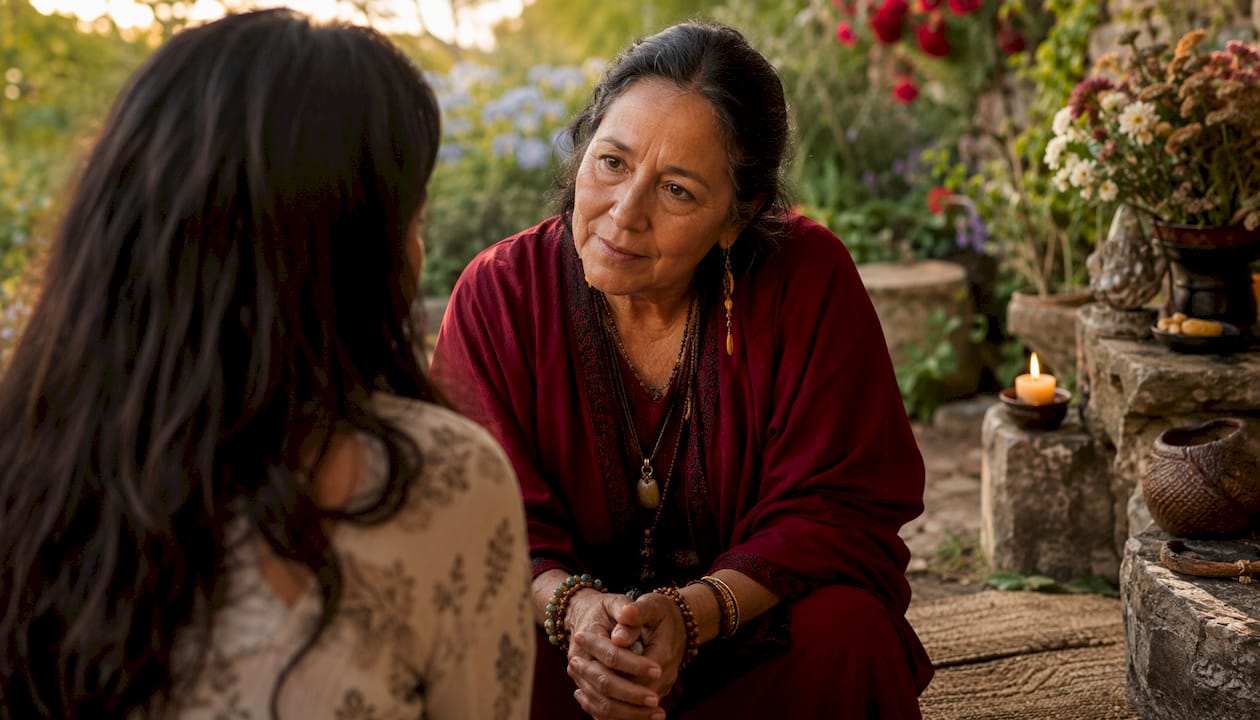
The Spiritual Care Association’s code of ethics is explicit: practitioners must not solicit private information beyond what is necessary, and once shared, that information is bound by strict confidentiality standards. Written materials from sessions must be secured. Client identity itself is protected, not just the content of what was said.
Formal agreements between healer and client matter here. Establishing a clear covenant at the onset of a spiritual relationship, whether written or verbal, clarifies what confidentiality covers, how the relationship differs from counseling or psychotherapy, and what legal limits apply. That clarity builds the trust that makes the work effective.
Spiritual healing confidentiality differs from psychotherapy in one important way: it is grounded in sacred obligation rather than licensure. The healer holds disclosures not because a regulatory board requires it, but because the tradition demands it. In shamanic and traditional practices, client identity and disclosures are treated as sacred unless a legal mandate requires otherwise.
Pro Tip: Before your first session with any spiritual practitioner, ask directly how they handle confidentiality, whether they take notes, and under what circumstances they would share anything you disclose. A practitioner who cannot answer clearly is one worth reconsidering.
Digital privacy in spiritual healing creates real risks
The shift toward digital communication has introduced threats that traditional sacred container concepts were never designed to handle.
AI tools and digital platforms commodify personal spiritual narratives, treating intimate disclosures as data to be processed, stored, and potentially used for algorithm training. A conversation that feels private on a consumer app may be retained, reviewed, or incorporated into model improvement. That is not a theoretical risk.
End-to-end encryption offers meaningfully stronger protection than standard consumer messaging apps, but most clients do not know to ask which type of platform their practitioner uses.
| Communication Tool | Encryption Level | Data Retention Risk | Suitable for Spiritual Sessions |
|---|---|---|---|
| Standard SMS / text | None | High | No |
| Consumer messaging apps | Varies | Medium–High | No |
| End-to-end encrypted apps | Strong | Low | Conditionally yes |
| Practitioner-managed secure platforms | Strong | Low | Yes |
| AI chatbots | None (data used for training) | Very High | No |
Legal frameworks in the United States offer limited protection for spiritual data specifically. HIPAA covers licensed medical and mental health providers, not traditional spiritual healers. That gap means the ethical responsibility falls entirely on the practitioner.
How Motherodessa’s 40+ years of experience protects your privacy
Motherodessa has spent many years refining a confidentiality practice that is both ethically grounded and practically specific. Every ritual begins with a clear understanding of what will be shared, how it will be held, and what protections are in place.
Her personalized spiritual healing approach means no two sessions follow the same structure. That customization is only possible because clients trust her with the full truth of their situations, including the details they have never shared with anyone else. That trust is earned through consistent, demonstrated confidentiality.
Key elements of Motherodessa’s privacy practice:
- Client identities and disclosures are never shared, documented beyond what the ritual requires, or referenced outside the session.
- Remote sessions are conducted through secure channels, not consumer platforms, reflecting the same client confidentiality standards applied in person.
- Ritual customization is built on what clients share privately, which means privacy and effectiveness are directly linked.
- Clients who have worked with Motherodessa on matters ranging from generational curses to relationship restoration consistently describe the session environment as the first place they felt safe enough to be completely honest.
That safety is not incidental. It is the mechanism through which transformation happens.
Privacy empowers your healing and protects your spiritual autonomy
Privacy does more than protect information. It actively enables the kind of vulnerability that produces real spiritual breakthroughs.
When you know your disclosures are sealed, you stop performing and start being honest. That shift, from managed self-presentation to unfiltered truth, is where healing begins. Spiritual autonomy depends on it. The moment your ritual narrative becomes data that others can access, interpret, or commodify, your ability to engage authentically is compromised.
Community stigma around spiritual healing makes this especially acute in the United States. Many clients seeking traditional healing practices do so privately, away from family members, employers, or social circles who might not understand or might actively judge. Privacy protects that choice.
Benefits clients gain from a protected ritual environment:
- Freedom to disclose the full situation without fear of judgment or exposure
- Ability to engage with culturally specific practices without community stigma
- Protection of spiritual autonomy against external interference or commodification
- Confidence that remote sessions carry the same confidentiality as in-person ones
- Space to be vulnerable, which is the precondition for genuine transformation
Some plant medicine and alternative healing traditions share this understanding: the intimacy of the healing encounter is inseparable from its effectiveness.
Privacy is a human right, not just a healing preference
The Stanford Encyclopedia of Philosophy frames medical confidentiality as promoting individual autonomy by sheltering those seeking morally or culturally sensitive care from outside criticism. That framing applies directly to spiritual healing.
Privacy in healing is not a preference. It is a condition that allows people to make choices about their own lives without external interference. When that condition is absent, people self-censor, delay seeking help, or avoid it entirely. The harm is not abstract.
Shoshana Zuboff, whose work on surveillance capitalism has shaped contemporary privacy discourse, argues that a society preserving space for spirituality and conscience requires a society that preserves privacy. That argument holds whether the context is a therapist’s office or a traditional ritual space.
What happens when privacy is breached in spiritual healing
A breach of confidentiality in spiritual healing does not just damage a relationship. It can end a client’s willingness to seek help at all.
When clients discover their disclosures were shared, documented without consent, or exposed through digital channels, the nervous system registers it as a violation. For clients already carrying trauma, that response compounds existing harm. The chronic loss of control that follows a breach produces anxiety, hypervigilance, and a retreat from vulnerability that can persist long after the incident itself.
Trust, once broken in a sacred healing context, is rarely rebuilt with the same practitioner. More significantly, clients often generalize that breach to the entire category of healing, avoiding future help because the risk feels too high. The public health consequence is real: privacy failures determine who seeks care and who stays silent.
Motherodessa offers private, personalized ritual healing rooted in tradition
For clients who need a practitioner they can trust completely, Motherodessa offers something most healing services cannot: extensive demonstrated confidentiality, combined with rituals that are genuinely built around your specific situation. No templates, no generic protocols, no shared platforms that treat your spiritual narrative as data.
Whether you are working through a relationship crisis, seeking financial restoration, or addressing protection needs, each session is customized from the ground up, and everything you share stays sealed within the sacred space of the ritual. That is not a policy statement. It is how Motherodessa has worked for over 40 years.
Explore her personalized healing services and take the first step toward a session built entirely around you.
Key Takeaways
Privacy is the non-negotiable foundation of effective spiritual healing, enabling the radical honesty and sacred trust that make genuine transformation possible.
| Point | Details |
|---|---|
| Privacy enables transformation | Clients who trust confidentiality stop self-censoring, giving practitioners the full truth needed for effective ritual work. |
| Digital tools carry real risks | Consumer apps and AI platforms retain and process spiritual disclosures; end-to-end encrypted channels are the minimum standard for remote sessions. |
| Breaches cause lasting harm | A confidentiality breach can end a client’s willingness to seek spiritual help entirely, compounding existing trauma. |
| Privacy is a human right | Spiritual autonomy depends on the freedom to seek culturally sensitive healing without external judgment or interference. |
| Motherodessa’s approach | Over 40 years of strict confidentiality and fully customized rituals make Motherodessa a trusted choice for clients who need genuine privacy. |