
Persistent misfortune that clusters around one person or one household, especially when it resists every ordinary fix, is the pattern West African practitioners most often treat as a spiritual attack. A single sign rarely confirms anything on its own. When several align, the next step is a formal diagnostic reading, and that’s where decades of practitioner experience, including Mother Odessa’s, matters most.
TL;DR:
- A formal diagnostic reading is essential to identify if a spiritual attack is the root cause, with timelines ranging from immediate to several weeks.
- Common environmental signs include repeated damage to household objects, strange odors, suspicious objects, and bad luck linked to particular people or recent events.
- Initial protective steps like cleansing baths, threshold anointing, and better sleep habits can be taken safely while awaiting a professional diagnosis.
- Medical and mental health evaluations should run in parallel with spiritual work to rule out physical or psychological causes.
- Personalized treatment plans, including charms and rituals, are crucial; avoid fixed packages, guarantees, or unvetted remedies to ensure ethical and effective help.
Table of Contents
- Behavioral, Emotional, and Physical Spiritual Attack Signs
- Household and Object Signs of Spiritual Interference
- How Practitioners Confirm a Spiritual Attack
- Immediate Protections and Actions to Avoid
- When to Seek Personalized Ritual Help
- The Spiritual Forces Behind These Attacks
- Preventing Future Attacks and Recovering Long-Term
- Practitioner Perspective: Why Diagnosis and Personalization Matter
- Protection Rituals and Diagnostic Readings From Mother Odessa
- Sources
Behavioral, Emotional, and Physical Spiritual Attack Signs
Practitioners look at clusters, not isolated bad days. A person suddenly failing in one specific area of life, while everything else holds steady, is one of the clearer indicators of spiritual distress. The pattern tends to be narrow and stubborn: the same job interview falls through three times, the same relationship collapses in the same way, the same bank account keeps hemorrhaging money right when things should be improving.
Watch for these clusters:
- Chronic anxiety or a sudden drop in performance tied to one area of life, work, love, or finances, that doesn’t respond to normal problem-solving.
- Recurring nightmares or disturbed sleep with repeating imagery, especially themes of being chased, robbed, or confronted by a specific person.
- Sudden fatigue with no medical explanation, new phobias, or physical complaints that come and go without a diagnosis.
- A string of relationship breakdowns or betrayals that follow an oddly similar script, as though someone keeps sabotaging the same outcome.
Some of these overlap with ordinary stress or with clinical conditions. Case literature on culture-bound nocturnal disturbances, sometimes called night attacks in West African communities, notes real overlap with parasomnias and other medical conditions. Rule out medical and mental health causes first, and keep a written log of when each symptom shows up. That log becomes useful evidence once you sit down with a diviner.
Household and Object Signs of Spiritual Interference
Spiritual attacks don’t always target the body. Sometimes they show up in the walls, the yard, or a single object that keeps causing trouble no matter where it’s placed. West African-rooted diagnostic traditions treat these environmental clues as seriously as personal symptoms.
- Localized, repeated damage. The same appliance breaks in the same room. The same wall cracks again after repair. Bad luck seems fixed to a location rather than spread evenly through the household.
- Odd sensory signals. A smell with no source, a pet that won’t go near a particular corner or object, or a residue that appears and reappears despite cleaning.
- Suspicious objects. A gift that arrived right before misfortune started, or a small item, hair, powder, a knotted cloth, found somewhere it doesn’t belong.
- Misfortune tied to a transaction or visitor. Bad luck that started right after a specific purchase, a specific guest’s visit, or a falling out with someone.
Traditions rooted in Vodún treat these object-based clues as legitimate diagnostic material, not superstition. A diviner will often ask about the household’s recent history before ever discussing the person’s symptoms.
How Practitioners Confirm a Spiritual Attack
Divination is the standard first step. A practitioner working from West African-rooted methods will typically walk through a structured reading, sometimes using shells, cards, or other tools depending on their lineage, to map out where the disturbance originated and who or what is behind it. This isn’t guesswork dressed up in ritual language. It’s a diagnostic process, and it functions the way an intake exam functions in any other healing tradition: gather symptoms, gather history, identify the source, then build a plan.
Expect a session to include direct questions about your recent history, relationships, and any objects or incidents you’ve noticed. Some diagnostics involve reviewing a physical item you bring in, since charms and countercharms play a real role in both causing and resolving these situations. The diagnostic matters because it distinguishes between very different root causes: an outside curse born of envy, an ancestral imbalance that needs appeasing, or a taboo violation that calls for a different remedy entirely.
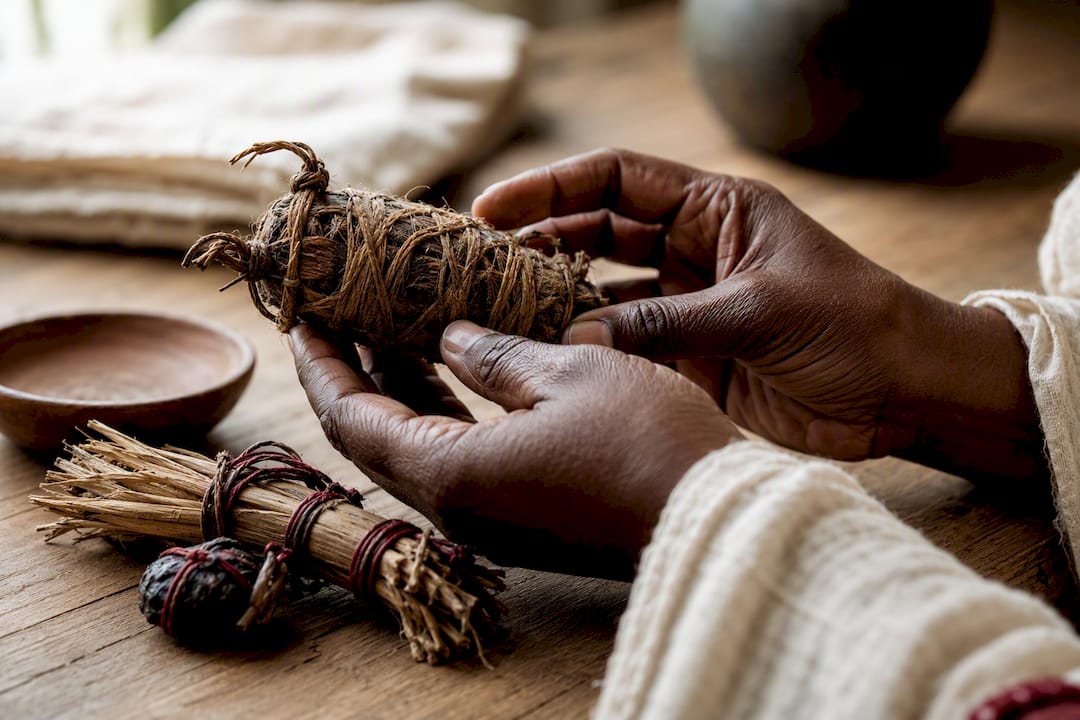
Timelines vary widely. Some cases resolve with a single cleansing ritual. Others require a sequence of ceremonies spaced over weeks, particularly when ancestral work or a deeply rooted curse is involved. Cost and duration should always follow from what the diagnostic actually finds, not from a fixed menu applied to everyone.
Immediate Protections and Actions to Avoid
You don’t need to wait for a full reading to take reasonable, low-risk steps. Cleansing baths, a habit of grounding yourself daily, and simple boundary work at your home’s entry points are all reasonable while you arrange a proper diagnostic.
Safe steps to start now:
-
A cleansing bath using herbs traditionally associated with purification, done with intention rather than as a quick shower add-on.
-
An Aabo-style threshold gesture, anointing your doorway with red palm oil and placing sacred leaves near entry points, drawn from ancestral protection practices still used today.
-
Better sleep habits and less caffeine or alcohol, since exhaustion amplifies every symptom on this list.
-
Medical or mental health evaluation for any physical or psychological symptom, run in parallel with spiritual work, not instead of it.
Avoid anything that escalates risk. Never attempt retaliation against a suspected source, never ingest or apply unknown substances found online, and never follow a “cure” from an unvetted source promising a fast fix. These shortcuts cause real physical and legal harm, and they almost never address the actual cause.
Pro Tip: Keep a dated log of every incident, symptom, and object you’ve noticed, no matter how small. A practitioner can move through a diagnostic far faster when you arrive with a clear timeline instead of a scattered memory of “it’s been bad for months.”
When to Seek Personalized Ritual Help
Consult a practitioner once you’ve noticed multiple signs stacking together, once ordinary remedies stop working, or once you spot a pattern repeating across generations in your family. A single bad week doesn’t need a ritual response. A pattern that survives every normal intervention does.
A reputable practitioner should offer:
- A transparent diagnostic reading before recommending any specific ritual.
- A tailored plan with a clear timeline and cost range explained upfront, not a one-size-fits-all package.
- Privacy protections and aftercare guidance once the ritual work is complete.
Common remedies include charms known as bǒ, spiritual cleansing baths, banishing or protection ceremonies, and curated offerings matched to what the diagnostic reveals. Be wary of anyone guaranteeing a specific outcome, pressuring you to spend beyond the agreed plan, or asking you to direct harm toward another person. None of that reflects ethical practice.
The Spiritual Forces Behind These Attacks
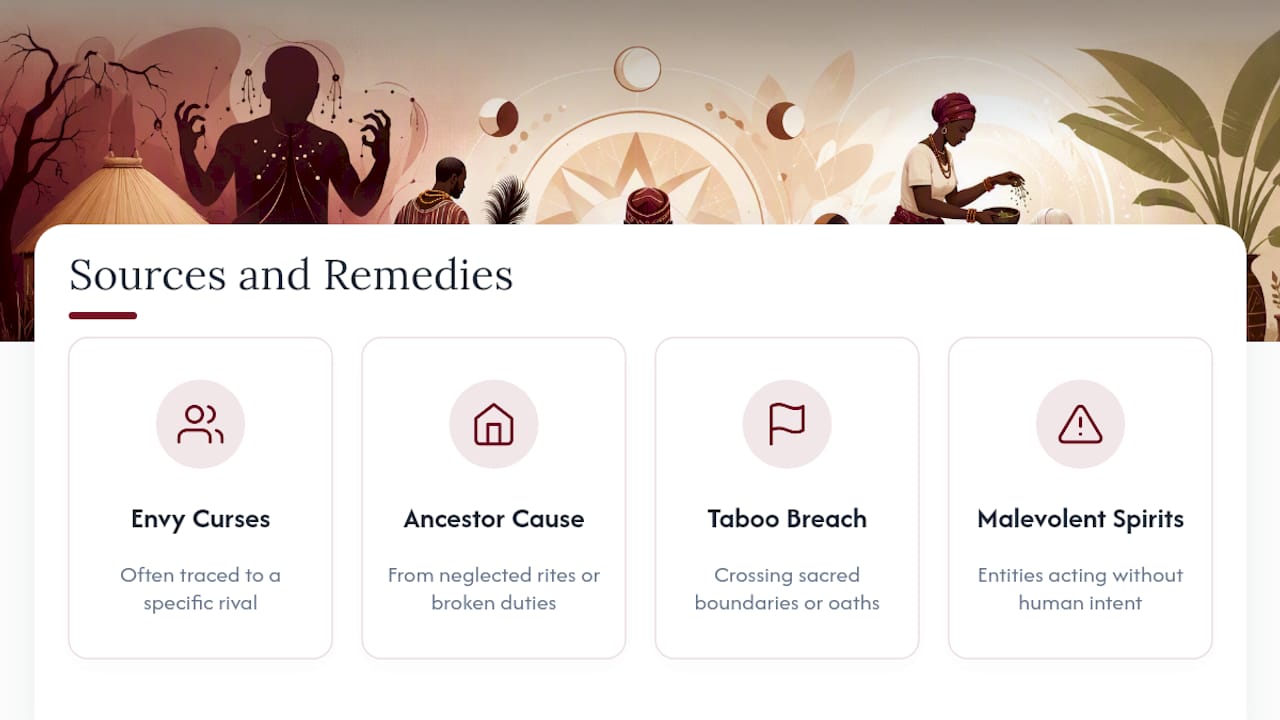
West African traditions name several distinct sources rather than treating “spiritual attack” as one vague force. Envy-driven curses, often channeled through juju or targeted charm work, are among the most common, and they’re typically traced back to a specific rival or jealous acquaintance rather than an anonymous evil.
Ancestral displeasure is another frequent cause. When obligations to ancestors go unmet, whether through neglected rites or broken family duties, misfortune can surface as a kind of correction rather than punishment. Broader traditional religious frameworks describe ancestors as active participants in the living family’s fortunes, which is part of why diviners always ask about family history early in a session.
Taboo violations round out the picture. Certain traditions hold that crossing specific boundaries, disrespecting a sacred space, breaking an oath, mishandling ritual objects, opens a person to spiritual consequence. And some attacks are attributed to malevolent spirits or entities acting independently of any human intention, which is why a diagnostic reading matters so much: it tells you which of these forces you’re actually dealing with, since the remedy for envy looks nothing like the remedy for ancestral neglect.
Preventing Future Attacks and Recovering Long-Term
Recovery from a confirmed spiritual attack isn’t always instant, even after the primary ritual work is done. Some clients notice lingering fatigue, emotional rawness, or a period of adjustment as the disruption clears, similar to a physical recovery period after a serious illness. Aftercare matters as much as the initial ceremony.
Long-term prevention leans heavily on consistency rather than a one-time fix. Regular cleansing practices, maintained boundary work at the home, and ongoing attention to ancestral obligations all reduce the odds of a repeat attack. Families with a documented history of recurring curses often benefit from periodic maintenance rituals rather than waiting for symptoms to return before acting again.
Staying alert to early warning signs matters too. Someone who has already gone through a diagnostic and ritual process usually recognizes the early version of their original symptoms faster the second time, which shortens how long any new disturbance goes unaddressed. Combining spiritual maintenance with ordinary self-care, sleep, medical checkups, healthy relationships, gives the protective work something solid to hold onto.
Practitioner Perspective: Why Diagnosis and Personalization Matter
No two cases of spiritual distress look the same, even when the symptoms sound alike on paper. Over four decades of practice, Mother Odessa has found that skipping the diagnostic step and jumping straight to a generic ritual almost always wastes a client’s time and money. Every reading is confidential, every outcome is discussed honestly rather than promised, and anyone noticing several signs at once deserves a proper assessment before spending on anything.
— Psychic
Protection Rituals and Diagnostic Readings From Mother Odessa
If several of these signs sound familiar, the next reasonable step is a real diagnostic rather than another round of guesswork. Mother Odessa offers a Full Spiritual Diagnostic Reading to identify the actual source before recommending anything, alongside targeted options like Psychic Attack Defense and Spiritual Shield for ongoing protection once the cause is clear.
First contact often starts with a diagnostic: a private reading that maps your specific situation, followed by a proposed ritual plan with its own timeline and scope, rather than a blanket package applied to every client. Discussions remain confidential, and no outcome is promised beyond what the reading actually supports. If protection or curse removal is what you need, the Protection & Banishing collection is the place to start, and you can request a diagnostic reading directly to find out what’s actually driving your situation before committing to a full ritual plan.
Sources
For deeper cultural background, see the Vodún overview on Wikipedia, academic research on African traditional healing, and practitioner writing on Vodun’s broader cultural context.
- West African Vodún — Wikipedia
- Clinical case literature on nocturnal spiritual disturbance — SAGE Journals