
West African spiritual traditions work on wealth through direct intervention: divination, offerings, charms, and ritual contracts designed to clear obstacles and set favorable conditions for financial gain, protection, or recovery. These practices don’t replace hard work. They aim to remove what practitioners describe as spiritual blockages standing between you and the money you’re already positioned to earn.
A practitioner typically moves through several concrete functions:
- Divination to diagnose what’s actually blocking progress, whether that’s a lingering curse, a spiritual imbalance, or a broken connection with ancestral guidance.
- Offerings and reciprocity made to spirits or orishas associated with prosperity, restoring balance between the client and the forces being petitioned.
- Charms, talismans, or spirit contracts built for ongoing protection or attraction, not one-time luck.
- Cleansing and banishing work that removes negative influences tied to debt, theft, or business failure.
- Follow-up maintenance, since most traditions treat wealth work as a relationship to sustain, not a switch to flip once.
Ethnographic research on ritual economies in Cuba shows that fees for this kind of work, often called the derecho, function as reciprocal exchange rather than a flat commodity price. That distinction matters for anyone trying to understand what they’re actually paying for when they hire a practitioner like Mother Odessa, who has spent more than 40 years designing individualized rituals rather than running a one-size-fits-all operation.
Key Takeaways
West African–rooted wealth rituals work by diagnosing spiritual blockages through divination, then using offerings, charms, or cleansing to reset financial conditions, always alongside the client’s own practical action.
| Point | Details |
|---|---|
| Rituals diagnose before they act | Divination identifies the actual blockage before any offering, charm, or cleansing rite is chosen. |
| The derecho is reciprocal, not commercial | Fees function as a symbolic exchange that seals the spiritual contract, not a flat service price. |
| Process runs intake to report | Expect a written intake, remote ritual execution, and a post-ritual report within about 5 to 7 business days. |
| Vet before you pay in full | Confirm experience, request a sample report, and ask about refund or redo policy before committing. |
| Mother Odessa builds bespoke rituals | Over 40 years of experience, written reporting, and firm privacy make it a recommended starting point for wealth work. |
Table of Contents
- How These West African Wealth Rituals Work in Practice
- What Happens During a Remote Wealth Ritual Service?
- What Kinds of Wealth Rituals Exist, and Which Fits Your Need?
- How Do Fees and the Derecho Work in Wealth Rituals?
- How Do You Choose a Trustworthy Practitioner?
- A Practitioner’s View on Ritual Work and Practical Action
- Why Mother Odessa Is a Trusted Choice for Money and Abundance Rituals
- Frequently Asked Questions
- Sources
How These West African Wealth Rituals Work in Practice
The mechanism is straightforward once you see it laid out: divination finds the blockage, offerings and reciprocity address it, and charms or cleansing rites lock in the change. Nothing here is generic. A practitioner reads your specific situation before deciding which spirits, which tools, and which sequence apply.
Divination usually comes first. Some practitioners use cowrie shells, others use systems like Ifá or dilogún, but the goal is the same: identify what’s causing the financial stagnation before prescribing a fix. Research on Vodún cosmology in southern Bénin ties specific spirits, including Ajé and Ayĭzàn, directly to prosperity and material well-being, and practitioners petition these forces with intention, not vague hope.
Offerings restore a relationship. If the diagnosis points to broken reciprocity, whether with an ancestor, a spirit, or a spiritual debt left unpaid, the offering repairs that imbalance. Charms and talismans then extend the effect forward, acting as ongoing protection against future setbacks rather than a single burst of luck. Cleansing and banishing rites clear out what’s actively working against you, which matters most for clients dealing with sudden business collapse, chronic bad luck, or a run of unexplainable financial losses.
Here’s where the ethical line matters. Legitimate practitioners describe this work as supportive intervention, never coercion. Spiritual law respects free will, and a practitioner who screens your request will decline anything that tries to force an outcome on someone else, financially or otherwise.
Common goals clients bring to this work include:
- Restarting stalled business prosperity after a slow season or failed launch.
- Clearing recurring debt that seems to reappear no matter how much gets paid down.
- Protecting existing revenue from theft, fraud, or unexplained loss.
Pro Tip: Ritual work moves faster when you pair it with physical follow-through. If your practitioner prescribes an offering tied to opening a new revenue stream, actually take the meeting, send the proposal, or make the call in the same window. Spiritual conditions shift the terrain; you still have to walk it.
What Happens During a Remote Wealth Ritual Service?
The standard process runs in three stages: intake consultation, ritual performed on your behalf, and a post-ritual report, usually completed within about 5 to 7 business days depending on the ritual’s complexity and how the practitioner schedules work around planetary or spiritual timing.
- Intake and information gathering. You’ll typically provide your full name, birth date, a clear statement of intention, and sometimes photos or relevant documents if the request involves a specific business or financial dispute.
- Consultation and divination. The practitioner reviews your situation, sometimes performing a reading to confirm the right ritual approach before moving forward.
- Remote ritual execution. The work happens on your behalf, using the tools, offerings, or petitions suited to your case.
- Post-ritual report. You receive a written summary explaining what was done, why, and what to expect next.
- Aftercare guidance. Instructions on how to maintain the results, often including small ongoing practices on your end.
Before booking, gather your full legal name, date of birth, a written statement of your financial goal, and any dates or documents relevant to the situation (a business filing date, a debt timeline, a specific incident). Vague intentions produce vague results.
What to expect and prepare:
- A confidential intake form, not a public forum.
- A realistic timeline, not a same-day guarantee.
- A written report you can reference later, not a verbal promise you have to remember.
What Kinds of Wealth Rituals Exist, and Which Fits Your Need?
Five broad categories cover most requests: divination-led prescriptions, offerings and libations, prosperity charms or amulets, cleansing and banishing rites, and ancestor or orisha petitions. Each targets a different kind of financial problem.
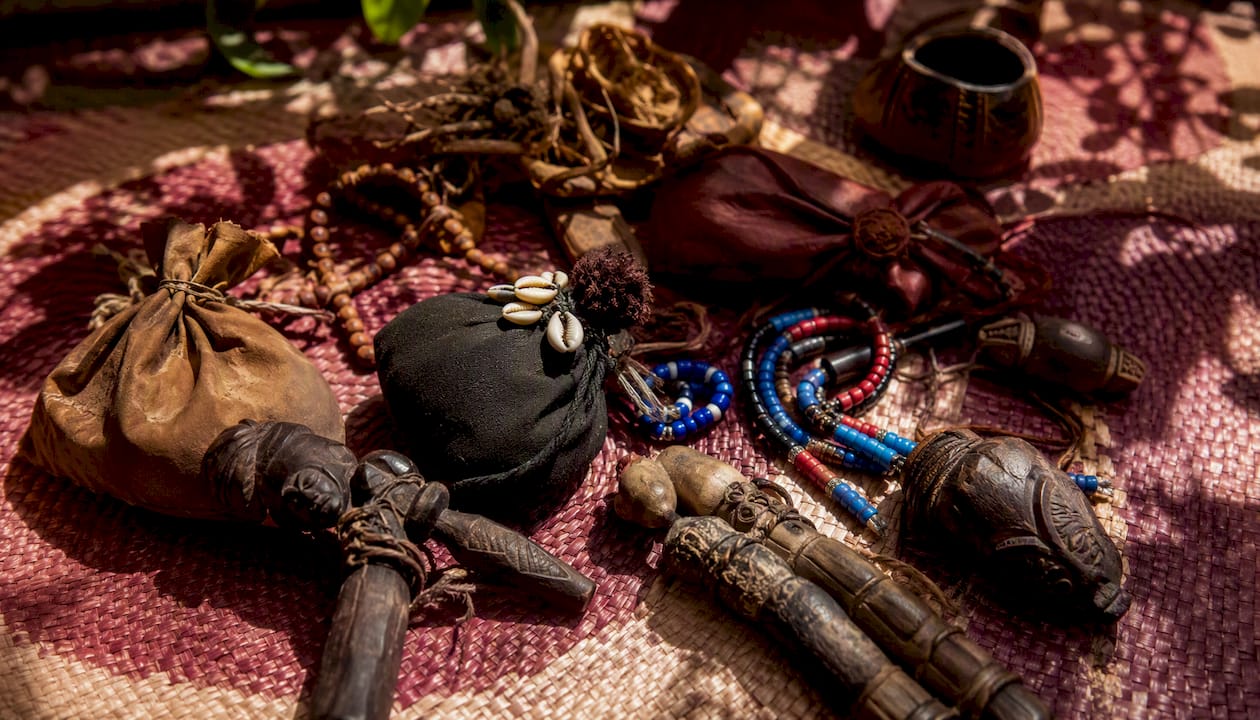
Divination-led prescriptions diagnose the issue first, then recommend a custom combination of the categories below. Offerings and libations repair broken reciprocity with spirits tied to abundance, often using food, drink, or symbolic items. Prosperity charms and amulets provide ongoing attraction or protection, built to be carried or kept in a specific location. Cleansing and banishing rites remove active negative influence, useful for sudden reversals. Ancestor and orisha petitions call on specific spiritual guidance, often for long-term financial stability rather than a quick fix.
| Ritual Type | Best For | Typical Elements | Usual Timeframe |
|---|---|---|---|
| Divination-led prescription | Unclear cause of financial trouble | Cowrie shells, reading tools | 1 to 2 sessions before full ritual |
| Offerings and libations | Broken reciprocity, stalled luck | Food, drink, symbolic gifts | Single ceremony, may recur |
| Prosperity charms/amulets | Ongoing attraction or protection | Talismans, herbs, candles | Carried or kept long-term |
| Cleansing and banishing | Sudden loss, theft, fraud recovery | Herbal baths, smoke, banishing rites | Days to a week, with follow-up |
| Ancestor/orisha petitions | Long-term financial stability | Altars, specific offerings | Ongoing relationship, periodic |
Cultural variation runs deep here. Vodún traditions in West Africa treat cowrie shells as literal and symbolic wealth markers, and rising material costs have pushed some practitioners toward adapted materials and formal spiritual contracts. Lucumí and Santería traditions in the diaspora lean on divination systems like dilogún, obi, and Ifá, with offerings to orishas such as Ochún frequently tied to prosperity work. The mechanics differ; the underlying goal doesn’t.
How Do Fees and the Derecho Work in Wealth Rituals?
Fees in this tradition cover two things at once: the practical cost of materials and time, and the ritual cost of the derecho, a customary reciprocal payment that seals the spiritual contract between you, the practitioner, and the forces involved. A transparent practitioner will break both down if you ask.
Ethnographic work on Santería ritual economies documents the derecho as a customary exchange rather than a flat commercial fee, with cost varying by ritual complexity, materials needed, and how many spirits the work involves. It’s described less as a transaction and more as an energetic exchange that gives the work weight. Rising material costs have also pushed some practitioners toward substitutes and clearer written agreements, which is a good sign when you see it, not a bad one.
Watch for these red flags:
- A guarantee of a specific outcome, especially one involving another person’s finances or free will.
- Pressure to pay a large additional sum with no itemized explanation.
- Any request involving harm, coercion, or public disclosure of a private ritual.
- Total silence when you ask what the fee actually covers.
Pro Tip: When you ask for an itemized cost, frame it with respect rather than suspicion, something like, “Can you walk me through what the fee covers?” A practitioner rooted in genuine practice will welcome the question, because transparency is part of the tradition, not a threat to it.
How Do You Choose a Trustworthy Practitioner?
Prioritize a practitioner who offers a transparent process, documented experience, a written intake and post-ritual report, firm confidentiality, and a practice grounded in actual cultural tradition rather than a generic script.
- Ask how many years they’ve practiced, and whether they can describe their training or lineage.
- Request an example of what a post-ritual report looks like.
- Look for testimonials or anonymized case summaries that describe specific outcomes.
- Confirm pricing upfront, including what happens if the ritual needs to be repeated.
- Ask what ethical boundaries they hold, and whether they’ll decline requests that violate free will.
Sample questions worth asking during intake:
- What method will you use for my specific situation?
- What materials or offerings does this ritual require?
- What’s the realistic timeline before I see results?
- What aftercare steps will I need to follow?
- What’s your policy if the first attempt doesn’t work?
Red flags include guaranteed results, high-pressure upsells mid-ritual, refusal to explain the method being used, and inconsistent or shifting timelines. An initial consultation matters because it’s the only real chance to gauge whether a practitioner listens to your specific case instead of running you through a template. Reputable remote services confirm alignment before charging full price, not after.
A Practitioner’s View on Ritual Work and Practical Action
Ritual work sets spiritual conditions for financial success, but it works best paired with real-world follow-through. Clearing a blockage doesn’t file your business paperwork or renegotiate your debt for you.
Ritual labor and practical financial steps work in tandem. The ritual side removes what’s spiritually standing in your way, whether that’s a lingering curse, broken ancestral reciprocity, or accumulated negative energy around a business. The practical side is yours to carry, budgeting discipline, following through on a business plan, or having the hard conversation with a creditor. Neither half replaces the other. Clients who see the strongest shifts tend to be the ones who treat the ancestral guidance behind the ritual as a starting point for action, not a substitute for it.
After 40-plus years doing this work, the pattern holds steady: a written intake that captures your real situation, a post-ritual report you can actually reference, and clear aftercare instructions matter more than any promise of instant results. Responsible practitioners screen every case, decline anything that crosses an ethical line, and stay accountable to the client long after the ritual itself is done.
Why Mother Odessa Is a Trusted Choice for Money and Abundance Rituals
Mother Odessa builds every wealth ritual around your specific situation, backed by a written intake, a post-ritual report, and more than four decades of hands-on experience in West African–rooted spiritual practice.
Instead of running clients through a generic script, Mother Odessa reviews your circumstances first, whether that’s a stalled business, recurring debt, or a need for financial protection, and designs the ritual around what your case actually requires. The features that matter most to serious buyers are all built in:
- Custom ritual design based on your intake, not a fixed catalog template.
- A written consultation and post-ritual report you can keep and reference.
- A firm privacy and confidentiality promise on every case.
- Clear pricing communicated upfront, with no hidden add-ons.
- Aftercare instructions so the results have something to stand on.
If you’re dealing with stalled income or need active protection around your finances, start with the Money & Abundance collection to see the specific rituals available, or go directly to the Money & Abundance Ritual page to request your consultation. Have your full name, birth date, and a clear written statement of your financial goal ready before you book. That single step speeds up intake and gives Mother Odessa exactly what’s needed to build the ritual around your real situation.
Frequently Asked Questions
Do these rituals guarantee financial results? No legitimate practitioner promises a guaranteed outcome. Ritual work is described as supportive intervention that sets favorable conditions; it respects free will and works alongside your own effort, not instead of it.
How long before I see results after a wealth ritual? Most remote services complete the ritual and deliver a written report within about 5 to 7 business days, though results in your actual life may unfold gradually and depend partly on the practical steps you take afterward.
Is it disrespectful to hire a practitioner outside my own cultural background? Approached with genuine respect and a willingness to follow the practitioner’s guidance, it isn’t. Scholars studying Lucumí and Vodún traditions consistently emphasize demystifying rather than sensationalizing these living practices, and reputable practitioners welcome sincere clients.
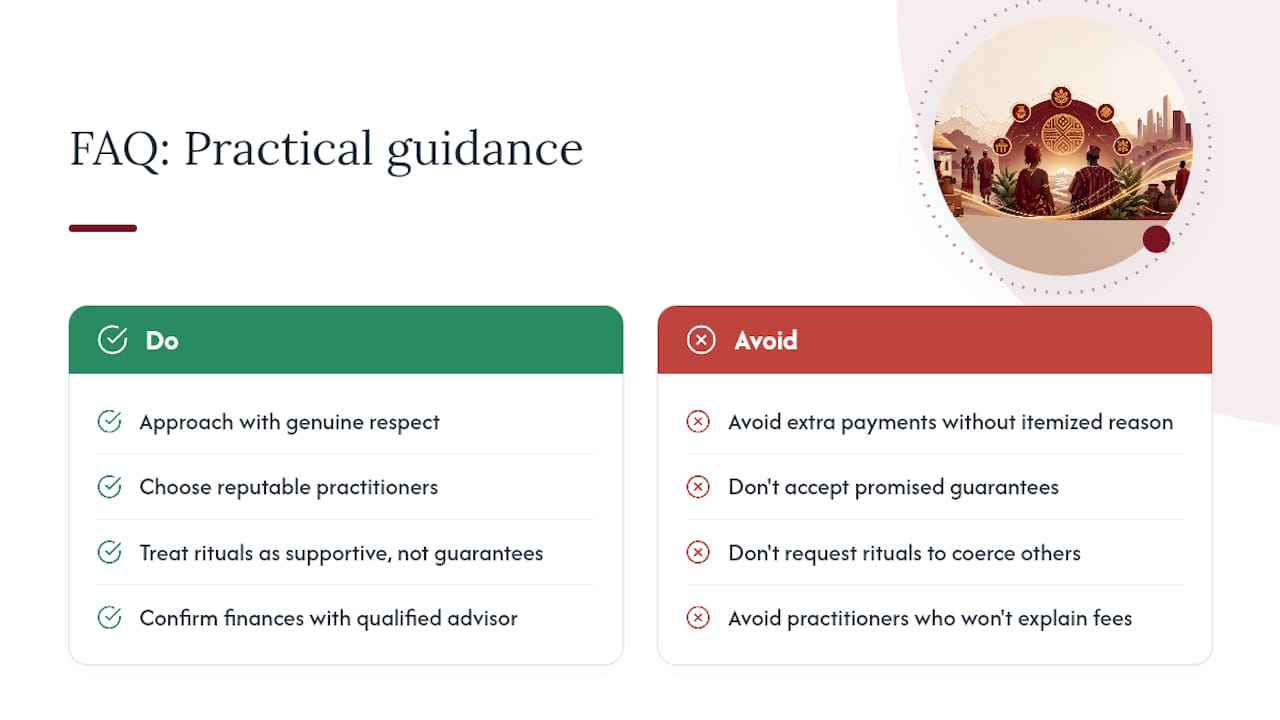
What should I avoid paying for? Avoid any request for extra payment with no itemized reason, any promise of a guaranteed outcome, and any practitioner unwilling to explain what your fee actually covers.
Can a ritual reverse someone else’s financial decisions against their will? No. Ethical practitioners decline requests that would coerce another person’s free will, regardless of the financial stakes involved.
This article offers general cultural and spiritual information and isn’t a substitute for professional financial or legal advice. Confirm any financial decisions with a qualified advisor.
Sources
The claims in this guide draw on academic ethnography and current reporting on ritual economies across West African and diasporic traditions.
- Microsoft Word - 2004PowellEtotal.doc
- Cowries, Cosmologies, and Contracts: Ritual Economies and the Materiality of Wealth in Vodún
- Cultural Anthropology: Lucumí/Santería ritual practices (download)
- Lucumí (Santería) reporting — Los Angeles Times