
Yes — personalized West African reconciliation rituals can help rebuild trust after betrayal when you combine sincere participation, a divination-first diagnosis, and ethical practice standards appropriate for U.S. settings. This is not a psychological framework or a counseling protocol. It is a spiritual covenant process, rooted in Afa/Ifa tradition, that invokes ancestors as witnesses and uses ceremony to restore the moral and spiritual foundation a betrayal has fractured.
What this guide covers at a glance:
- What West African reconciliation rituals actually aim to accomplish
- Ceremony types and ritual components you will encounter
- Legal and ethical considerations specific to the United States
- How to prepare, what to bring, and what to expect
- How to commission a ritual from Motherodessa and what you receive
Ready to begin? Schedule a private consultation with Mother Odessa to get a divination diagnosis before any ceremony is prescribed.
Table of Contents
- What do West African reconciliation rituals actually aim to accomplish?
- What ceremony elements will you encounter when healing from betrayal?
- What should you expect when you commission a reconciliation ritual?
- What are the legal and ethical considerations in the United States?
- How should you prepare before the ritual begins?
- Why choose Mother Odessa for this work?
- How do you commission a ritual and what does each service include?
- How do you identify a trustworthy West African spiritual practitioner?
- What safety protocols apply in private home vs. communal settings?
- Are West African rituals compatible with other faiths?
- Key Takeaways
- What the conventional wisdom on betrayal healing gets wrong
- Motherodessa offers a direct path to ritual reconciliation
What do West African reconciliation rituals actually aim to accomplish?
The goal is not emotional forgiveness in the secular sense. Scholars who study African Traditional Religion describe these rituals as aiming to eliminate deep-seated animosity and re-establish cooperative relations, emphasizing restorative justice over transactional fixes. The ritual outcome is a restored covenantal relationship, witnessed by ancestors and deities, rather than simply a feeling of resolution.
Three core objectives drive every reconciliation ceremony:
- Remove the spiritual root cause. Afa divination (and the related Ifa system) diagnoses whether the betrayal stems from neglected ancestral obligations, spiritual imbalance, or external interference. No ritual is prescribed until that diagnosis is complete.
- Re-establish the covenant. Offerings, libations, and oath-taking acts re-bind the parties under ancestral and divine witness, creating accountability that extends beyond the human relationship.
- Realign both parties with ancestral order. Betrayal is understood as a disruption of spiritual lineage, not merely personal wrongdoing. Healing the ancestral dimension of the relationship is what prevents the same pattern from recurring.
What ceremony elements will you encounter when healing from betrayal?
Reconciliation ceremonies commonly include libation, offerings, feasting, oath-taking, and public reintegration acts such as shared meals and symbolic gestures. Here is how those elements typically appear in practice:
- Divination session — the practitioner casts Afa/Ifa to identify root causes and prescribe the specific ritual path
- Ancestor invocation — calling lineage ancestors as mediators and witnesses to the covenant being restored
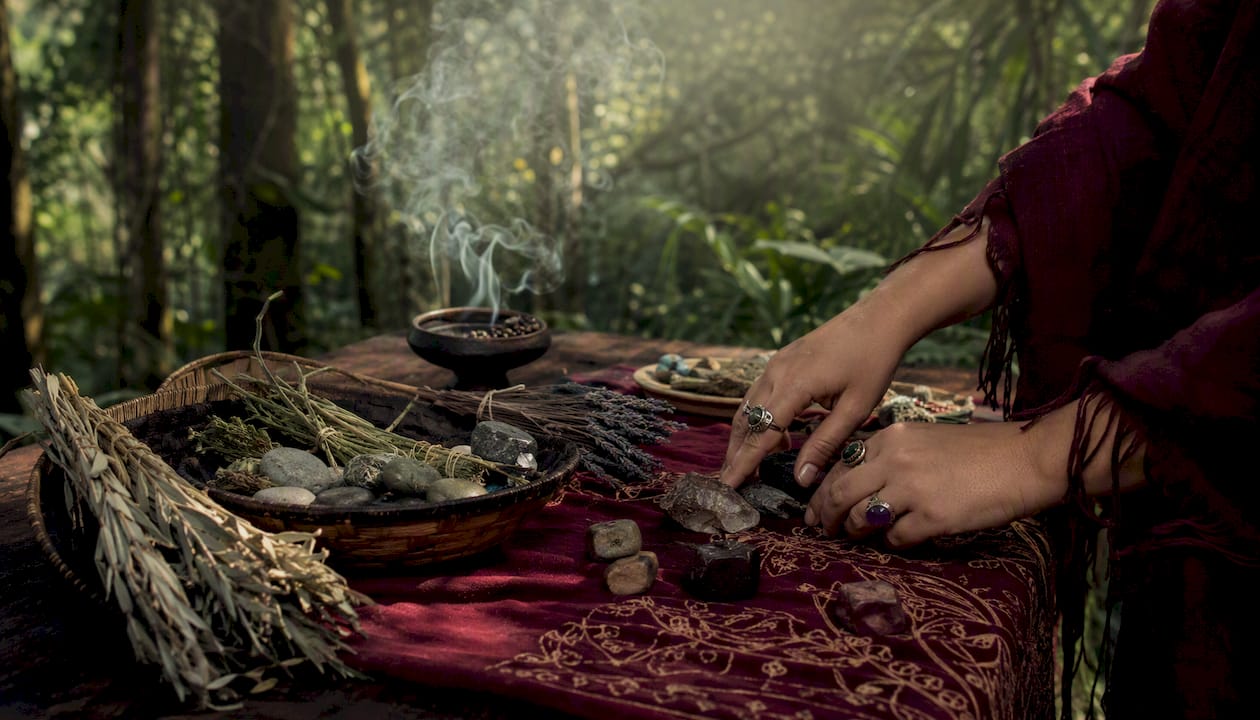
- Offerings and libation — palm wine, kola nut, herbal preparations, or symbolic substitutes presented to ancestors and deities
- Covenant act — drawn from traditions like Igba ndu, which seals a binding relationship through shared items, oath formulas, and a declaration of the issues being resolved
- Cleansing ceremony — spiritual clearing of residual harm, resentment, or negative attachments
- Reintegration feast — a shared meal or celebration that publicly signals restored communion
Pro Tip: In U.S. settings, practitioners routinely substitute symbolic materials for items that may be restricted. Herbal libations, candles, kola nut, palm wine, and carved symbolic objects replace blood offerings without diminishing the ceremony’s covenantal integrity. Ask your practitioner explicitly which substitutions apply to your ritual.
What should you expect when you commission a reconciliation ritual?
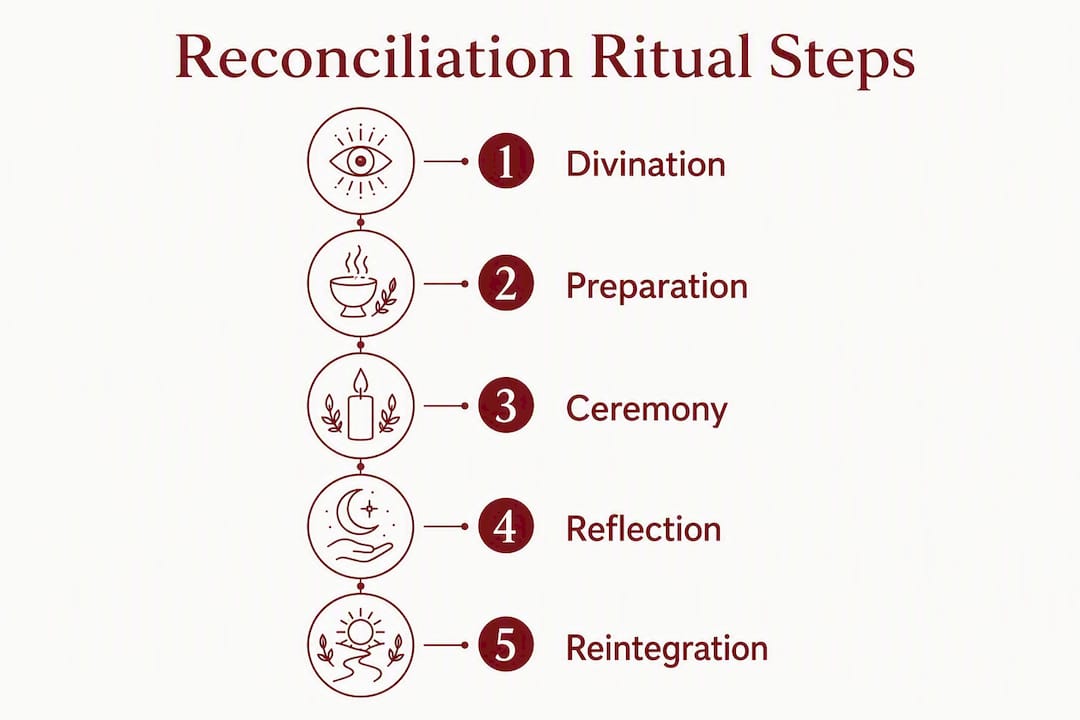
The process follows a clear sequence. Divination always precedes ceremony, and the timeline adjusts based on what the diagnosis reveals.
- Inquiry and intake — you submit relationship history, names, dates of key events, and any prior ritual work
- Divination diagnosis — the practitioner casts Afa/Ifa to identify the spiritual root cause; this session typically takes place within the first week after intake
- Ritual prescription and customization — based on the diagnosis, a bespoke ceremony is designed; materials are sourced and symbolic substitutions confirmed for your jurisdiction
- Ceremony execution — the ritual is performed; timing varies from a single session to a multi-day ceremony depending on complexity
- Post-ritual follow-up — you receive aftercare instructions, behavioral guidance, and a recommendation for any follow-up ceremonies
What you receive as deliverables:
- Written divination report summarizing findings and prescribed path
- Ceremony summary documenting what was performed and why
- Aftercare instructions covering behavioral steps that support the ritual’s effect
- Recommended follow-up rituals or monitoring milestones
- Written privacy assurance covering all personal information shared
Watch for signs a reconciliation ritual is working in the weeks following ceremony — shifts in communication, reduced emotional reactivity, and a sense of spiritual ease are documented indicators.
What are the legal and ethical considerations in the United States?
Animal offerings and public sacrificial acts are regulated or prohibited in many U.S. jurisdictions. Before any ceremony, confirm local ordinances with your practitioner. A reputable practitioner will raise this proactively.
Lawful symbolic alternatives commonly used in U.S. practice:
- Herbal libations (water infused with sacred herbs)
- Candles in prescribed colors
- Kola nut, palm wine, and honey as covenant foods
- Carved wooden or clay figures as symbolic substitutes
- Grain, fruit, and flower offerings at a home altar
“Practitioner transparency about legal alternatives, humane practice, and aftercare increases client trust in the U.S. market and differentiates reputable providers from those who cut corners.” — PMC, ritual practice and client participation
Pro Tip: Before booking, ask your practitioner these four questions: (1) Which materials will be used and are they lawful in my state? (2) Is the ceremony conducted in a private or communal space, and what permits apply? (3) How is my personal information stored and protected? (4) Will I receive written documentation of what was performed?
How should you prepare before the ritual begins?
Ritual efficacy depends on the client’s alignment, sincerity, and willingness to accept behavioral change alongside the ceremony itself. Preparation is not optional.
- Gather relationship history: key dates, names of both parties, lineage details if known, and a clear account of the betrayal
- Document any prior ritual work, spiritual practices, or active spells that may interact with the new ceremony
- Prepare consent documentation if the ritual involves a second party
- Write a clear statement of intention: what restored trust looks like to you specifically
Dos and don’ts:
- Do approach the consultation with full transparency; withholding information limits what divination can diagnose
- Do commit to the aftercare instructions the practitioner prescribes
- Don’t attempt to coerce or deceive the other party into participation; coerced consent undermines the covenant
- Don’t pursue parallel rituals from multiple practitioners simultaneously without disclosure
Request a written privacy policy from your practitioner before sharing personal details. A credible provider will specify how names, relationship history, and ritual records are stored, who has access, and under what circumstances any information could be disclosed.
Why choose Mother Odessa for this work?
Mother Odessa brings decades of practice rooted in West African ritual traditions, with a specialization in love reconciliation, covenant restoration, and generational curse removal. Her approach is divination-first: no ceremony is prescribed until Afa/Ifa diagnosis identifies the root cause specific to your situation.
What sets Motherodessa apart:
- Every ritual is custom-built from the divination findings; no two ceremonies are identical
- U.S.-appropriate symbolic substitutions are standard practice, keeping all work lawful and humane
- Clients receive a written divination report and ceremony summary, not just a verbal debrief
- A strict privacy policy governs all personal information shared during intake and ceremony
- Documented outcomes include reuniting estranged couples and breaking generational patterns that had persisted across multiple relationships
Mother Odessa’s Love & Relationships collection and the Return a Lover Ritual are the primary entry points for reconciliation work, while the Seven African Powers Ceremony addresses deeper spiritual realignment when the betrayal has disrupted multiple life areas simultaneously.
How do you commission a ritual and what does each service include?
Motherodessa’s core offerings for trust restoration:
- Return a Lover Ritual — targeted reconciliation ceremony for estranged partners; includes divination, covenant restoration, and written aftercare
- Love & Relationships — broader category covering trust repair, emotional clearing, and reintegration ceremonies
- Seven African Powers Ceremony — invokes seven ancestral powers to clear obstacles and realign the relationship’s spiritual foundation
- Spiritual Healing & Clarity — diagnostic and clearing work for clients who need divination before committing to a specific ceremony
What every commission includes:
- Private consultation and intake
- Afa/Ifa divination session with written report
- Custom ceremony execution (in-person or U.S.-legal symbolic variant)
- Written ceremony summary and aftercare instructions
- Follow-up support window
To begin, place an order through the relevant product or collection page. Payment is processed securely at checkout. Typical turnaround from intake to ceremony execution is one to two weeks, though complex cases requiring multi-stage ceremonies may extend that timeline. Mother Odessa’s team confirms scheduling and privacy terms before any personal information is collected.
How do you identify a trustworthy West African spiritual practitioner?
Generic trust signals — a professional website, social media presence, a list of services — tell you almost nothing. Here is what actually separates a credible practitioner from one who will take your money and deliver nothing.
Questions to ask at first contact:
- What divination system do you use, and can you explain how it informs the ritual prescription?
- Will I receive a written record of the divination findings and what was performed?
- How do you handle symbolic substitutions for restricted materials in my state?
- What is your privacy policy for client information?
Red flags that warrant walking away:
- Guarantees a specific outcome before divination is complete
- Refuses to provide written documentation of any kind
- Pressures you to purchase additional services during the initial consultation
- Cannot name or explain the specific ritual tradition they work within
- Asks for escalating payments to “remove curses” discovered mid-process
A practitioner rooted in genuine West African tradition understands that divination precedes prescription. Any offer of a pre-packaged ceremony with no diagnostic step is a departure from authentic practice.
What safety protocols apply in private home vs. communal settings?
Private home settings offer the most control. The practitioner works within your space, which limits exposure and simplifies consent. Key protocols:
- Confirm in advance which materials will be brought into the home and whether any open flames, smoke, or liquids are involved
- Designate a clear ritual space away from children, pets, and uninvolved household members
- Request that the practitioner provide a written list of all materials before arrival
Communal or public spaces introduce additional variables. Permits may be required for open fires, amplified sound, or gatherings above a certain size depending on local ordinance. Consent from all participants must be documented. Confidentiality is harder to maintain in a shared space, so discuss with your practitioner how personal details will be protected when others are present.
In either setting, a reputable practitioner will conduct a pre-ceremony walkthrough, confirm that all materials meet local legal standards, and provide emergency contact information in writing.
Are West African rituals compatible with other faiths?
Can a practicing Christian, Muslim, or Buddhist participate in West African rituals? Many clients hold existing faith commitments and engage in West African ritual work without abandoning them. African Traditional Religion has historically coexisted with Christianity and Islam across West Africa, and practitioners experienced in diaspora contexts understand how to frame ceremony in ways that honor a client’s existing spiritual commitments. The rituals address ancestral and covenantal dimensions that most faith traditions acknowledge in some form.
Will the ritual conflict with my existing spiritual practices? Conflict is most likely when a client is simultaneously engaged in practices that invoke opposing spiritual forces or when prior ritual work has left unresolved obligations. Afa/Ifa divination is specifically designed to identify these conflicts before ceremony begins, which is one reason the diagnostic step is non-negotiable.
Do I need to convert to or adopt African Traditional Religion? No. Participation requires sincerity, transparency, and a willingness to follow aftercare instructions. It does not require abandoning your existing faith or adopting a new one.
This article provides general information about West African spiritual practices and is not a substitute for professional spiritual, legal, or medical counsel. Confirm current local regulations with a qualified professional before commissioning any ceremony.
Key Takeaways
Personalized West African reconciliation rituals rebuild trust after betrayal by restoring a spiritual covenant through divination-guided, ancestral-witnessed ceremony rather than through behavioral negotiation alone.
| Point | Details |
|---|---|
| Divination comes first | Afa/Ifa diagnosis identifies the spiritual root cause before any ceremony is prescribed. |
| Covenant, not just closure | Rituals restore a witnessed spiritual covenant, producing social and ancestral realignment. |
| U.S.-legal symbolic substitutions | Herbal libations, candles, and kola nut replace restricted materials without compromising ceremony integrity. |
| Client preparation matters | Sincerity, full transparency at intake, and commitment to aftercare directly affect ritual outcomes. |
| Motherodessa’s path forward | Commission a Return a Lover Ritual or Seven African Powers Ceremony after a private divination consultation. |
What the conventional wisdom on betrayal healing gets wrong
Most advice on restoring trust after betrayal focuses on communication strategies and behavioral accountability. Those things matter in their own context. What they miss is the dimension that West African tradition has addressed for centuries: the spiritual covenant that existed before the betrayal and was fractured by it.
Betrayal does not only damage feelings. In the framework that Afa/Ifa divination operates within, it disrupts an ancestral agreement, creates spiritual debt, and leaves both parties misaligned with their lineage obligations. No amount of honest conversation repairs that layer. The ceremony does.
What I find most misunderstood is the role of the client in this process. People come expecting the practitioner to do everything. The scholarship is clear: ritual efficacy depends on the supplicant’s alignment, sincerity, and willingness to follow aftercare. The ceremony creates the conditions for restoration. The client’s behavior in the weeks that follow determines whether that restoration holds. That is not a caveat. It is the design.
Motherodessa offers a direct path to ritual reconciliation
Motherodessa’s 40+ years of West African ritual practice means you receive a diagnosis before a prescription, a written record of everything performed, and a privacy guarantee that protects your most personal details. The difference between a generic spiritual service and what Motherodessa provides is specificity: your divination reading, your ceremony, your aftercare plan.
The Return a Lover Ritual and the Seven African Powers Ceremony are the two most direct entry points for relationship reconciliation. If you are unsure which applies to your situation, the Spiritual Healing & Clarity collection begins with a diagnostic session that maps the right path before any ceremony is commissioned.
To start, visit the relevant product page, complete the secure checkout, and Mother Odessa’s team will contact you within one business day to schedule your private intake and divination session.