
Business blessing ceremonies are deliberate rituals performed to invoke divine favor, prosperity, and protection over a business and its operations. Rooted in traditions spanning Hindu, Christian, Chinese, and West African cultures, these ceremonies create a dedicated sacred time to pray over a workspace, its leadership, and its staff. The goal is not superstition. The goal is to build an environment of integrity, confidence, and positive energy from day one. This article covers the most practical examples of business blessing ceremonies across traditions, with guidance on ritual elements, planning, and how to choose the right format for your business.
Examples of business blessing ceremonies across traditions
Business owners draw from a wide range of cultural and spiritual traditions when choosing a ceremony. Each tradition carries its own symbolism, ritual tools, and intended outcomes. The five examples below represent the most widely practiced corporate blessing rituals in use today.
-
Hindu Office Opening Puja. The office opening puja calls on deities including Ganesha, the remover of obstacles, and Lakshmi, the goddess of wealth. A priest leads the ceremony using offerings of flowers, incense, and sacred fire. Many businesses also incorporate a Vastu Shanti ritual, which removes negative energies known as Vastu Doshas from the commercial space. This cleanse reduces workplace stress and promotes harmony among staff. The puja is typically performed before the first workday begins.
-
Chopda Puja during Diwali. This Hindu ritual takes place during Diwali and focuses specifically on financial tools. Business owners worship account books, laptops, and accounting software using kumkum, sandalwood paste, and rice. The ceremony sanctifies the instruments of commerce and invites obstacle-free prosperity for the coming fiscal year. It is one of the most targeted examples of workplace ceremonies because it directly blesses the tools of business rather than the space alone.
-
Christian business dedication prayer. Christian business blessing ceremonies typically include anointing with oil on the doorway or forehead, scripture readings, and personalized prayers for leadership and staff by name. Many ceremonies draw on Proverbs 16:3, committing business plans to the Lord and asking for their establishment. The DMV Christian Chamber of Commerce formalizes this practice as a structured service for business owners. The ceremony focuses on consecrating the business mission and asking for divine favor over daily operations.
-
Chinese lion dance ceremony. The lion dance is both a cultural performance and a spiritual ritual at business openings. The lion symbolizes protection and strength, while its movements are designed to drive away negative influences and attract wealth. A key moment in the ceremony is the Cai Qing ritual, where the lion symbolically eats lettuce and distributes it to represent prosperity spreading through the community. Lion dance performances also communicate confidence and cultural pride, making a strong impression on customers and neighbors at a grand opening.
-
Modern personalized business blessing. Many entrepreneurs today combine elements from multiple traditions or create entirely original ceremonies. A personalized blessing might include a community prayer circle, the lighting of candles or incense, spoken affirmations, and the involvement of employees and family members. Motherodessa specializes in this approach, building personalized business rituals that reflect the specific goals and values of each business owner rather than applying a one-size-fits-all formula.
Key ritual elements and symbolism in blessing ceremonies
Understanding the components of a ceremony helps you choose what fits your business and your beliefs. Most blessing ceremonies share a core set of ritual elements, even when the cultural context differs.
-
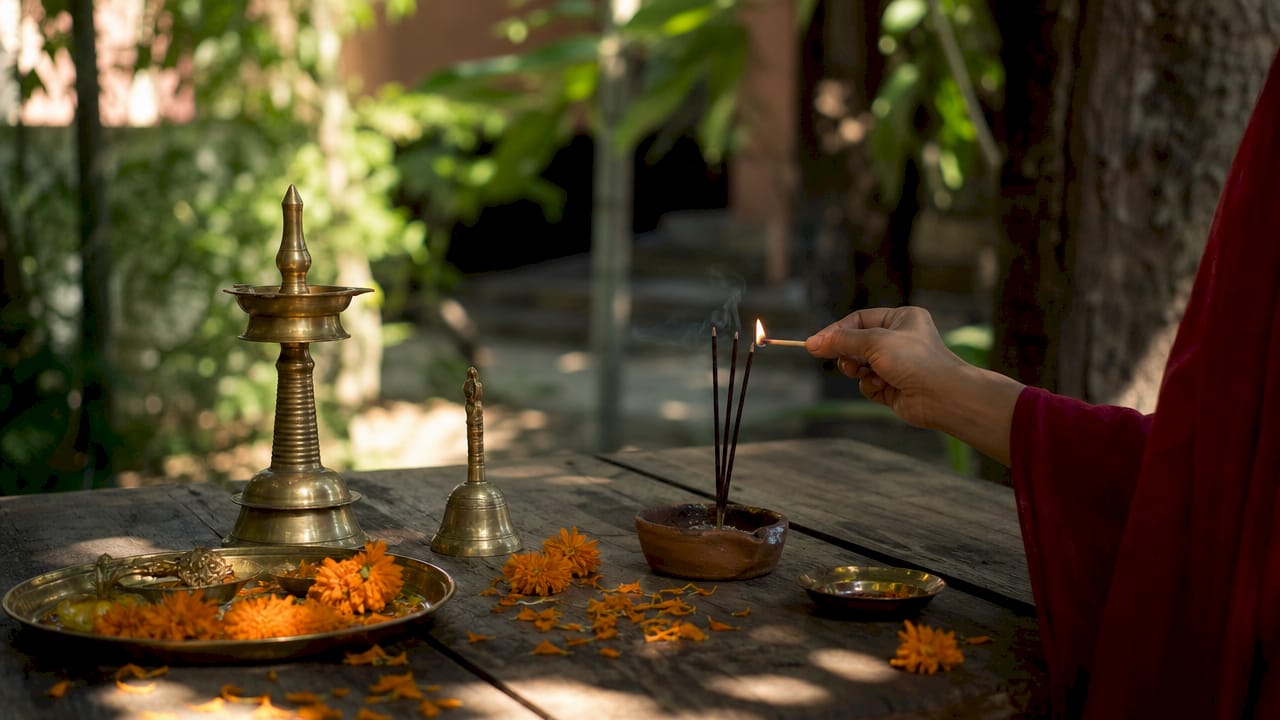
Offerings and sacred materials. Oil anointing, flowers, incense, lamps, and symbolic foods appear across nearly every tradition. In Hindu pujas, sacred fire and ghee are central. In Christian ceremonies, olive oil consecrates doorways and foreheads. These materials are not decorative. Each one carries a specific symbolic meaning tied to the desired outcome.
-
Recitations and spoken blessings. Mantras, scripture readings, and spoken prayers form the verbal core of most ceremonies. The words spoken during a blessing carry intention. Christian ceremonies often use specific scripture passages, while Hindu ceremonies use Sanskrit mantras tied to particular deities. The recitation anchors the ceremony in a recognized spiritual framework.
-
Ritual actions. Physical acts such as prayer walks around the perimeter of the space, laying hands on equipment, or chanting while moving through rooms are common across traditions. These actions mark the space as intentionally blessed. They also involve the body, not just the mind, which deepens the experience for participants.
-
Symbolic gestures and performance. The lion dance is the clearest example of symbolic gesture at scale. Its choreographed movements represent specific outcomes: the lion’s entrance drives out negative energy, and the Cai Qing lettuce ritual represents wealth flowing outward. Even in smaller ceremonies, gestures like lighting a lamp carry weight. Lighting a lamp at the close of a ceremony symbolizes the dispelling of darkness and the arrival of wisdom and success.
-
Auspicious timing. Timing is treated as a ritual element in itself, particularly in Hindu tradition. The concept of muhurat refers to a specific window of time considered spiritually favorable for beginning a new venture. Professional puja planners prioritize ceremony timing before operations begin to maximize the spiritual foundation of the business. Scheduling a ceremony at a random time misses this layer of intention entirely.
Pro Tip: If you are working with a faith leader or ritual specialist, ask them to identify an auspicious time for your ceremony based on your business launch date. This single step adds significant depth to any tradition.
How to conduct or organize a business blessing ceremony
Planning a ceremony well requires more than booking a date. The choices you make before the event shape its meaning and its impact.
-
Choose a ceremony aligned with your values. The most effective blessing ceremonies reflect the actual beliefs and culture of the business owner and team. A ceremony performed out of obligation carries less weight than one chosen with genuine conviction. If your background is Christian, a dedication prayer with anointing makes sense. If your business serves a multicultural community, a personalized modern ceremony may resonate more broadly.
-
Scale the ceremony to your context. Ceremonies are modular. Professional puja services, for example, offer compact and expanded formats to match team size, space, and launch-day complexity. A solo entrepreneur blessing a home office needs a different ceremony than a company opening a 10,000-square-foot retail space. Pricing for professional guided puja services typically ranges from $40 for a compact ceremony to $90 for an expanded one.
-
Work with a qualified ritual leader. Authenticity matters. A faith leader, pandit, or experienced spiritual practitioner brings the knowledge to perform the ceremony correctly and to explain its meaning to participants. Motherodessa brings over 40 years of experience to business success ceremonies, ensuring each ritual is built around the specific needs and goals of the business owner.
-
Involve your team and community. A blessing ceremony gains power when it is shared. Inviting employees, partners, and community members creates collective positive energy and signals that the business is built on something larger than profit. Even a small team gathering for a 20-minute prayer or ritual creates a sense of shared purpose that carries into daily work.
-
Time the ceremony before operations begin. The ceremony should happen before the business opens its doors or before a major milestone, not after. This timing establishes the spiritual foundation before the first transaction, the first hire, or the first client interaction.
Pro Tip: Record the ceremony, even informally. Watching it later reminds your team of the intention behind the business and can serve as a grounding moment during difficult periods.
Comparing ceremony types by features and fit
Different ceremony formats suit different business contexts. The table below compares the main types by key features to help you make an informed choice.
| Ceremony type | Typical length | Cost range | Best for | Formality level |
|---|---|---|---|---|
| Hindu office puja | 1–2 hours | $40–$90 (professional) | South Asian-owned businesses, new office openings | High |
| Chopda Puja (Diwali) | 30–60 minutes | Low (DIY-friendly) | Businesses with fiscal year focus, retail owners | Medium |
| Christian dedication prayer | 30–90 minutes | Varies by officiant | Faith-based businesses, Christian-owned companies | Medium to high |
| Chinese lion dance | 30–60 minutes | Varies by troupe | Retail openings, restaurants, community-facing businesses | High (public) |
| Personalized modern blessing | 20–90 minutes | Varies widely | Entrepreneurs of any background, multicultural teams | Flexible |
The most important factor is not cost or length. It is cultural fit. A ceremony that feels authentic to you and your team will have a lasting effect. A ceremony performed purely for appearance will not.
Key Takeaways
Business blessing ceremonies work best when they combine cultural authenticity, meaningful ritual elements, and deliberate timing to create a foundation of positive energy and shared purpose.
| Point | Details |
|---|---|
| Choose by cultural fit | Select a ceremony tradition that reflects your actual beliefs and business values. |
| Timing is a ritual element | Schedule the ceremony before operations begin to establish the spiritual foundation first. |
| Scale to your context | Compact and expanded ceremony formats exist for every business size and budget. |
| Involve your people | Including employees and community members multiplies the ceremony’s collective impact. |
| Personalization adds depth | Custom rituals built around your specific goals outperform generic one-size-fits-all formats. |
What I have learned from watching business blessings work
Most business owners treat a blessing ceremony as a one-time event. They do it at the opening, take a few photos, and move on. That approach misses the point entirely.
The ceremonies I have seen make a real difference share one quality: the people involved actually believe in what they are doing. It does not matter whether the tradition is Hindu, Christian, West African, or entirely original. What matters is that the ceremony creates a moment of genuine intention. That moment becomes a reference point the team returns to, consciously or not, when things get hard.
The practical benefits are real and underrated. A shared ritual builds team cohesion faster than a team-building exercise. It signals to employees that leadership takes the culture of the business seriously. It communicates to the community that the business stands for something beyond transactions.
My advice to any business owner is this: do not choose a ceremony because it looks impressive or because a competitor did it. Choose one that reflects who you actually are and what you actually want for your business. Then commit to it fully. A career and business blessing performed with full conviction, even a simple one, carries more weight than an elaborate ceremony done out of obligation.
— Psychic
Motherodessa’s rituals for business prosperity
Motherodessa brings over 40 years of experience in spiritual healing rooted in West African traditions, with a deep catalog of rituals designed for business owners seeking real results.
Her money and abundance rituals are built specifically for entrepreneurs who want to clear financial blocks, invite prosperity, and establish a strong spiritual foundation for their business. Every ritual is personalized. No two ceremonies are the same, because no two businesses are the same. Motherodessa’s approach combines cultural depth with practical intention, giving business owners a ceremony that reflects their specific goals rather than a generic template. Explore the full range of spiritual healing services to find the right ritual for your next business milestone.
FAQ
What is a business blessing ceremony?
A business blessing ceremony is a deliberate ritual performed to invoke divine favor, protection, and prosperity over a business and its operations. These ceremonies create an intentional sacred space focused on integrity and positive energy rather than superstition.
How do I choose the right ceremony for my business?
Choose a ceremony that aligns with your cultural background, personal beliefs, and the values of your team. Cultural fit matters more than ceremony length or cost.
When should a business blessing ceremony take place?
The ceremony should occur before the business opens or before a major milestone begins. Timing the ceremony before operations start establishes the spiritual foundation at the right moment.
How much does a professional business blessing ceremony cost?
Professional guided puja services typically range from $40 for a compact ceremony to $90 for an expanded one, depending on scale and space size. Christian and personalized ceremonies vary based on the officiant or practitioner.
Can I combine elements from different traditions in one ceremony?
Yes. Modern personalized business blessings frequently draw from multiple traditions, combining prayers, symbolic materials, and community participation into a single ceremony tailored to the business owner’s specific goals and values.