A reunion ceremony is a planned social gathering where people who have been separated by time or distance come together to reconnect and celebrate their shared history. The Cambridge Dictionary defines a reunion as a social occasion for people who have not seen each other for a long time, often organized around annual dates or milestone anniversaries. What sets a reunion apart from a casual get-together is its intentionality: there is usually a structure, a purpose, and a set of traditions that give the event meaning beyond simply being in the same room.
Common elements you will find at a reunion ceremony include:
- Shared meals that serve as the centerpiece of communal bonding
- History recitals and storytelling to pass down family or group narratives
- Honoring elders and recognizing achievements within the group
- Memory-building activities such as group photo books or family trees
- Music, games, and entertainment to create a relaxed, joyful atmosphere
The Collins Dictionary reinforces this, describing reunions as gatherings of family members, classmates, or groups who have not met for extended periods. The ceremony aspect comes from the deliberate rituals and traditions woven into the event, not from any formal religious or legal framework.
Who typically attends a reunion ceremony?
Attendees vary depending on the type of reunion, but most gatherings draw from a predictable and overlapping set of groups. Family reunions typically include:
- Immediate family: parents, siblings, and children
- Extended relatives: grandparents, aunts, uncles, and cousins across multiple generations
- Distant relations: second, third, and even fourth cousins who share a common ancestor
- Former classmates at school or college reunions
- Former colleagues at professional or military reunions
The generational mix is one of the most distinctive features of a reunion ceremony. You might have a grandparent sitting across from a grandchild they rarely see, or a college roommate reconnecting with someone they have not spoken to in decades. That breadth of relationship is part of what gives the event its emotional weight.
What actually happens at a reunion ceremony?
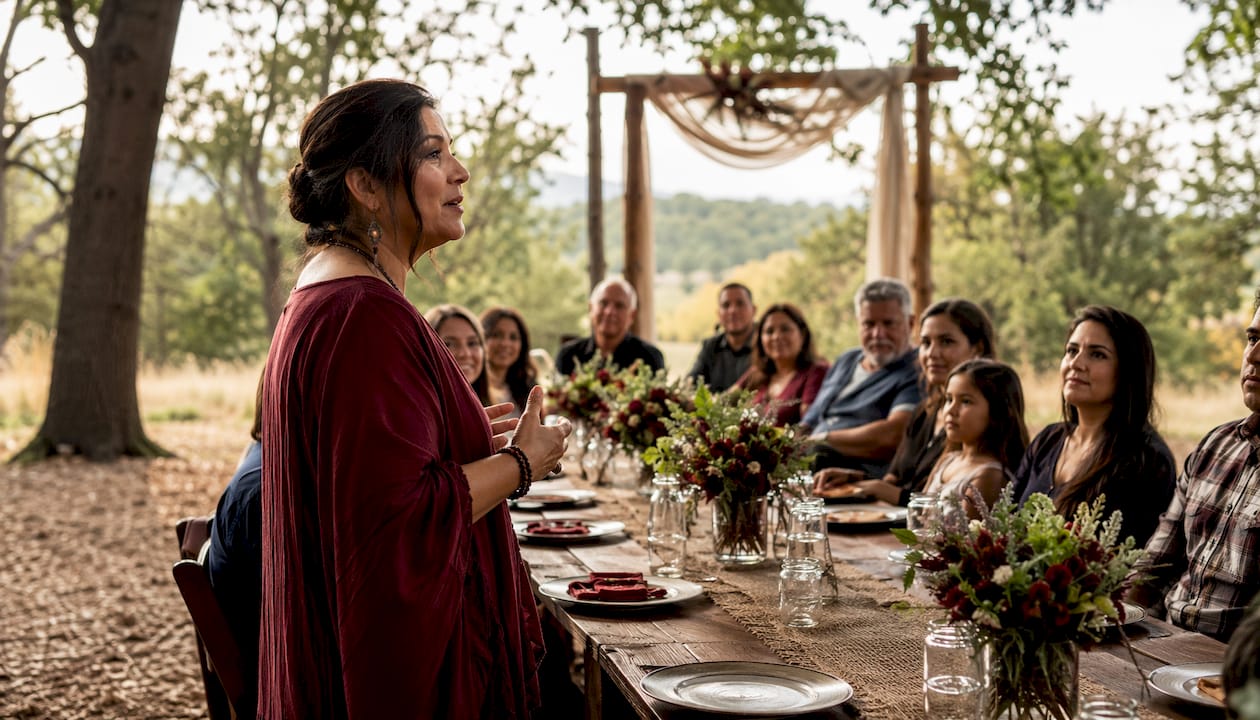
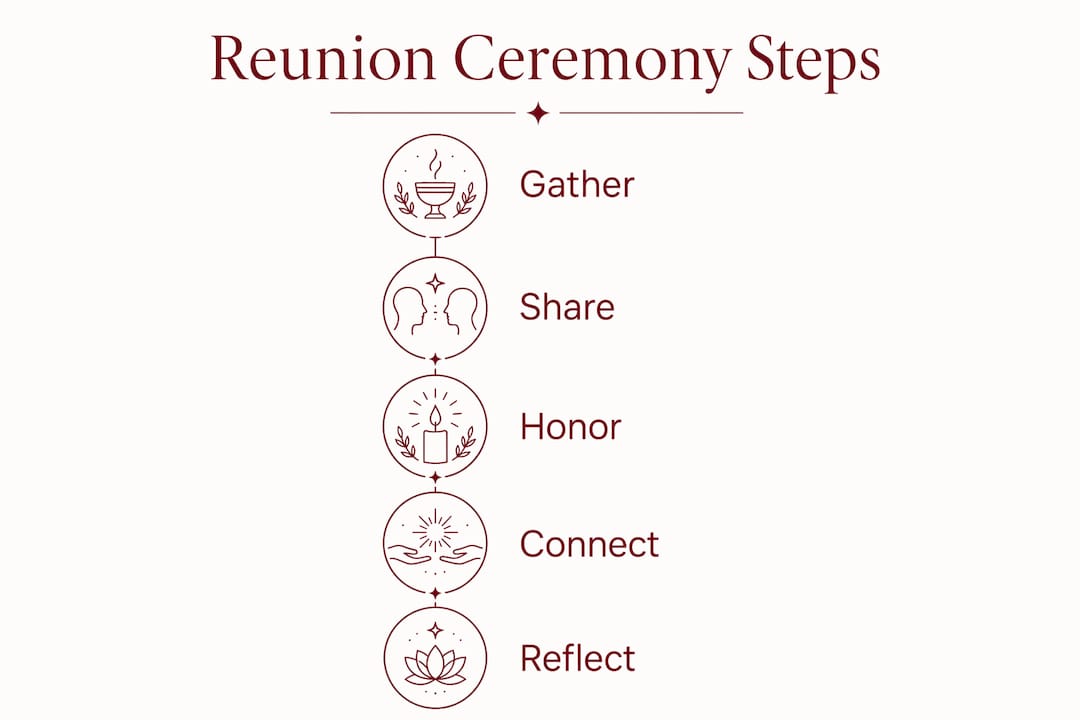
The Wikipedia entry on family reunions describes a typical gathering as one that assembles for a meal, recreation, and discussion, with a program that often includes music, poetry readings, history recitals, and honorary recognition of elders. In practice, the agenda tends to look something like this:
- Communal dining: a shared lunch or dinner anchors almost every reunion, giving people a natural reason to sit together and talk
- Storytelling sessions: older members share memories, and younger attendees learn where they come from
- Ceremonial recognitions: achievements, milestones, and the contributions of elders get acknowledged formally or informally
- Group games and activities: from lawn games to trivia about family history, these create laughter and lower social barriers
- Tribute traditions: some families set up memorial tables for those who have passed, or share ancestral recipes as a form of cultural preservation
The best reunion ceremonies mix structured moments with open time. A tribute to a grandparent carries real weight when it is followed by an hour of unscripted conversation around the dinner table.
Why do reunion ceremonies matter?
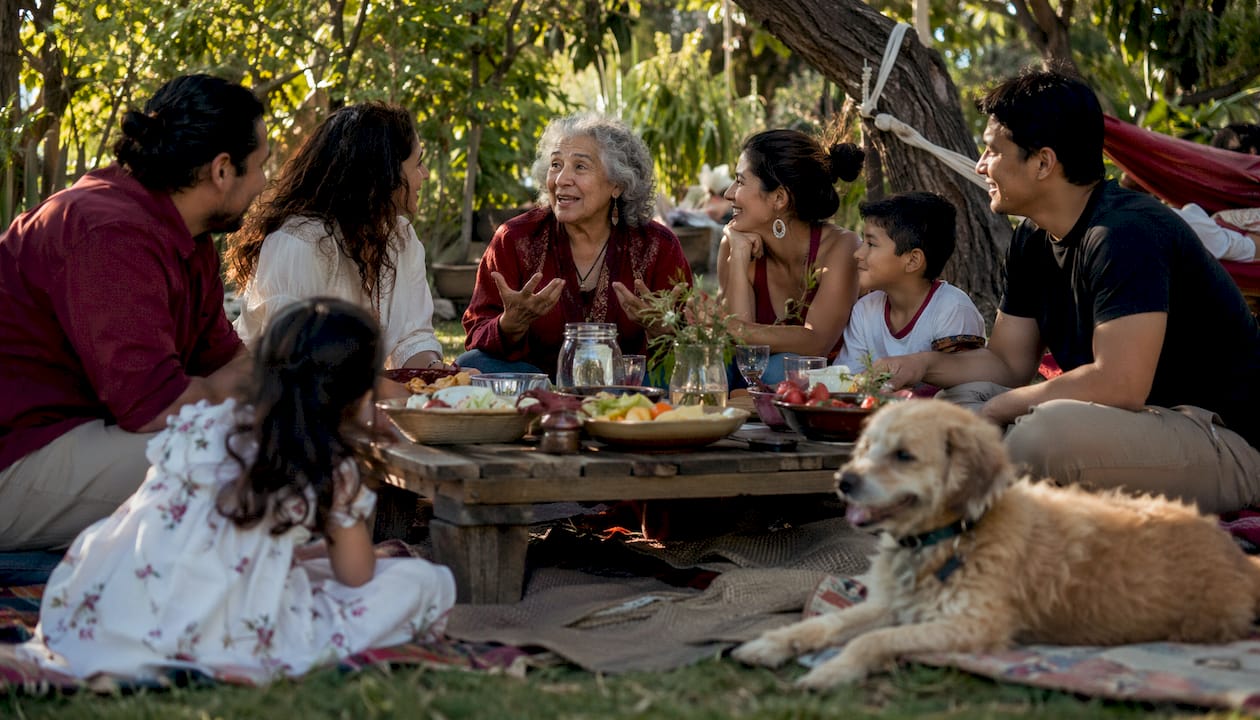
The primary purpose of a reunion ceremony is to strengthen relationships and provide a form of social support that digital communication simply cannot replicate. Research on reunion benefits points to intergenerational wisdom transfer, emotional support through storytelling, and the reduction of isolation as core outcomes. These are not soft benefits. Positive family interactions genuinely improve mental well-being by reducing the isolation that grows in an increasingly screen-mediated world.
The significance of a reunion ceremony goes deeper than a good meal and some laughs:
- Cultural preservation: traditions, recipes, and family histories survive because someone passed them on at a gathering
- Trust and safety: play and laughter at reunions build the foundational blocks of interpersonal trust, according to child development expert Joseph Chilton Pearce
- Self-reflection: seeing yourself through the eyes of people who knew you years ago offers a perspective daily life rarely provides
- Community reinforcement: reunions remind attendees that they belong to something larger than their immediate household
- Intentional presence: face-to-face gatherings create a depth of connection that social media scrolling cannot produce, regardless of how active a group’s online presence is
Reunions also function as rare opportunities for reconnecting with ancestral roots, which carries its own psychological and spiritual weight. For some families, the ceremony is where younger generations first learn about lineage, heritage, and the values that shaped their elders.
Pro Tip: Leave at least 30–40 minutes of your reunion agenda completely unscheduled. Unstructured social time is where the most genuine conversations happen. Over-scheduling crowds out the spontaneous moments that people remember longest.
How long does a reunion ceremony usually last?
Duration varies widely, and the type of reunion is the biggest factor. A neighborhood block party reunion might wrap up in three or four hours. A milestone family gathering often stretches across a full weekend. Alumni reunion weekends frequently use a 72-hour timeframe, giving participants enough time to genuinely set aside daily responsibilities and reconnect without the pressure of a tight schedule.
Key factors that shape how long a reunion runs:
- Travel distance: when attendees fly in from across the country, a single afternoon feels wasteful; multi-day formats justify the trip
- Reunion type: college and military reunions tend toward longer formats; neighborhood or workplace reunions often stay within a single day
- Group size: larger groups need more time to allow meaningful one-on-one interaction
- Purpose: a reunion centered on honoring a recently passed elder may be more compact and solemn; a milestone anniversary celebration may expand into a full weekend of events
- Budget and venue: planning the date and duration around venue availability and travel costs often determines the final length as much as preference does
For most families, a single day works for local gatherings, while a 72-hour (three day) format suits groups spread across multiple states or countries. The online gifts that attendees send ahead of a reunion can also signal the event’s scale, with more elaborate gestures typically accompanying longer, more significant gatherings.
Key Takeaways
A reunion ceremony is a structured social gathering built around intentional presence, shared history, and the kind of face-to-face connection that strengthens bonds across generations.
| Point | Details |
|---|---|
| Core definition | A reunion ceremony is a planned gathering where separated individuals reconnect through shared traditions and activities. |
| Who attends | Attendees range from immediate family and grandparents to classmates, former colleagues, and distant relatives. |
| What happens | Communal meals, storytelling, elder recognition, and group games form the backbone of most reunion programs. |
| Why it matters | Reunions combat isolation, transfer cultural knowledge, and build interpersonal trust through play and shared presence. |
| How long they last | Duration ranges from a single day for local gatherings to a full 72-hour weekend for alumni or milestone reunions. |
When a reunion ceremony stirs something deeper, whether a longing for reconciliation, a desire to heal a family rift, or the need to reconnect with someone you have lost touch with, Motherodessa’s spiritual healing rituals offer a personalized path forward. Rooted in over 40 years of West African healing tradition, each ritual is tailored to your specific situation, never a generic template.