
Gather salt (plain or black), one protective herb like rosemary or bay leaf, a shielding stone such as black tourmaline, and a personal item that anchors your intention. Sprinkle black salt across a threshold for instant defense, or layer everything in a small jar, seal it with wax, and set it where you need the boundary most.
TL;DR:
- Black salt and herbs like rosemary or bay leaf are essential ingredients, with black salt providing stronger banishing and herbs offering active defense.
- Grounding stones such as black tourmaline or obsidian are recommended to create lasting protection, especially against specific or ongoing threats.
- Sealing a protection jar with wax and placing it near entry points or carrying a miniature version as personal amulet enhances its effectiveness for daily use.
- Using a few straightforward ingredients like salt, an herb, a stone, and a personal item can build a reliable protection spell jar in about 20 minutes.
- For persistent or complex issues, professional, personalized rituals charged and sealed by practitioners offer stronger, longer-lasting protection solutions.
Table of Contents
- What Are the Best Protection Spell Ingredients?
- How Do You Make a Simple Protection Spell Jar?
- Why These Ingredients? Matching Materials to Intention
- Handling and Sourcing Protection Ingredients Safely
- Quick Recipes: 5-Item Jar, Black Salt, and Protection Oil
- How Protection Ingredients Have Changed Across Cultures
- When a DIY Jar Isn’t Enough
- Ready for a Custom Protection Ritual?
- Sources
- FAQ
What Are the Best Protection Spell Ingredients?
Every reliable protection kit starts with the same four categories: a salt base, a protective herb, a grounding or shielding stone, and something sharp or metallic to represent a barrier. You don’t need all eleven items on this list. Most working recipes use several ingredients chosen for a specific intent, not a shopping cart’s worth of supplies.
Salt and black salt form the foundation of nearly every protection working. Plain sea salt purifies and sets a boundary; black salt, made by mixing sea salt with ash, charcoal, or metal scrapings, is the stronger banishing version used to line doorways or dust onto candles.
Herbs do the active protective work. Here’s what each one brings to the jar:
- Rosemary wards off negativity and is often swapped in when other herbs aren’t available.
- Sage clears stagnant or hostile energy before you seal anything in.
- Bay leaf blocks specific threats and works well for written-intention spells since you can burn it after.
- Mugwort strengthens psychic defense and dream protection.
- Lavender calms and softens aggressive energy directed at you.
- Cloves and garlic are pantry-shelf substitutes with long folk histories in banishing work.
Crystals add a lasting, physical anchor. Black tourmaline and obsidian are the go-to shielding stones, hematite grounds excess anxious energy, and clear quartz amplifies whatever intention you’ve already set into the jar. Small tumbled chips work fine and cost far less than raw specimens.
Iron and sharp items, nails, pins, or thorns, come from the witch bottle tradition, where they acted as decoys to trap and repel harmful energy before the bottle got sealed and hidden. If handling metal feels excessive, a few sealed sewing pins or iron filings do the same symbolic job with less risk.
Symbolic extras round things out: crushed eggshell (cascarilla) for a barrier, a bay leaf with your name written on it, a scrap of parchment with your intention, or a personal item like a hair strand or photograph that ties the spell directly to you.
How Do You Make a Simple Protection Spell Jar?
A protection jar is the most common format for this kind of spellwork, and it’s forgiving for beginners. Here’s a version that takes about 20 minutes.
Materials (pick 4 to 6): sea salt or black salt, dried rosemary or bay leaf, a small black tourmaline or obsidian chip, a personal item (hair, photo, or written name), a pinch of iron filings or a sealed pin, and white or black candle wax for sealing. No stone on hand? Use two black-eyed peas or a piece of dark-colored glass as a stand-in.
- Cleanse the jar. Pass it through sage or incense smoke, wipe it with a pinch of salt, or set it in moonlight for an hour. This clears any residual energy already sitting in the glass.
- Write your intention. A single sentence on a small piece of paper, something direct like “This home is sealed against harm,” works better than a paragraph.
- Layer the ingredients. Salt first, then herbs, then your stone, then the paper folded small, then your personal item on top. As you add each layer, say what it’s for out loud, even a whisper works: “Salt for the boundary, rosemary for the shield, stone to hold it steady.”
- Seal the lid with dripped candle wax, turning the jar as the wax cools to fully cover the rim.
- Place it. For a household ward, set it near your front door or a windowsill facing the street. For a personal amulet, keep a miniature version in a pocket or bag instead of at home.
A 7-ingredient version using Himalayan salt, lavender, cinnamon oil, carnelian, rain water, a personal item, and white wax is a popular beginner template if you want a fixed recipe rather than building your own from the list above.
Pro Tip: If you’re sealing a jar for someone else, like a family member’s bedroom, ask their intention rather than assuming yours will transfer. A protection spell aimed at “them” without their input tends to feel disconnected once it’s placed.
Household wards stay put for extended periods. Personal amulet jars get carried daily and typically need recharging sooner, since handling and travel wear down the energetic seal faster than a stationary jar on a shelf.
Why These Ingredients? Matching Materials to Intention
Every ingredient in a protection jar corresponds to a specific job, and picking the wrong one for your situation is the most common beginner mistake.
- Salt correlates to boundary and purification, the “wall” of the spell.
- Herbs correlate to active defense, banishing, or calming, depending on which one you choose.
- Stones correlate to sustained shielding (tourmaline, obsidian) or grounding (hematite) rather than quick bursts of protection.
- Iron and metal correlate to deflection and decoy work, the oldest layer of the witch bottle tradition.
If you’re warding against ongoing hostility from a specific person, lean on tourmaline plus bay leaf. If you’re trying to reverse energy someone sent your way, obsidian paired with black salt does more work than lavender ever will. For general anxious, unsettled energy in a space, combine a grounding stone like hematite with a calming herb like lavender rather than something aggressive like mugwort.
Substitution is normal and doesn’t weaken the spell. Rosemary and sage overlap enough in function that you can swap freely, and clear quartz can stand in for almost any stone when you need an all-purpose amplifier.
Handling and Sourcing Protection Ingredients Safely
A few practical rules keep this hobby safe and legal.
- Keep jars with eggshell, garlic, or any liquid dry-sealed or refrigerated if left assembled for more than a few days, spoilage inside a sealed jar is a real (if minor) issue, not just an aesthetic one.
- Wear gloves when handling glass shards, pins, or nails, and secure lids tightly before storing or transporting a jar.
- Buy crystals from reputable U.S. sellers and choose organic herbs where you can, quality sourcing matters more for skin contact and inhalation than most people assume.
- Never wild-harvest protected or at-risk plant species. Check your state’s regulations before gathering anything from public land.
If you’re anxious or rushed while assembling a jar, a short grounding pause first, even just three slow breaths, helps you work from intention rather than panic. Fear-driven spellwork tends to produce sloppy, half-finished results.
Quick Recipes: 5-Item Jar, Black Salt, and Protection Oil
Short on time or supplies? These three shortcuts cover most situations.
- 5-item jar: salt, one herb, one stone chip, a personal item, sealing wax. Pantry-only version: table salt, dried rosemary from the spice rack, a dark button or coin instead of a stone, a hair strand, and a taper candle for wax.
- Black salt: mix two parts sea salt with one part ash, activated charcoal, or fine iron scrapings, ground together and stored dry. Use it to line thresholds or dust onto protection candles.
- Protection oil: combine a neutral carrier oil with a few drops of rosemary and clove essential oil, then anoint candles or dab a small amount on wrists or door frames.
Pro Tip: Recharge jars and oils under a full moon or a few hours of direct sun every month or two. If a jar feels “flat” or you can’t remember the last time you refreshed it, that’s usually your sign it needs a new charge, not a replacement.
How Protection Ingredients Have Changed Across Cultures
Protection magic didn’t start with Pinterest jars. English and colonial American witch bottles from the 1600s and 1700s used urine, pins, nails, and hair sealed in stoneware and buried at thresholds to trap curses before they reached the household. That burial tradition has faded for practical reasons, most renters and homeowners today keep jars indoors in a secure, private spot instead of digging up a yard, but the symbolic logic of trapping and neutralizing harm hasn’t changed at all.
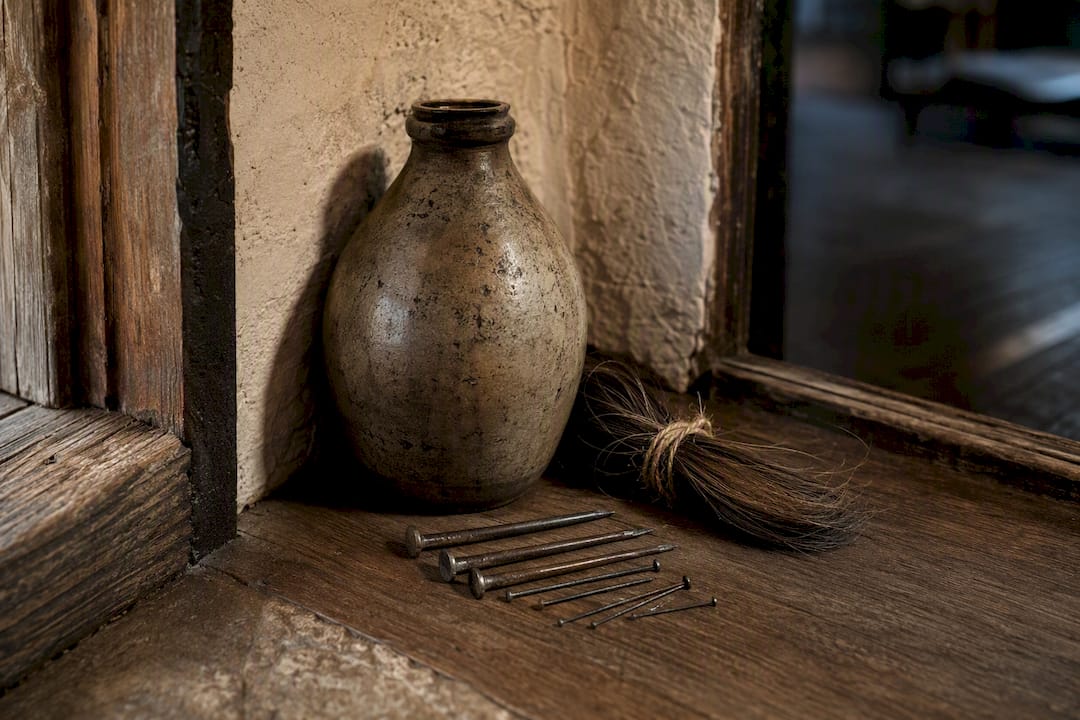
West African and diaspora traditions bring their own protective materials into the mix: specific herbs, consecrated water, and items charged through ceremony rather than assembled solo. Caribbean and Latin American folk practices lean on cascarilla (crushed eggshell) as a barrier and often combine Catholic saint imagery with older African-rooted protective work. European folk magic favored iron above almost everything else, horseshoes over doors, iron nails in walls, because iron was believed to repel malevolent spirits outright.
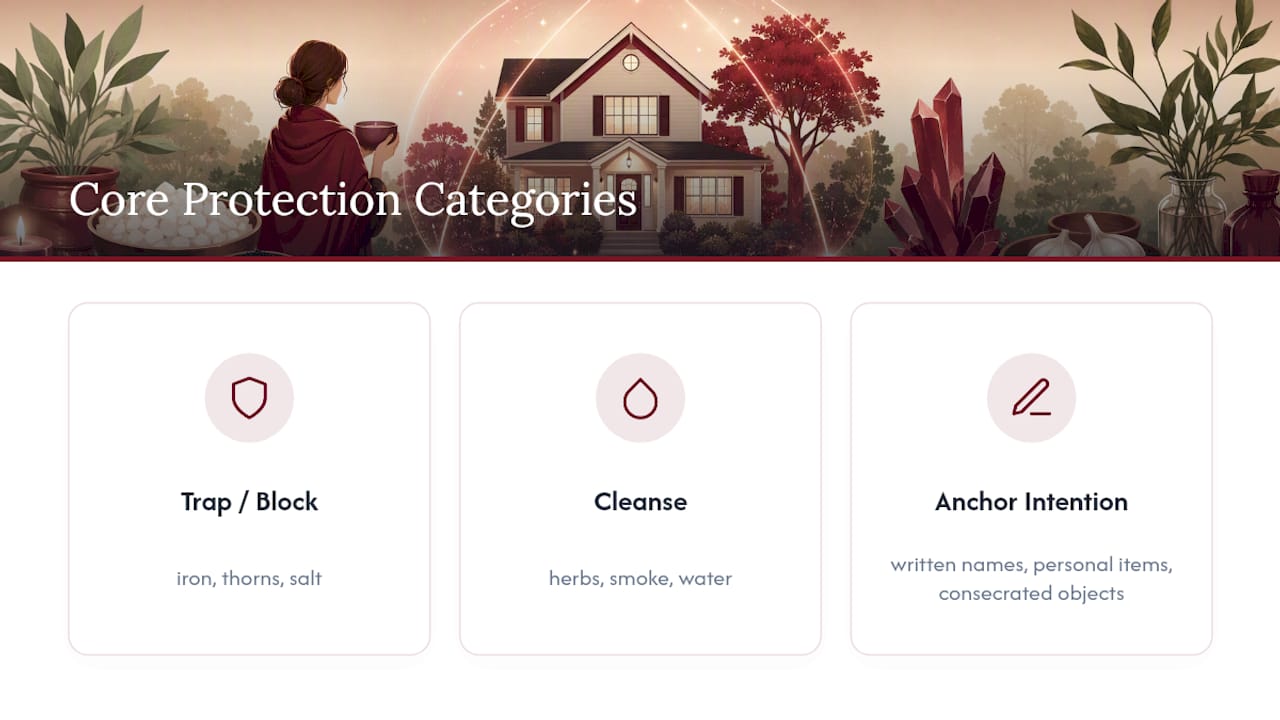
What’s interesting is how consistent the underlying categories stay even as the specific materials shift by region: something to trap or block (iron, thorns, salt), something to cleanse (herbs, smoke, water), and something to anchor intention (a written name, a personal item, a consecrated object). Modern American practitioners have mostly just swapped burial for indoor placement and urine for hair or fingernail clippings, the bones of the practice are older than any of us.
When a DIY Jar Isn’t Enough
A jar you assemble yourself works well for everyday unease, a hostile coworker, general anxiety about your home. I’ve seen the pattern enough times to say it plainly: DIY protection handles surface-level interference. It doesn’t hold up against sustained psychic attack, generational patterns, or targeted harm from someone who knows you personally.
That’s the line where a custom ritual makes sense instead of another trip to the craft store. If you’re dealing with repeated nightmares tied to one person, a family curse that seems to resurface every generation, or protection that needs to hold under real pressure rather than casual discomfort, a practitioner-led approach accounts for variables a beginner jar simply can’t. Mother Odessa has spent more than 40 years working within West African spiritual traditions, and a custom protection and banishing service typically includes a personalized ritual built around your specific situation, materials charged and sealed by the practitioner rather than assembled at home, and a private written report detailing what was done and why. That’s a different tier of work than a jar on a windowsill, and it’s built for exactly the cases where a jar alone won’t hold.
— Psychic
Ready for a Custom Protection Ritual?
A jar on your windowsill handles everyday interference. When the problem is deeper, ongoing harassment, a curse that keeps resurfacing, or protection that needs to hold under real pressure, DIY ingredients only go so far. Motherodessa’s Protection & Banishing collection offers custom rituals built around your exact situation instead of a generic template.

Each ritual is personalized rather than assembled from a fixed list, with materials selected, charged, and sealed by a practitioner, delivered with a private written report. That level of customization is the real difference between a jar you build in twenty minutes and a working prepared by an experienced practitioner. If your situation calls for more than salt and rosemary can offer, browse the Protection & Banishing collection and reach out to describe what you’re facing. A consultation is the simplest next step toward a ritual matched to your actual circumstances.
Sources
For ingredient lists and jar recipes, see The Moon School and Totally the Bomb. For witch bottle history and sharp-object symbolism, see Esoteric Universe. For grounding practice research, see this NCBI article.
- Witch bottle: Make & bury for protection — Esoteric Universe
- How to make a protection spell jar with 7 simple ingredients — Totally the Bomb
- NCBI article (supporting grounding/breathwork as a safety/preparatory practice)
FAQ
What can I put in a protection spell?
Salt or black salt, a protective herb like rosemary or bay leaf, a shielding stone such as black tourmaline, and a personal item to anchor your intent cover most situations. Iron filings, pins, or written intentions on parchment are common additions from older witch bottle traditions.
How do I do a simple protection spell?
Cleanse a small jar, layer salt, an herb, a stone, and a personal item while stating your intention out loud, then seal it with wax and place it near an entryway or in your bedroom. The full step-by-step version above walks through each layer in order.
What do you say during a protection spell?
Keep it short and direct: name what each ingredient is doing as you add it, such as “salt for the boundary, rosemary for the shield.” A single written sentence of intent on paper often works better than a long spoken chant.
What are some effective protection spells?
A layered jar with salt, an herb, and a shielding stone is one of the most reliable formats for everyday protection, and a perimeter line of black salt works as a fast defensive boundary. For ongoing or complex threats, a custom ritual built around your specific circumstances tends to hold up better than a standard jar.